FSF Launches Librephone Project to Free Android from Proprietary Code
The Free Software Foundation launched the Librephone project to replace proprietary Android components with open-source alternatives, aiming for complete software freedom.
Join us
 Updates and recent posts about Claude..
The Free Software Foundation launched the Librephone project to replace proprietary Android components with open-source alternatives, aiming for complete software freedom.

We’re thrilled to be featured in “Unveiling the Power of Network Load Balancers” by HENOF 📰 The article highlights how RELIANOID Load Balancer is redefining reliability, scalability, and security in modern data centers. 🔗 Read it here: https://www.relianoid.com/about-us/relianoid-related-articles/ #..


Agile frameworks like Scrum provide flexibility in structuring workflows, which can sometimes lead to confusion, especially when using project management tools such as Jira.
This is especially true for tasks and story issue types, as both exist at the same hierarchy level, and teams often struggle to determine when to use one over the other.
Although these issue types share the same hierarchy in Jira, they are intended for different purposes. By understanding their roles, teams can better organize their work, improve their planning, and enhance their reporting.
In this article, I’ll explore the purpose of tasks and stories, how they can work together effectively, and best practices for managing them in Jira.

Connecting issues in Jira serves many purposes. For instance, it allows you to track dependencies between tasks, identify blockers, and visualize these blockers in a timeline view. As a result, you can better organize your team’s work, enhance planning, and improve collaboration.
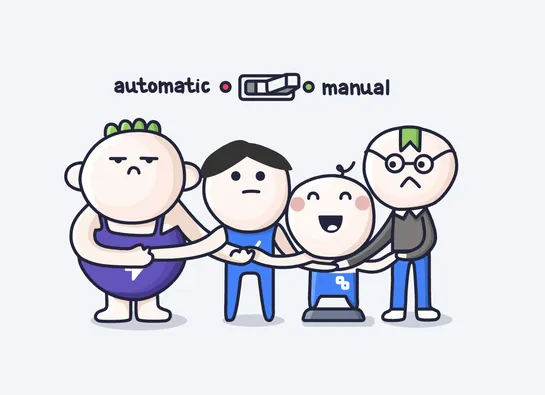
In this blog post, I explain how to link issues in Jira using different methods. You can link issues automatically or manually from a Jira board or issue view. Additionally, we give you useful tips on how to make working with linked issues more convenient and efficient.


Recently, the latest Kubernetes version, v1.34, was released with 13 new alpha features on board. They include: - KYAML, a new dialect of YAML for Kubernetes manifests, which is still compatible with all existing tooling; - asynchronous API calls to kube-apiserver during scheduling; - various enhanc..

Unified communication platforms like Skype for Business play a critical role in keeping teams connected through instant messaging, voice, and video — but maintaining high performance and availability is key. That’s where RELIANOID ADC comes in. 💪 In our latest article, we explain how to optimize Sky..

Explore 11 APM tools built for Go—from lightweight open-source options to enterprise-grade platforms that simplify debugging.


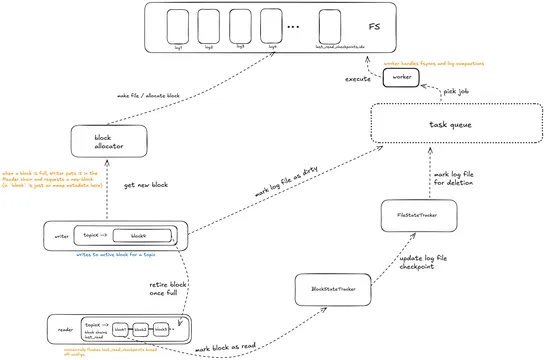
Walrusis a lock-free, single-nodeWrite Ahead Log in Rustthat rips through a million ops/sec and moves 1 GB/s of write bandwidth - on bare-metal, nothing fancy. It leans on mmap-backed sparse files, atomic counters, and zero-copy reads to get there. Each topic gets its own line of 10MB memory-mapped .. read more
OpenAI’sAgent Builderdrops the guardrails. It’s a no-code, drag-and-drop playground for building, testing, and shipping AI workflows - logic flows straight from your brain to the screen. Tweak interfaces inWidget Studio. Plug into real systems with theAgents SDK. Just one catch: it’s locked behind P.. read more
SteamPipe just gutted its real-time storage engine and rebuilt it inRust. Expect faster performance and better scaling. Now runs oncolumnar storage, ships withvectorized queries, and rolls anobject store-backed WAL. Serious firepower for time series data. System shift:Another sign that high-throughp.. read more

