Join us

ContentUpdates from The Open Source Security Foundation (OpenSSF) is a...
Link
@kala shared a link, 4 months, 3 weeks ago
FAUN.dev()

Structured Vibe Coding: A Smarter Way to Build AI Agents with GitHub Copilot

A fresh approach calledstructured vibe codingblends human-style team habits with AI workflows. Specs, GitHub Issues, and Copilot now pull agents into the loop like actual teammates. Powered byGitHub Copilot Coding AgentsandAzure AI Foundry, devs can run full AI-driven sprints—spec to PR—right inside.. read more  

Structured Vibe Coding: A Smarter Way to Build AI Agents with GitHub Copilot
Link
@kala shared a link, 4 months, 3 weeks ago
FAUN.dev()

OpenAI Needs $400 Billion In The Next 12 Months

OpenAI, Broadcom, NVIDIA, and AMD say they’ll deploy10GWof AI compute by end of 2026. That includes custom chips and slews of 1GW data centers. What they didn’t say: where, when, or how. No sites named. No shovels in dirt. OpenAI alone aims for250GW by 2033—a moonshot that needs$400Bin the next 12 m.. read more  

OpenAI Needs $400 Billion In The Next 12 Months
Link
@devopslinks shared a link, 4 months, 3 weeks ago
FAUN.dev()

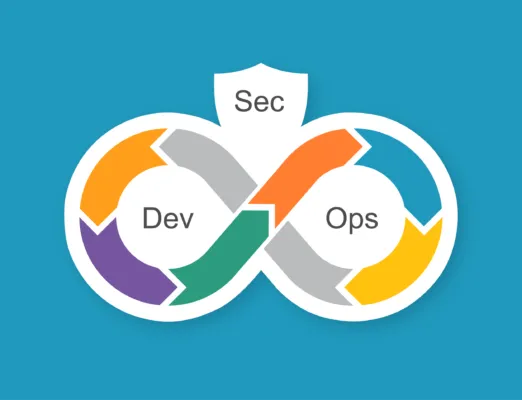
How AI can help your DevSecOps pipeline

AI is sliding into DevSecOps and turning security into less of a slog. Tools likeDarktrace PREVENT,CrowdStrike Falcon, andMicrosoft Security Copilotaren't just watching—they're flagging weird behavior, proposing fixes, and unclogging patch pipelines inside CI/CD. The shift:DevSecOps is on its way to.. read more  

How AI can help your DevSecOps pipeline
Link
@devopslinks shared a link, 4 months, 3 weeks ago
FAUN.dev()

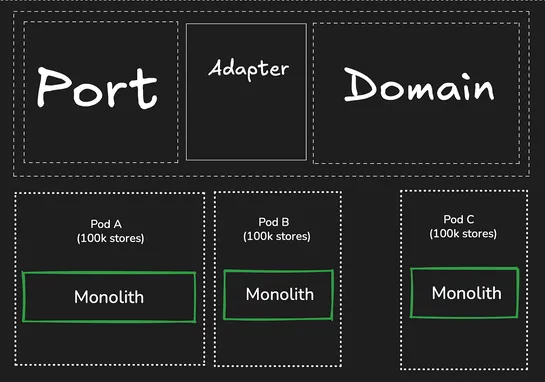
How Shopify Handles 30TB of Data Every Minute with a Monolithic Architecture

Shopify handles billions of Black Friday requests on amodular monolith, built with Ruby on Rails and kept in check byPackwerk. Domain boundaries are enforced. Chaos averted. Inside, it blendsHexagonal Architecture, isolatedPods, and real-time Kafka pipes. The system scales without fracturing into mi.. read more  

How Shopify Handles 30TB of Data Every Minute with a Monolithic Architecture
Link
@devopslinks shared a link, 4 months, 3 weeks ago
FAUN.dev()

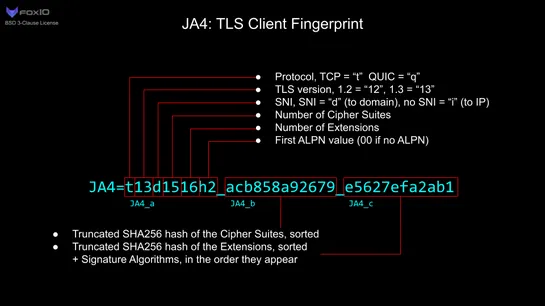
How I Block All 26 Million Of Your Curl Requests

A developer built a razor-sharp TLS fingerprinting and blocking tool—all in kernel space—witheBPFandXDP. It hooks into incoming packets, scrapes TLS Client Hello messages, and cranks out simplified JA4-style hashes from their cipher suite lists. The fun part? It's running under tight stack limits, s.. read more  

How I Block All 26 Million Of Your Curl Requests
Link
@devopslinks shared a link, 4 months, 3 weeks ago
FAUN.dev()

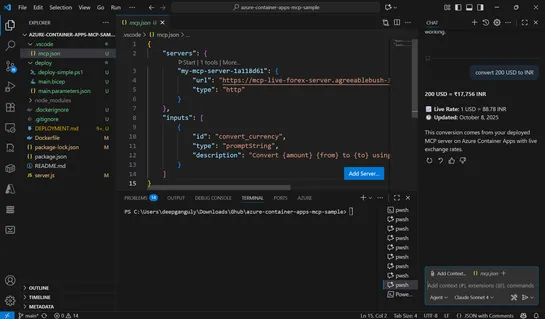
Hosting Remote MCP Server on Azure Container Apps (ACA) using Streamable HTTP transport mechanism

A fresh setup shows how to runModel Context Protocol (MCP) servers over HTTPinsideAzure Container Apps—stateless, serverless, and ready for real-time jobs like live forex conversion. It pipes in a live API fallback, adds caching, and speaksJSON-RPC 2.0overPOST. You can spin it up withBicep templates.. read more  

Hosting Remote MCP Server on Azure Container Apps (ACA) using Streamable HTTP transport mechanism
Link
@devopslinks shared a link, 4 months, 3 weeks ago
FAUN.dev()

CVE-2025-49844 - The Redis CVSS 10.0 vulnerability and how we responded

Report URI closed the door on Redis CVE-2025-49844 fast. They rolled out ACL-based command blocks and jumped to Redis8.2.2, now running on a freshRedis Sentinel-based HA setup. To prove the fix stuck, they ran command counter checks and layered in enforced blocking rules—then pushed it all out fleet.. read more  

CVE-2025-49844 - The Redis CVSS 10.0 vulnerability and how we responded
Link
@devopslinks shared a link, 4 months, 3 weeks ago
FAUN.dev()

Migrating to Hetzner - We saved 76% on our cloud bills

DigitalSociety ditched AWS and DigitalOcean. Swapped the comfort of cloud for full control onHetzner, built onTalos Linux. PostgreSQL? Now running onCloudNativePG. Traffic flows throughIngress NGINXwithExternalDNShandling the names. The payoff: monthly costs dropped from $449.50 to under $100. ARM v.. read more  

Migrating to Hetzner - We saved 76% on our cloud bills
Link
@kaptain shared a link, 4 months, 3 weeks ago
FAUN.dev()

A fully functional Kubernetes cluster with 1 million active nodes.

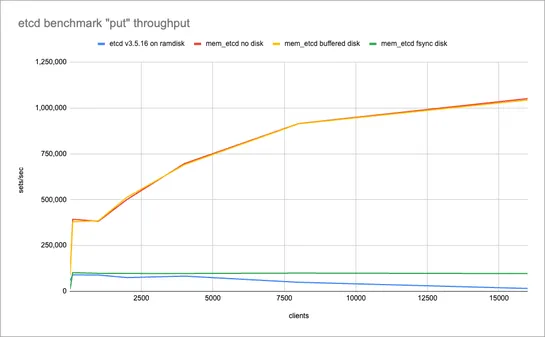
Pushing Kubernetes to 1M nodes isn’t just hardware—it's architectural judo. Networking flips to exclusive IPv6.Less chatter, more breathing room. etcd hits a wall.Write throughput stalls at scale, so they swap it out. Entermem_etcd, a Rust-built replacement pushing over 1M buffered writes per second.. read more  

A fully functional Kubernetes cluster with 1 million active nodes.
Link
@kaptain shared a link, 4 months, 3 weeks ago
FAUN.dev()

Debug Builds with Visual Studio Code

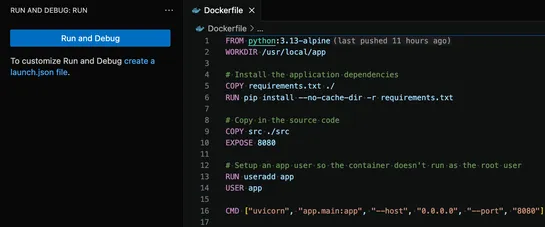
Docker droppedBuildx debuggingfor VS Code. Set breakpoints in your Dockerfiles. Peek into image layers. Even jump into an interactive shell mid-build. It runs on theDebug Adapter Protocol, so editors likeNeovimandJetBrains IDEscan join the party too... read more  

Debug Builds with Visual Studio Code
The Open Source Security Foundation (OpenSSF) is an industry-backed foundation focused on strengthening the security of the global open source software ecosystem. It brings together major technology companies, cloud providers, open source communities, and security experts to address systemic security challenges that affect how software is built, distributed, and consumed.

OpenSSF was launched in 2021 and operates under the Linux Foundation, combining efforts from earlier initiatives such as the Core Infrastructure Initiative (CII) and industry-led supply chain security programs. Its mission is to make open source software more trustworthy, resilient, and secure by default, without placing unrealistic burdens on maintainers.

The foundation works across several key areas:

- Supply chain security: Developing frameworks, best practices, and tools to secure the software lifecycle from source to deployment. This includes stewardship of projects like sigstore and leadership on SLSA (Supply-chain Levels for Software Artifacts).

- Security tooling: Supporting and incubating open source tools that help developers detect, prevent, and remediate vulnerabilities at scale.

- Vulnerability management: Improving how vulnerabilities are discovered, disclosed, scored, and fixed across open source projects.

- Education and best practices: Publishing guidance, training, and maturity models such as the OpenSSF Best Practices Badge Program, which helps projects assess and improve their security posture.

- Metrics and research: Advancing data-driven approaches to understanding open source security risks and ecosystem health.

OpenSSF operates through working groups and special interest groups (SIGs) that focus on specific problem areas like securing builds, improving dependency management, or automating provenance generation. This structure allows practitioners to collaborate on concrete, actionable solutions rather than high-level policy alone.

By aligning maintainers, enterprises, and security teams, OpenSSF plays a central role in reducing large-scale risks such as dependency confusion, compromised build systems, and malicious package injection. Its work underpins many modern DevSecOps and cloud-native security practices and is increasingly referenced by governments and enterprises as a baseline for secure software development.