Join us

ContentUpdates from The Open Source Security Foundation (OpenSSF) is a...
Link
@varbear shared a link, 4 months, 3 weeks ago
FAUN.dev()

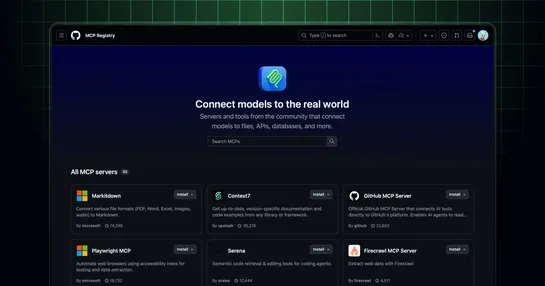
GitHub MCP Registry: The fastest way to discover AI tools

GitHub rolled out theMCP Registry—a hub for findingModel Context Protocol (MCP) serverswithout hunting through scattered corners of the internet. No more siloed lists or mystery URLs. It's all in one place now. The goal? Cleaner access to AI agent tools, plus a path towardself-publishing, thanks to .. read more  
GitHub MCP Registry: The fastest way to discover AI tools
Link
@varbear shared a link, 4 months, 3 weeks ago
FAUN.dev()

Nine HTTP Edge Cases Every API Developer Should Understand

Last February, CVE-2024-26141 punched a nasty hole inRack's Range header parsing. All versions since 1.3.0 are exposed. The bug let attackers blow up memory usage and responses—classic denial-of-service—just by crafting bloated Range headers. The trick? Custom file download handlers. They skip the u.. read more  

Nine HTTP Edge Cases Every API Developer Should Understand
Link
@varbear shared a link, 4 months, 3 weeks ago
FAUN.dev()

A stateful browser agent using self-healing DOM maps

A stateful browser agent using self-healing DOM maps is now available. Users describe tasks, Agent4 performs them, creates reusable workflows from interactions, and executes instantly on subsequent requests. Under the hood, it checks for known maps in a vector DB, patches them if needed, and self-he.. read more  

Link
@varbear shared a link, 4 months, 3 weeks ago
FAUN.dev()

Foreign hackers breached a US nuclear weapons plant via SharePoint flaws

UnpatchedSharePoint flaws(CVE-2025-53770, CVE-2025-49704) cracked open theKansas City National Security Campusin July. IT systems tied to 80% of U.S. non-nuclear weapons parts got compromised. Attackers—likely state-backed, Russian or Chinese—moved fast, hitting the zero-day RCE and spoofing bugs ju.. read more  

Foreign hackers breached a US nuclear weapons plant via SharePoint flaws
Link
@varbear shared a link, 4 months, 3 weeks ago
FAUN.dev()

Python 3.14 Is Here. How Fast Is It?

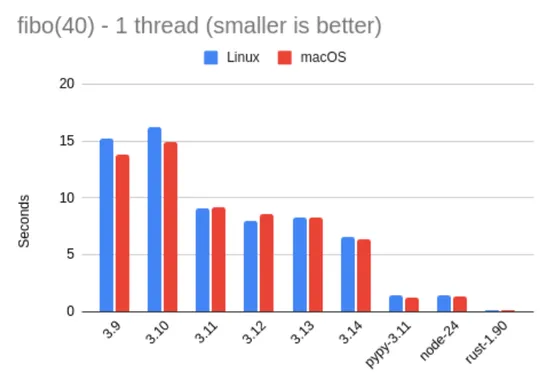
Python 3.14 lands with a ~27% speed jump over 3.13, keeping the post-3.11 momentum alive. The big news: the newfree-threading interpreter—no GIL—now hits up to3.1x fasterthan regular CPython in multi-threaded, CPU-heavy benchmarks. That’s up from 2.2x in 3.13. Less shiny: theJIT interpreterstill can.. read more  

Python 3.14 Is Here. How Fast Is It?
Link
@varbear shared a link, 4 months, 3 weeks ago
FAUN.dev()

Supply Chain Risk in VSCode Extension Marketplaces

Wiz dug up 550+ leaked secrets buried in 500+ public VSCode extensions—including 130+ live access tokens forVSCode MarketplaceandOpenVSX. That’s a wide-open door to supply chain attacks through auto-updates. Microsoft reacted fast: dumped the breached tokens, rolled outpre-publish secret scanning, a.. read more  

Link
@kala shared a link, 4 months, 3 weeks ago
FAUN.dev()

Sora 2 in Azure AI Foundry: Create videos with responsible AI

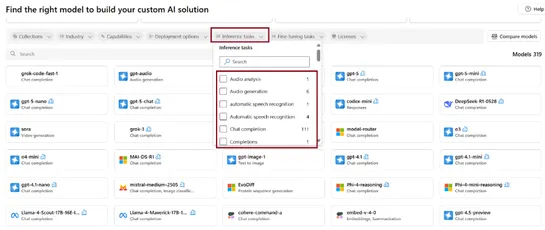
OpenAI’sSora 2just dropped intopublic previewvia theAzure AI FoundryAPI. It’s a multimodal video model aimed at serious use—enterprise safety, API-ready, built for scale. Azure didn’t stop there. It bundled inGPT-image-1,Flux 1.1, andKontext Pro, pulling together a full-gen stack under one roof... read more  

Sora 2 in Azure AI Foundry: Create videos with responsible AI
Link
@kala shared a link, 4 months, 3 weeks ago
FAUN.dev()

How Microsoft Evaluates LLMs in Azure AI Foundry: A Practical, End-to-End Playbook

Microsoft’s Azure AI Foundry just released a proper workflow for putting LLMs through their paces. Thinkoffline/online tests,human-in-the-loop checks,automated scoring, and evencustom evaluators—all wired into one system. At the heart of it: the newAzure AI Evaluation SDK. You can run it locally whi.. read more  

How Microsoft Evaluates LLMs in Azure AI Foundry: A Practical, End-to-End Playbook
Link
@kala shared a link, 4 months, 3 weeks ago
FAUN.dev()

Claude Skills are awesome, maybe a bigger deal than MCP

Anthropic releasedClaude Skills—a lean way to snap specialized instructions and scripts into Claude without bloating the prompt. Each “skill” lives in a folder with Markdown and optional code. Frontmatter tags tell Claude when to load what. No need to cram everything into the context window—Claude g.. read more  

Claude Skills are awesome, maybe a bigger deal than MCP
Link
@kala shared a link, 4 months, 3 weeks ago
FAUN.dev()

Structured Vibe Coding: A Smarter Way to Build AI Agents with GitHub Copilot

A fresh approach calledstructured vibe codingblends human-style team habits with AI workflows. Specs, GitHub Issues, and Copilot now pull agents into the loop like actual teammates. Powered byGitHub Copilot Coding AgentsandAzure AI Foundry, devs can run full AI-driven sprints—spec to PR—right inside.. read more  

Structured Vibe Coding: A Smarter Way to Build AI Agents with GitHub Copilot
The Open Source Security Foundation (OpenSSF) is an industry-backed foundation focused on strengthening the security of the global open source software ecosystem. It brings together major technology companies, cloud providers, open source communities, and security experts to address systemic security challenges that affect how software is built, distributed, and consumed.

OpenSSF was launched in 2021 and operates under the Linux Foundation, combining efforts from earlier initiatives such as the Core Infrastructure Initiative (CII) and industry-led supply chain security programs. Its mission is to make open source software more trustworthy, resilient, and secure by default, without placing unrealistic burdens on maintainers.

The foundation works across several key areas:

- Supply chain security: Developing frameworks, best practices, and tools to secure the software lifecycle from source to deployment. This includes stewardship of projects like sigstore and leadership on SLSA (Supply-chain Levels for Software Artifacts).

- Security tooling: Supporting and incubating open source tools that help developers detect, prevent, and remediate vulnerabilities at scale.

- Vulnerability management: Improving how vulnerabilities are discovered, disclosed, scored, and fixed across open source projects.

- Education and best practices: Publishing guidance, training, and maturity models such as the OpenSSF Best Practices Badge Program, which helps projects assess and improve their security posture.

- Metrics and research: Advancing data-driven approaches to understanding open source security risks and ecosystem health.

OpenSSF operates through working groups and special interest groups (SIGs) that focus on specific problem areas like securing builds, improving dependency management, or automating provenance generation. This structure allows practitioners to collaborate on concrete, actionable solutions rather than high-level policy alone.

By aligning maintainers, enterprises, and security teams, OpenSSF plays a central role in reducing large-scale risks such as dependency confusion, compromised build systems, and malicious package injection. Its work underpins many modern DevSecOps and cloud-native security practices and is increasingly referenced by governments and enterprises as a baseline for secure software development.