Join us

ContentUpdates from The Open Source Security Foundation (OpenSSF) is a...
Link
@kaptain shared a link, 4 months, 2 weeks ago
FAUN.dev()

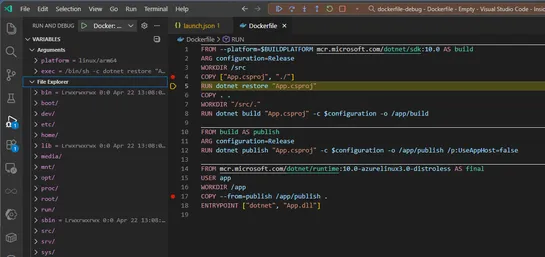
Debugging container image creation with a Dockerfile

Docker just made debugging Dockerfiles inVS Codefeel like real development. With the latest Docker extension and Docker Desktop update, you can now set breakpoints, step through builds with F10/F11, poke at variables, and mess with the container’s file system mid-build... read more  
Debugging container image creation with a Dockerfile
Link
@kaptain shared a link, 4 months, 2 weeks ago
FAUN.dev()

Kubernetes Gateway API in action

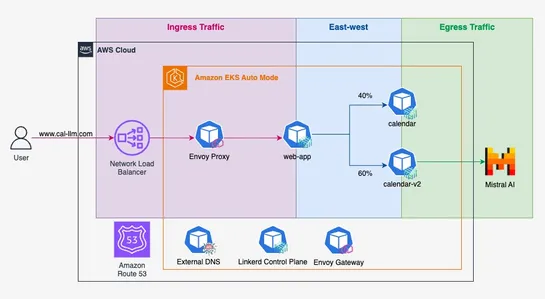
The Kubernetes Gateway API leveled up - unifying North-South, East-West, and egress traffic with standard CRDs likeGRPCRoute,HTTPRoute, andReferenceGrant. In a Linkerd world, that means clean, declarative canary releases, granular egress control to outside APIs (say, Mistral AI), and clearer lines b.. read more  

Kubernetes Gateway API in action
Link
@kaptain shared a link, 4 months, 2 weeks ago
FAUN.dev()

Bootstrapping Rancher’s RKE2 Kubernetes Cluster on a Podman VM with Cilium CNI and MetalLB LoadBalancer

Running RKE2 with Cilium and MetalLB in a lightweight Podman VM on macOS enables experimentation with Kubernetes. Unique network challenges require SSH port forwarding for service exposure... read more  

Link
@kaptain shared a link, 4 months, 2 weeks ago
FAUN.dev()

How to manage EKS Pod Identities at scale using Argo CD and AWS ACK

AWS shows how to wire upArgo CDwithAWS Controllers for Kubernetes (ACK)to automateEKS Pod Identityfor IAM roles - GitOps-style. The catch? The Pod Identity API has a lag. So they bolt on apre-deployment validation jobto wait-and-confirm that the IAM role's actually bound before app pods come online... read more  

Link
@kaptain shared a link, 4 months, 2 weeks ago
FAUN.dev()

Spotlight on Policy Working Group

The Kubernetes Policy Working Group got busy turning good intentions into real specs. They rolled out thePolicy Reports API, dropped best-practice docs worth reading, and helped steerValidatingAdmissionPolicyandMutatingAdmissionPolicytoward GA. Their work pulled inSIG Auth,SIG Security, and anyone e.. read more  

Link
@kaptain shared a link, 4 months, 2 weeks ago
FAUN.dev()

Replaying massive data in a non-production environment using Pekko Streams and Kubernetes Pekko Cluster

DoubleVerify built a traffic replay tool that actually scales. It runs onPekko StreamsandPekko Cluster, pumping real production-like traffic into non-prod setups. Throttlenails the RPS with precision for functional tests.Distributed datasyncs stressful loads across cluster nodes without breaking a s.. read more  

Replaying massive data in a non-production environment using Pekko Streams and Kubernetes Pekko Cluster
Link
@kaptain shared a link, 4 months, 2 weeks ago
FAUN.dev()

Exposing Kubernetes Services Without Cloud LoadBalancers: A Practical Guide

Bare-metal Kubernetes just got a cloud-style glow-up. By wiring upMetalLBin layer2 mode with theNGINX ingress controller, the setup exposesLoadBalancer-typeservices—no cloud provider in sight. MetalLB dishes out static, LAN-routable IPs. NGINX funnels external traffic to internalClusterIPservices th.. read more  

Exposing Kubernetes Services Without Cloud LoadBalancers: A Practical Guide
Link
@kaptain shared a link, 4 months, 2 weeks ago
FAUN.dev()

7 Common Kubernetes Pitfalls (and How I Learned to Avoid Them)

Seven ways folks trip over Kubernetes - each more avoidable than the last. Top offenses: skippingresource requests/limits, forgettinghealth probes, trustingephemeral logsthat vanish when you need them. Reusing configs across dev and prod? Still a bad idea. Pushing off observability until it’s on fir.. read more  

Link
@kala shared a link, 4 months, 2 weeks ago
FAUN.dev()

Why open source may not survive the rise of generative AI

Generative AI is snapping the attribution chain thatcopyleft licenseslike theGNU GPLrely on. Without clear provenance, license terms get lost. Compliance? Forget it. The give-and-take that powersFOSSstops giving - or taking... read more  

Why open source may not survive the rise of generative AI
Link
@kala shared a link, 4 months, 2 weeks ago
FAUN.dev()

I regret building this $3000 Pi AI cluster

A 10-node Raspberry Pi 5 cluster built with16GB CM5 Lite modulestopped out at325 Gflops- then got lapped by an $8K x86 Framework PC cluster running4x faster. On the bright side? The Pi setup edged out in energy efficiency when pushed to thermal limits. It came with160 GB total RAM, but that didn’t h.. read more  

I regret building this $3000 Pi AI cluster
The Open Source Security Foundation (OpenSSF) is an industry-backed foundation focused on strengthening the security of the global open source software ecosystem. It brings together major technology companies, cloud providers, open source communities, and security experts to address systemic security challenges that affect how software is built, distributed, and consumed.

OpenSSF was launched in 2021 and operates under the Linux Foundation, combining efforts from earlier initiatives such as the Core Infrastructure Initiative (CII) and industry-led supply chain security programs. Its mission is to make open source software more trustworthy, resilient, and secure by default, without placing unrealistic burdens on maintainers.

The foundation works across several key areas:

- Supply chain security: Developing frameworks, best practices, and tools to secure the software lifecycle from source to deployment. This includes stewardship of projects like sigstore and leadership on SLSA (Supply-chain Levels for Software Artifacts).

- Security tooling: Supporting and incubating open source tools that help developers detect, prevent, and remediate vulnerabilities at scale.

- Vulnerability management: Improving how vulnerabilities are discovered, disclosed, scored, and fixed across open source projects.

- Education and best practices: Publishing guidance, training, and maturity models such as the OpenSSF Best Practices Badge Program, which helps projects assess and improve their security posture.

- Metrics and research: Advancing data-driven approaches to understanding open source security risks and ecosystem health.

OpenSSF operates through working groups and special interest groups (SIGs) that focus on specific problem areas like securing builds, improving dependency management, or automating provenance generation. This structure allows practitioners to collaborate on concrete, actionable solutions rather than high-level policy alone.

By aligning maintainers, enterprises, and security teams, OpenSSF plays a central role in reducing large-scale risks such as dependency confusion, compromised build systems, and malicious package injection. Its work underpins many modern DevSecOps and cloud-native security practices and is increasingly referenced by governments and enterprises as a baseline for secure software development.