Join us

ContentUpdates from The Open Source Security Foundation (OpenSSF) is a...
Link
@kala shared a link, 4 months, 2 weeks ago
FAUN.dev()

Post-Training Generative Recommenders with Advantage-Weighted Supervised Finetuning

Generative recommender systems need more than just observed user behavior to make accurate recommendations. Introducing A-SFT algorithm improves alignment between pre-trained models and reward models for more effective post-training... read more  
Link
@kala shared a link, 4 months, 2 weeks ago
FAUN.dev()

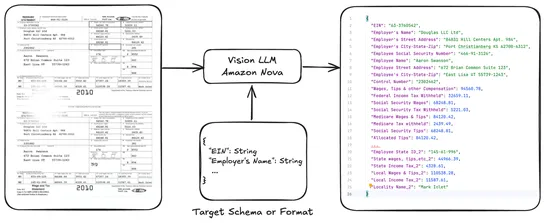
Optimizing document AI and structured outputs by fine-tuning Amazon Nova Models and on-demand inference

Amazon rolled out fine-tuning and distillation forVision LLMslike Nova Lite viaBedrockandSageMaker. Translation: better doc parsing—think messy tax forms, receipts, invoices. Developers get two tuning paths:PEFTor full fine-tune. Then choose how to ship:on-demand inference (ODI)orProvisioned Through.. read more  

Optimizing document AI and structured outputs by fine-tuning Amazon Nova Models and on-demand inference
Link
@kala shared a link, 4 months, 2 weeks ago
FAUN.dev()

What Significance Testing is, Why it matters, Various Types and Interpreting the p-Value

Significance testing determines if observed differences are meaningful by calculating the likelihood of results happening by chance. The p-value indicates this likelihood, with values below 0.05 suggesting statistical significance. Different tests, such as t-tests, ANOVA, and chi-square, help analyz.. read more  

Link
@devopslinks shared a link, 4 months, 2 weeks ago
FAUN.dev()

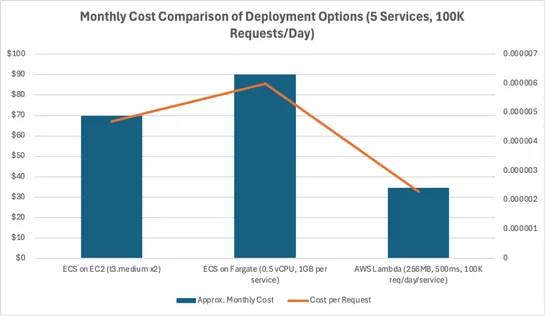
A FinOps Guide to Comparing Containers and Serverless Functions for Compute

AWS dropped a new cost-performance playbook pittingAmazon ECSagainstAWS Lambda. It's not just a tech choice - it’s a workload strategy. Go containers when you’ve got steady traffic, high CPU or memory needs, or sticky app state. Go serverless for spiky, event-driven bursts that don’t need a long lea.. read more  

A FinOps Guide to Comparing Containers and Serverless Functions for Compute
Link
@devopslinks shared a link, 4 months, 2 weeks ago
FAUN.dev()

How and Why Netflix Built a Real-Time Distributed Graph -  Ingesting and Processing Data Streams at Internet Scale

Netflix built a Real-Time Distributed Graph (RDG) to connect member interactions across different devices instantly. Using Apache Flink and Kafka, they process up to1 millionmessages per second for node and edge updates. Scaling Flink jobs individually reduced operational headaches and allowed for s.. read more  

Link
@devopslinks shared a link, 4 months, 2 weeks ago
FAUN.dev()

Jump Starting Quantum Computing on Azure

Microsoft just pulled off full-stack quantum teleportation withAzure Quantum, wiring up Qiskit and Quantinuum’s simulator in the process. Entanglement? Check. Hadamard and CNOT gates set the stage. Classical control logic wrangles the flow. Validation lands cleanly on the backend... read more  

Link
@devopslinks shared a link, 4 months, 2 weeks ago
FAUN.dev()

What is autonomous validation? The future of CI/CD in the AI era

CircleCI droppedautonomous validation, a smarter CI/CD that thinks on its feet. It scans your code, predicts breakage, runs only the tests that matter - and fixes the easy stuff on its own. If things get messy, it hands off full context so you’re not digging through logs. Bonus: it keeps learning fr.. read more  

What is autonomous validation? The future of CI/CD in the AI era
News FAUN.dev() Team
@kala shared an update, 4 months, 2 weeks ago
FAUN.dev()

FSF Talks GPL Compliance and AI Code at GNU Cauldron

The FSF's Licensing and Compliance Lab engaged with GNU toolchain maintainers at GNU Cauldron to discuss GPL compliance, AI-generated code, and attribution in containerized environments.

FSF Talks GPL Compliance and AI Code at GNU Cauldron
News FAUN.dev() Team
@varbear shared an update, 4 months, 2 weeks ago
FAUN.dev()

Arkade’s New Off-Chain Protocol Promises Smoother Bitcoin Transactions

Arkade introduces a new protocol to enhance Bitcoin's global financial capabilities by enabling offchain payments and transaction batching, inviting developers to explore its public beta.

Arkade’s New Off-Chain Protocol Promises Smoother Bitcoin Transactions
News FAUN.dev() Team
@kala shared an update, 4 months, 2 weeks ago
FAUN.dev()

Anthropic Scales Up Google Cloud TPUs to Power Next-Gen AI Research

Google Kubernetes Engine (GKE)

Anthropic plans a major expansion of its Google Cloud TPU usage to enhance AI research and development, driven by increasing customer demand and valued at tens of billions of dollars.

Anthropic Scales Up Google Cloud TPUs to Power Next-Gen AI Research
The Open Source Security Foundation (OpenSSF) is an industry-backed foundation focused on strengthening the security of the global open source software ecosystem. It brings together major technology companies, cloud providers, open source communities, and security experts to address systemic security challenges that affect how software is built, distributed, and consumed.

OpenSSF was launched in 2021 and operates under the Linux Foundation, combining efforts from earlier initiatives such as the Core Infrastructure Initiative (CII) and industry-led supply chain security programs. Its mission is to make open source software more trustworthy, resilient, and secure by default, without placing unrealistic burdens on maintainers.

The foundation works across several key areas:

- Supply chain security: Developing frameworks, best practices, and tools to secure the software lifecycle from source to deployment. This includes stewardship of projects like sigstore and leadership on SLSA (Supply-chain Levels for Software Artifacts).

- Security tooling: Supporting and incubating open source tools that help developers detect, prevent, and remediate vulnerabilities at scale.

- Vulnerability management: Improving how vulnerabilities are discovered, disclosed, scored, and fixed across open source projects.

- Education and best practices: Publishing guidance, training, and maturity models such as the OpenSSF Best Practices Badge Program, which helps projects assess and improve their security posture.

- Metrics and research: Advancing data-driven approaches to understanding open source security risks and ecosystem health.

OpenSSF operates through working groups and special interest groups (SIGs) that focus on specific problem areas like securing builds, improving dependency management, or automating provenance generation. This structure allows practitioners to collaborate on concrete, actionable solutions rather than high-level policy alone.

By aligning maintainers, enterprises, and security teams, OpenSSF plays a central role in reducing large-scale risks such as dependency confusion, compromised build systems, and malicious package injection. Its work underpins many modern DevSecOps and cloud-native security practices and is increasingly referenced by governments and enterprises as a baseline for secure software development.