Join us

ContentUpdates from The Open Source Security Foundation (OpenSSF) is a...
Link
@varbear shared a link, 4 months, 2 weeks ago
FAUN.dev()

100X Faster: How We Supercharged Netflix Maestro’s Workflow Engine

The Maestro engine has been revamped for jaw-dropping improvement: a speed boost of100Xwith overhead slashed from seconds to milliseconds. The groundbreaking redesign delivers massive performance gains, solving past workflow development hurdles and elevating user experiences sky-high!.. read more  

Link
@varbear shared a link, 4 months, 2 weeks ago
FAUN.dev()

How I Reversed Amazon's Kindle Web Obfuscation Because Their App Sucked

A developer cracked Kindle Cloud Reader’s font obfuscation, sidestepping randomized glyph swaps withSVG renderingandSSIM-powered perceptual hashingto rebuild actual EPUBs. Amazon rotates font mappings every five pages, using finicky micro-paths to jam scrapers and derail OCR. It wasn’t enough. Syste.. read more  

How I Reversed Amazon's Kindle Web Obfuscation Because Their App Sucked
Link
@varbear shared a link, 4 months, 2 weeks ago
FAUN.dev()

Discussion of the Benefits and Drawbacks of the Git Pre-Commit Hook

Pre-commit hooks catch secrets and fix formatting before bad stuff hits your repo. But if they’re clunky or slow, devs bail. Tools likePre-Commit,Husky, anddevenvare trying to fix that.devenvstands out—hooks are baked right into your Nix env, no extra glue scripts... read more  

Link
@varbear shared a link, 4 months, 2 weeks ago
FAUN.dev()

State of AI Report 2025

The 2025 State of AI Report just landed—China’s catching up fast on reasoning and coding. Models like DeepSeek, Qwen, and Kimi are starting to nip at OpenAI’s heels. AI is thinking longer-term now. Reinforced reasoning and rubric-style feedback are pushing models into deeper, more deliberate plannin.. read more  

State of AI Report 2025
Link
@varbear shared a link, 4 months, 2 weeks ago
FAUN.dev()

Measuring Engineering Productivity

A former engineering leader lays out a no-nonsense framework for tracking team output without turning into Big Brother. Think:daily Slack updates,weekly GitHub changelogs,tight 1:1s,demo-fueled All-Hands, andauto-verified deploys. It leans onpublic artifacts, not peeking over shoulders - and puts th.. read more  

Measuring Engineering Productivity
Link
@kaptain shared a link, 4 months, 2 weeks ago
FAUN.dev()

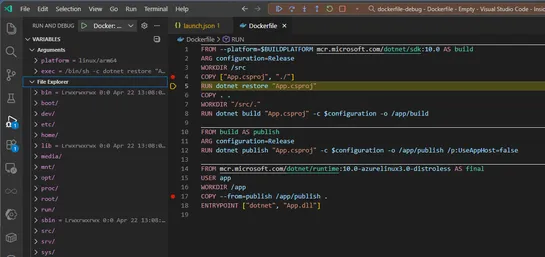
Debugging container image creation with a Dockerfile

Docker just made debugging Dockerfiles inVS Codefeel like real development. With the latest Docker extension and Docker Desktop update, you can now set breakpoints, step through builds with F10/F11, poke at variables, and mess with the container’s file system mid-build... read more  

Debugging container image creation with a Dockerfile
Link
@kaptain shared a link, 4 months, 2 weeks ago
FAUN.dev()

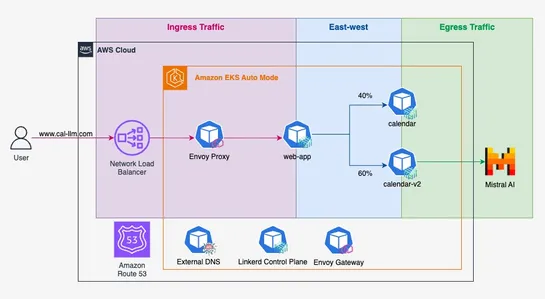
Kubernetes Gateway API in action

The Kubernetes Gateway API leveled up - unifying North-South, East-West, and egress traffic with standard CRDs likeGRPCRoute,HTTPRoute, andReferenceGrant. In a Linkerd world, that means clean, declarative canary releases, granular egress control to outside APIs (say, Mistral AI), and clearer lines b.. read more  

Kubernetes Gateway API in action
Link
@kaptain shared a link, 4 months, 2 weeks ago
FAUN.dev()

Bootstrapping Rancher’s RKE2 Kubernetes Cluster on a Podman VM with Cilium CNI and MetalLB LoadBalancer

Running RKE2 with Cilium and MetalLB in a lightweight Podman VM on macOS enables experimentation with Kubernetes. Unique network challenges require SSH port forwarding for service exposure... read more  

Link
@kaptain shared a link, 4 months, 2 weeks ago
FAUN.dev()

How to manage EKS Pod Identities at scale using Argo CD and AWS ACK

AWS shows how to wire upArgo CDwithAWS Controllers for Kubernetes (ACK)to automateEKS Pod Identityfor IAM roles - GitOps-style. The catch? The Pod Identity API has a lag. So they bolt on apre-deployment validation jobto wait-and-confirm that the IAM role's actually bound before app pods come online... read more  

Link
@kaptain shared a link, 4 months, 2 weeks ago
FAUN.dev()

Spotlight on Policy Working Group

The Kubernetes Policy Working Group got busy turning good intentions into real specs. They rolled out thePolicy Reports API, dropped best-practice docs worth reading, and helped steerValidatingAdmissionPolicyandMutatingAdmissionPolicytoward GA. Their work pulled inSIG Auth,SIG Security, and anyone e.. read more  

The Open Source Security Foundation (OpenSSF) is an industry-backed foundation focused on strengthening the security of the global open source software ecosystem. It brings together major technology companies, cloud providers, open source communities, and security experts to address systemic security challenges that affect how software is built, distributed, and consumed.

OpenSSF was launched in 2021 and operates under the Linux Foundation, combining efforts from earlier initiatives such as the Core Infrastructure Initiative (CII) and industry-led supply chain security programs. Its mission is to make open source software more trustworthy, resilient, and secure by default, without placing unrealistic burdens on maintainers.

The foundation works across several key areas:

- Supply chain security: Developing frameworks, best practices, and tools to secure the software lifecycle from source to deployment. This includes stewardship of projects like sigstore and leadership on SLSA (Supply-chain Levels for Software Artifacts).

- Security tooling: Supporting and incubating open source tools that help developers detect, prevent, and remediate vulnerabilities at scale.

- Vulnerability management: Improving how vulnerabilities are discovered, disclosed, scored, and fixed across open source projects.

- Education and best practices: Publishing guidance, training, and maturity models such as the OpenSSF Best Practices Badge Program, which helps projects assess and improve their security posture.

- Metrics and research: Advancing data-driven approaches to understanding open source security risks and ecosystem health.

OpenSSF operates through working groups and special interest groups (SIGs) that focus on specific problem areas like securing builds, improving dependency management, or automating provenance generation. This structure allows practitioners to collaborate on concrete, actionable solutions rather than high-level policy alone.

By aligning maintainers, enterprises, and security teams, OpenSSF plays a central role in reducing large-scale risks such as dependency confusion, compromised build systems, and malicious package injection. Its work underpins many modern DevSecOps and cloud-native security practices and is increasingly referenced by governments and enterprises as a baseline for secure software development.