Join us

ContentUpdates from The Open Source Security Foundation (OpenSSF) is a...
News FAUN.dev() Team
@kaptain shared an update, 2 months, 2 weeks ago
FAUN.dev()

Docker Brings Production-Grade Hardened Images to Developers at No Cost

Docker

Docker has launched Docker Hardened Images, a secure and minimal set of production-ready images. These images are now freely available to developers.

Docker Brings Production-Grade Hardened Images to Developers at No Cost
Link
@anjali shared a link, 2 months, 2 weeks ago
Customer Marketing Manager, Last9

OTel Updates: OpenTelemetry Deprecates Zipkin Exporters

OpenTelemetry deprecates Zipkin exporters in favor of native OTLP support. Migration paths and timeline through December 2026.

depreciating_zipkin
News FAUN.dev() Team
@kaptain shared an update, 2 months, 2 weeks ago
FAUN.dev()

Argo CD 3.2.2 Improves Secret Management, Retry Safety, and Auth Checks

Kubernetes Argo CD

ArgoCD v3.2.2 has been released, featuring a new addition, two enhancements, and a bug fix. This update aims to improve the overall functionality and reliability of the platform.

Argo CD 3.2.2 Improves Secret Management, Retry Safety, and Auth Checks
News FAUN.dev() Team
@devopslinks shared an update, 2 months, 2 weeks ago
FAUN.dev()

Rust Confirmed for Linux Kernel: Experiment Concludes Successfully

Rust GNU/Linux The Linux Kernel UNIX

The Rust experiment in the Linux kernel concludes, confirming its suitability and permanence in kernel development, with Rust now used in production and supported by major Linux distributions.
Rust Confirmed for Linux Kernel: Experiment Concludes Successfully
Course
@eon01 published a course, 2 months, 2 weeks ago
Founder, FAUN.dev

Generative AI For The Rest Of US

ChatGPT GPT

Your Future, Decoded

Generative AI For The Rest Of US
News FAUN.dev() Team
@kaptain shared an update, 2 months, 2 weeks ago
FAUN.dev()

Kubernetes v1.35 Timbernetes Release: 60 Enhancements

Kubernetes Gateway API Kubernetes

Kubernetes v1.35, the Timbernetes Release, debuts with 60 enhancements, including stable in-place Pod updates and beta features for workload identity and certificate rotation.
Kubernetes v1.35 Timbernetes Release: 60 Enhancements
 Activity
@kaptain added a new tool Kubernetes Gateway API , 2 months, 2 weeks ago.
News FAUN.dev() Team
@kala shared an update, 2 months, 2 weeks ago
FAUN.dev()

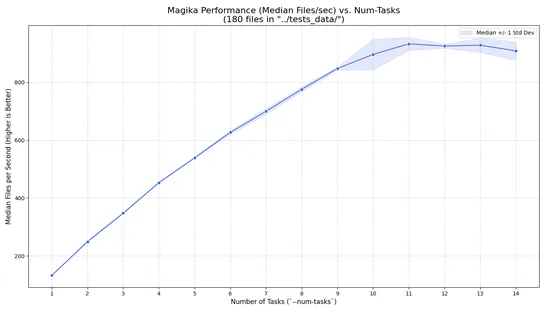
Google Releases Magika 1.0: AI File Detection in Rust

Rust Magika

Google releases Magika 1.0, an AI file detection system rebuilt in Rust for improved performance and security.
Google Releases Magika 1.0: AI File Detection in Rust
 Activity
@kala added a new tool Magika , 2 months, 2 weeks ago.
News FAUN.dev() Team
@kala shared an update, 2 months, 2 weeks ago
FAUN.dev()

Google’s Cloud APIs Become Agent-Ready with Official MCP Support

Apigee Google Cloud Platform Google Kubernetes Engine (GKE) BigQuery

Google supports the Model Context Protocol to enhance AI interactions across its services, introducing managed servers and enterprise capabilities through Apigee.

The Open Source Security Foundation (OpenSSF) is an industry-backed foundation focused on strengthening the security of the global open source software ecosystem. It brings together major technology companies, cloud providers, open source communities, and security experts to address systemic security challenges that affect how software is built, distributed, and consumed.

OpenSSF was launched in 2021 and operates under the Linux Foundation, combining efforts from earlier initiatives such as the Core Infrastructure Initiative (CII) and industry-led supply chain security programs. Its mission is to make open source software more trustworthy, resilient, and secure by default, without placing unrealistic burdens on maintainers.

The foundation works across several key areas:

- Supply chain security: Developing frameworks, best practices, and tools to secure the software lifecycle from source to deployment. This includes stewardship of projects like sigstore and leadership on SLSA (Supply-chain Levels for Software Artifacts).

- Security tooling: Supporting and incubating open source tools that help developers detect, prevent, and remediate vulnerabilities at scale.

- Vulnerability management: Improving how vulnerabilities are discovered, disclosed, scored, and fixed across open source projects.

- Education and best practices: Publishing guidance, training, and maturity models such as the OpenSSF Best Practices Badge Program, which helps projects assess and improve their security posture.

- Metrics and research: Advancing data-driven approaches to understanding open source security risks and ecosystem health.

OpenSSF operates through working groups and special interest groups (SIGs) that focus on specific problem areas like securing builds, improving dependency management, or automating provenance generation. This structure allows practitioners to collaborate on concrete, actionable solutions rather than high-level policy alone.

By aligning maintainers, enterprises, and security teams, OpenSSF plays a central role in reducing large-scale risks such as dependency confusion, compromised build systems, and malicious package injection. Its work underpins many modern DevSecOps and cloud-native security practices and is increasingly referenced by governments and enterprises as a baseline for secure software development.