Join us

ContentUpdates from The Open Source Security Foundation (OpenSSF) is a...
Course
@eon01 published a course, 3 weeks, 4 days ago
Founder, FAUN.dev

Painless Docker - 2nd Edition

Docker Compose Docker Grype Syft Docker Swarm Go Python

A Comprehensive Guide to Mastering Docker and its Ecosystem

Painless Docker - 2nd Edition
Story
@laura_garcia shared a post, 3 weeks, 5 days ago
Software Developer, RELIANOID

🚀 FinovateEurope 2026

📍 London, UK | 🗓️ 10–11 February 2026 Market-ready innovations. Executive-level networking. Inspiring insights. FinovateEurope brings together banking leaders, fintech innovators, investors, and technology providers to shape the future of financial services at a critical moment for the global fint..

finovate europe 2026 london relianoid
News FAUN.dev() Team Trending
@kala shared an update, 3 weeks, 6 days ago
FAUN.dev()

This Is the First AI That Helped Build Itself - Meet GPT-5.3-Codex

GPT-5.3-Codex

GPT-5.3-Codex, an advanced model, enhances coding performance and reasoning, operating 25% faster than its predecessor. It excels in industry benchmarks, supports the software lifecycle, and can autonomously build complex applications. The model is available on multiple platforms with plans for API access.

This Is the First AI That Helped Build Itself - Meet GPT-5.3-Codex
 Activity
@kala added a new tool GPT-5.3-Codex , 3 weeks, 6 days ago.
Story
@laura_garcia shared a post, 1 month ago
Software Developer, RELIANOID

🔐 CISO Sydney 2026

📍 Sydney, Australia | 🗓 10–11 February 2026 CISO Sydney returns for its 5th edition, bringing together New South Wales’ most senior Information Security leaders to explore how cybersecurity can truly enable business growth. From AI-driven threats and shared risk responsibility to culture-first secur..

ciso sydney 2026 relianoid
 Activity
@nelly96 added a new tool GPTHuman , 1 month ago.
Story
@laura_garcia shared a post, 1 month ago
Software Developer, RELIANOID

Want to deploy RELIANOID Load Balancer Enterprise Edition v8 on AWS using Terraform in a clean, automated way?

We’ve got you covered. In this step-by-step guide, you’ll learn how to: Use the official Terraform module from the Terraform Registry Automatically provision VPC, subnet, security groups, and EC2 Deploy the RELIANOID Enterprise Edition AMI Access the VM via SSH and Web GUI Easily destroy all resourc..
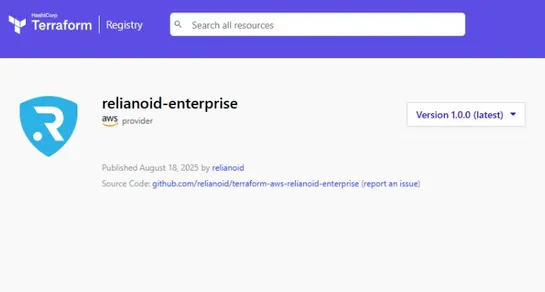
terraform_relianoid_enterprise_img2
Story Keploy Team Trending
@sancharini shared a post, 1 month ago

Interpreting Software Testing Metrics Beyond Dashboards

Learn how to interpret software testing metrics beyond dashboards, turning raw data into actionable insights that improve release decisions and reduce risk.

Interpreting Software Testing Metrics Beyond Dashboards
Story
@idjuric660 shared a post, 1 month ago
Technical Content Writer, Mailtrap

5 Best Email API for Python Developers Tested & Compared

The best email APIs for Python developers are Mailtrap, Mailgun, SendGrid, Amazon SES, and Postmark. SDK quality & framework compatibility All five providers offerPythonSDKs and they’re compatible with popular frameworks. I tested each withDjango,Flask, and FastAPI to assess real-world integration. ..

The Open Source Security Foundation (OpenSSF) is an industry-backed foundation focused on strengthening the security of the global open source software ecosystem. It brings together major technology companies, cloud providers, open source communities, and security experts to address systemic security challenges that affect how software is built, distributed, and consumed.

OpenSSF was launched in 2021 and operates under the Linux Foundation, combining efforts from earlier initiatives such as the Core Infrastructure Initiative (CII) and industry-led supply chain security programs. Its mission is to make open source software more trustworthy, resilient, and secure by default, without placing unrealistic burdens on maintainers.

The foundation works across several key areas:

- Supply chain security: Developing frameworks, best practices, and tools to secure the software lifecycle from source to deployment. This includes stewardship of projects like sigstore and leadership on SLSA (Supply-chain Levels for Software Artifacts).

- Security tooling: Supporting and incubating open source tools that help developers detect, prevent, and remediate vulnerabilities at scale.

- Vulnerability management: Improving how vulnerabilities are discovered, disclosed, scored, and fixed across open source projects.

- Education and best practices: Publishing guidance, training, and maturity models such as the OpenSSF Best Practices Badge Program, which helps projects assess and improve their security posture.

- Metrics and research: Advancing data-driven approaches to understanding open source security risks and ecosystem health.

OpenSSF operates through working groups and special interest groups (SIGs) that focus on specific problem areas like securing builds, improving dependency management, or automating provenance generation. This structure allows practitioners to collaborate on concrete, actionable solutions rather than high-level policy alone.

By aligning maintainers, enterprises, and security teams, OpenSSF plays a central role in reducing large-scale risks such as dependency confusion, compromised build systems, and malicious package injection. Its work underpins many modern DevSecOps and cloud-native security practices and is increasingly referenced by governments and enterprises as a baseline for secure software development.