Join us

ContentUpdates from The Open Source Security Foundation (OpenSSF) is a...
Link
@faun shared a link, 7 months ago
FAUN.dev()

Reduce Cloud Cross-Zone Data Transfer Costs with Kubernetes 1.33 trafficDistribution

Kubernetes 1.33 drops a new traffic policy that addszone-local routing. With it, kube-proxy now prefers endpoints in the same availability zone. Translation: less cross-AZ chatter, fewer surprise charges. On AWS, that can chop the usual $0.02/GB cross-AZ fee by up to 85%—especially in EKS clusters j.. read more  
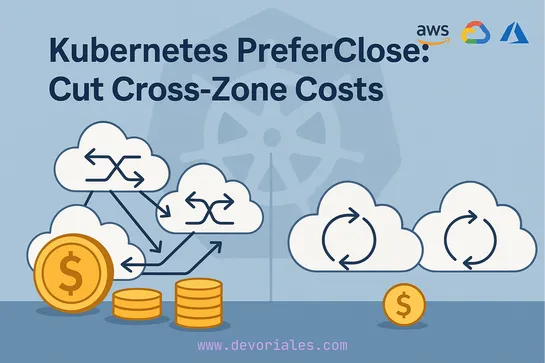
Reduce Cloud Cross-Zone Data Transfer Costs with Kubernetes 1.33 trafficDistribution
Link
@anjali shared a link, 7 months ago
Customer Marketing Manager, Last9

Kubernetes Monitoring Metrics That Improve Cluster Reliability

Understand Kubernetes monitoring metrics that help detect issues early, improve reliability, and keep your cluster performing at its best.

kubernetes_metrics
Story
@laura_garcia shared a post, 7 months ago
Software Developer, RELIANOID

🚀 Strengthening Europe’s Cybersecurity in Space

Just in case you missed it last month: The European Space Agency (ESA) has launched its brand-new Cybersecurity Operations Center (C-SOC) to safeguard satellites, mission control systems, and digital assets against growing cyber threats. 🌍 In today’s space-driven world, initiatives like this — suppo..

ESA_Cybersecurity Operations Center
Story
@laura_garcia shared a post, 7 months, 1 week ago
Software Developer, RELIANOID

🔐 Cybersecurity Fundamentals: Defensive, Offensive & Hybrid Approaches 🔐

Cybersecurity isn’t just about deploying tools — it’s about knowing how and when to use the right strategies. Defensive security focuses on prevention with technologies like firewalls, antivirus, access control, and system hardening to reduce exposure. Offensive security takes the attacker’s perspec..

Cibersecurity concepts diagram RELIANOID
Link
@anjali shared a link, 7 months, 1 week ago
Customer Marketing Manager, Last9

What is APM Tracing?

Understand APM tracing to see how a request moves through services, helping you spot delays, errors, and bottlenecks quickly.

apm tracing
Story
@laura_garcia shared a post, 7 months, 1 week ago
Software Developer, RELIANOID

✨ In case you missed it ✨

DDoS attacks in 2025 are bigger, smarter, and easier to launch than ever before. From AI-driven attack strategies to IoT-based botnets, the threat landscape is evolving fast. Our latest blog explains what’s happening now — and how RELIANOID helps organizations stay resilient. 🔗 https://www.relianoid..

Blog DDoS Trends RELIANOID
Story
@laura_garcia shared a post, 7 months, 1 week ago
Software Developer, RELIANOID

SourceForge Favorite Award 🏆

We are proud to share that RELIANOID has been recognized with the SourceForge Favorite Award 🏆 This recognition is granted to only a handful of projects out of more than 500,000 open source projects hosted on SourceForge, based on downloads and user engagement. 👉 With nearly 20 million monthly users..

Sourceforge favorite RELIANOID
 Activity
@kkz7777 gave 🐾 to 🚀 RELIANOID is heading to Washington, DC! , 7 months, 1 week ago.
Story
@laura_garcia shared a post, 7 months, 1 week ago
Software Developer, RELIANOID

🚀 RELIANOID is heading to Washington, DC!

From September 9–12, 2025, we’ll be at the 16th Billington CyberSecurity Summit — the premier government cybersecurity event gathering 2,500+ leaders and innovators to shape the future of AI, Zero Trust, cloud security, and critical infrastructure protection. Meet our team and discover how RELIANOID..

billington cybersecurity summit washington event
Story
@idjuric660 shared a post, 7 months, 1 week ago
Technical Content Writer, Mailtrap

Send emails with v0 and Mailtrap

Vercel Mailtrap.io

Learn how to integrate Mailtrap with your v0 application to send transactional emails and manage contacts without writing complex code.

The Open Source Security Foundation (OpenSSF) is an industry-backed foundation focused on strengthening the security of the global open source software ecosystem. It brings together major technology companies, cloud providers, open source communities, and security experts to address systemic security challenges that affect how software is built, distributed, and consumed.

OpenSSF was launched in 2021 and operates under the Linux Foundation, combining efforts from earlier initiatives such as the Core Infrastructure Initiative (CII) and industry-led supply chain security programs. Its mission is to make open source software more trustworthy, resilient, and secure by default, without placing unrealistic burdens on maintainers.

The foundation works across several key areas:

- Supply chain security: Developing frameworks, best practices, and tools to secure the software lifecycle from source to deployment. This includes stewardship of projects like sigstore and leadership on SLSA (Supply-chain Levels for Software Artifacts).

- Security tooling: Supporting and incubating open source tools that help developers detect, prevent, and remediate vulnerabilities at scale.

- Vulnerability management: Improving how vulnerabilities are discovered, disclosed, scored, and fixed across open source projects.

- Education and best practices: Publishing guidance, training, and maturity models such as the OpenSSF Best Practices Badge Program, which helps projects assess and improve their security posture.

- Metrics and research: Advancing data-driven approaches to understanding open source security risks and ecosystem health.

OpenSSF operates through working groups and special interest groups (SIGs) that focus on specific problem areas like securing builds, improving dependency management, or automating provenance generation. This structure allows practitioners to collaborate on concrete, actionable solutions rather than high-level policy alone.

By aligning maintainers, enterprises, and security teams, OpenSSF plays a central role in reducing large-scale risks such as dependency confusion, compromised build systems, and malicious package injection. Its work underpins many modern DevSecOps and cloud-native security practices and is increasingly referenced by governments and enterprises as a baseline for secure software development.