Join us

ContentUpdates from The Open Source Security Foundation (OpenSSF) is a...
Link
@faun shared a link, 7 months, 1 week ago
FAUN.dev()

How Salesforce Delivers Reliable, Low-Latency AI Inference

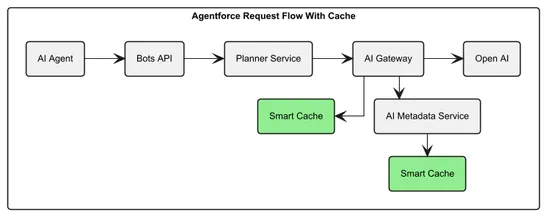
Salesforce’s AI Metadata Service (AIMS) just got a serious speed boost. They rolled out a multi-layer cache—L1 on the client, L2 on the server—and cut inference latency from 400ms to under 1ms. That’s over 98% faster. But it’s not just about speed anymore. L2 keeps responses flowing even when the b.. read more  
How Salesforce Delivers Reliable, Low-Latency AI Inference
Link
@faun shared a link, 7 months, 1 week ago
FAUN.dev()

We Needed Better Cloud Storage for Python so We Built Obstore

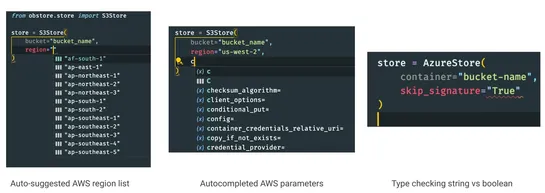
Obstoreis a new stateless object store that skips fsspec-style caching and keeps its API tight and predictable across S3, GCS, and Azure. Sync and async both work. Under the hood? Fast, zero-copy Rust–Python interop. And on small concurrent async GETs, it reportedly crushes S3FS with up to9x better .. read more  

We Needed Better Cloud Storage for Python so We Built Obstore
Link
@faun shared a link, 7 months, 1 week ago
FAUN.dev()

From Python to Go: Why We Rewrote Our Ingest Pipeline at Telemetry Harbor

Telemetry Harbor tossed out Python FastAPI and rebuilt its ingest pipeline inGo. The payoff?10x faster, no more CPU freakouts, and strongerdata integritythanks to strict typing. PostgreSQL is now the slowest link in the chain—not the app—which is the kind of bottleneck you actuallywant. Means the s.. read more  

From Python to Go: Why We Rewrote Our Ingest Pipeline at Telemetry Harbor
Link
@faun shared a link, 7 months, 1 week ago
FAUN.dev()

Open Source is one person

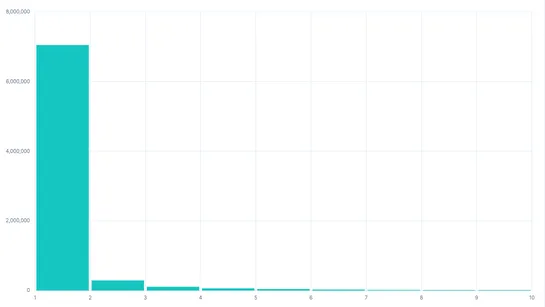
New data from ecosyste.ms drops a hard truth:almost 60% of 11.8M open source projects are solo acts. Even among NPM packages topping 1M monthly downloads, about half still rest on one pair of hands. The world runs on open source. But the scaffolding seems shakier than anyone wants to admit—millions.. read more  

Open Source is one person
Link
@faun shared a link, 7 months, 1 week ago
FAUN.dev()

Everything I know about good API design

This guide lays out the playbook for running tough, user-first APIs: no breaking changes, stick to familiar patterns, honor long-lived API keys, and make every write idempotent. It pushes cursor-based pagination for heavy data, rate limits that come with context, and optional fields to keep things .. read more  

Link
@faun shared a link, 7 months, 1 week ago
FAUN.dev()

The unexpected productivity boost of Rust

Lubeno's backend is100% Rust, providing strong safety guarantees for refactoring confidence. Rust's type checker catches async bugs, unlikeTypeScript. Rust excels in tracking lifetimes and borrowing rules.Zig, on the other hand, can be alarming with its compiler choices, such as overlooking typos in.. read more  

Link
@faun shared a link, 7 months, 1 week ago
FAUN.dev()

Bash Explained: How the Most Popular Linux Shell Works

Bash isn't going anywhere. It's still the glue for CI/CD, cron jobs, and whatever janky monitoring stack someone duct-taped together at 2am. If automation runs the show, Bash is probably in the pit orchestra. It keeps things moving on Linux, old-school macOS (think pre-Catalina), and even WSL. Stil.. read more  

Link
@faun shared a link, 7 months, 1 week ago
FAUN.dev()

Lessons learned from building a sync-engine and reactivity system with SQLite

A dev ditched Electric + PGlite for a lean, browser-native sync setup built aroundWASM SQLite,JSON polling, andBroadcastChannel reactivity. It’s running inside a local-first notes app. Changes get logged with DB triggers. Sync state? Tracked by hand. Svelte stores update via lightweight polling, wi.. read more  

Lessons learned from building a sync-engine and reactivity system with SQLite
Link
@faun shared a link, 7 months, 1 week ago
FAUN.dev()

Developer's block

Overdoing “best practices” can kill momentum. Think endless tests, wall-to-wall docs, airtight CI, and coding rules rigid enough to snap. Sounds responsible—until it slows dev to a crawl. The piece argues for flipping that script. Start scrappy. Build fast. Save the polish for later. It’s how you d.. read more  

Link
@faun shared a link, 7 months, 1 week ago
FAUN.dev()

Go is still not good

Go’s been catching flak for years, and the hits keep coming: stiff variable scoping, no destructor patterns, clunky error handling, and brittle build directives. Critics point out how Go’s design often blocks best practices like RAII and makes devs contort logic just to clean up resources or manage .. read more  

The Open Source Security Foundation (OpenSSF) is an industry-backed foundation focused on strengthening the security of the global open source software ecosystem. It brings together major technology companies, cloud providers, open source communities, and security experts to address systemic security challenges that affect how software is built, distributed, and consumed.

OpenSSF was launched in 2021 and operates under the Linux Foundation, combining efforts from earlier initiatives such as the Core Infrastructure Initiative (CII) and industry-led supply chain security programs. Its mission is to make open source software more trustworthy, resilient, and secure by default, without placing unrealistic burdens on maintainers.

The foundation works across several key areas:

- Supply chain security: Developing frameworks, best practices, and tools to secure the software lifecycle from source to deployment. This includes stewardship of projects like sigstore and leadership on SLSA (Supply-chain Levels for Software Artifacts).

- Security tooling: Supporting and incubating open source tools that help developers detect, prevent, and remediate vulnerabilities at scale.

- Vulnerability management: Improving how vulnerabilities are discovered, disclosed, scored, and fixed across open source projects.

- Education and best practices: Publishing guidance, training, and maturity models such as the OpenSSF Best Practices Badge Program, which helps projects assess and improve their security posture.

- Metrics and research: Advancing data-driven approaches to understanding open source security risks and ecosystem health.

OpenSSF operates through working groups and special interest groups (SIGs) that focus on specific problem areas like securing builds, improving dependency management, or automating provenance generation. This structure allows practitioners to collaborate on concrete, actionable solutions rather than high-level policy alone.

By aligning maintainers, enterprises, and security teams, OpenSSF plays a central role in reducing large-scale risks such as dependency confusion, compromised build systems, and malicious package injection. Its work underpins many modern DevSecOps and cloud-native security practices and is increasingly referenced by governments and enterprises as a baseline for secure software development.