Join us

ContentUpdates from The Open Source Security Foundation (OpenSSF) is a...
Story
@laura_garcia shared a post, 6 months, 3 weeks ago
Software Developer, RELIANOID

🌐 NIS2 is reshaping cybersecurity compliance across Europe.

At RELIANOID, we are fully aligned and compliant with NIS2 requirements, helping organizations strengthen their security posture. 👉 Explore more: https://www.relianoid.com/security-compliances/relianoid-nis2-compliance/ #NIS2#CyberSecurity#Compliance#Regulation#EUCompliance#InfoSec#DataProtection#Go..
nis2 compliance RELIANOID
Story
@ketbostoganashvili shared a post, 6 months, 3 weeks ago
Technical Content Writer

Send emails with Vercel and Mailtrap

Next.js Vercel Mailtrap.io

Learn how to integrate Mailtrap with your Vercel-hosted applications to send transactional emails with reliable delivery and comprehensive analytics.

Story
@ketbostoganashvili shared a post, 6 months, 3 weeks ago
Technical Content Writer

Send emails with Bolt.new and Mailtrap

Bolt Mailtrap.io

Learn how to integrate Mailtrap with your Bolt.new application to send transactional emails and manage contacts without writing complex code.

Link
@anjali shared a link, 6 months, 3 weeks ago
Customer Marketing Manager, Last9

APM for Kubernetes: Monitor Distributed Applications at Scale

Understand Kubernetes APM by linking request flows with pod, node, and cluster data to get complete visibility at scale.

k8
Story
@laura_garcia shared a post, 6 months, 3 weeks ago
Software Developer, RELIANOID

🌊 Load Balancing Smart Wave with RELIANOID — Built for Marine Telemetry

The Smart Wave platform is key for real-time telemetry from offshore buoys, vessels, and coastal stations. But how do you ensure it performs reliably — even over satellite links? We've published a new technical guide showing how to load balance Smart Wave using RELIANOID: ✅ MQTT & TCP ingestion for ..

Knowledge base_how to load balance SMART WAVE_blue economy
Link
@faun shared a link, 6 months, 3 weeks ago
FAUN.dev()

Claude Code Ushers in a New Era of Agentic Programming

The rapid evolution of agentic coding is transforming software development, moving beyond traditional methods to intelligent, autonomous systems. Anthropic's Claude Code represents a significant leap in AI assistance for developers, shifting the paradigm from direct text manipulation to hands-off co.. read more  

Link
@faun shared a link, 6 months, 3 weeks ago
FAUN.dev()

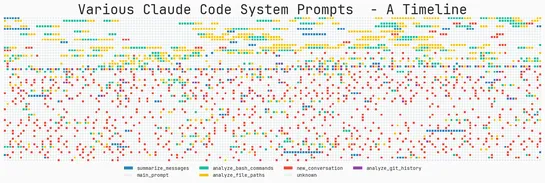
What makes Claude Code so damn good (and how to recreate that magic in your agent)!?

Claude Code skips the multi-agent circus. One main loop. At most, one fork in the road. Everything runs through a flat message history, tracked by a tidy little to-do list. Over half its LLM calls? Outsourced to lighter, cheaper models likeclaude-3-5-haiku. Smart split: heavyweight reasoning when y.. read more  

What makes Claude Code so damn good (and how to recreate that magic in your agent)!?
Link
@faun shared a link, 6 months, 3 weeks ago
FAUN.dev()

Top Tech Conferences & Events to Add to Your Calendar in 2025

Check out TechRepublic's events guide for a list of upcoming conferences, some of which are in-person and others that are virtual or hybrid. This list will be updated periodically to include new events and details... read more  

Link
@faun shared a link, 6 months, 3 weeks ago
FAUN.dev()

Closer to the Metal: Leaving Playwright for CDP

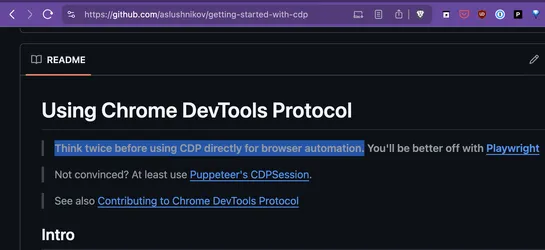
The Browser-Use crew ditched Playwright and went straight to the Chrome DevTools Protocol. Why? Speed. Way faster element scraping, screenshots, and async automation. They didn't stop there—cooked up a custom CDP Python client with strong type safety, an event-driven core, and real support for crash.. read more  

Closer to the Metal: Leaving Playwright for CDP
Link
@faun shared a link, 6 months, 3 weeks ago
FAUN.dev()

Redis to acquire Decodable

Redis is buyingDecodable, the real-time streaming startup, to crank up itsRedis Data Integration (RDI)and beef up real-time data ingestion. Decodable’s stack lands in Redis Cloud first, syncing outside data into Redis fast enough to feed hungry AI agents real context. What's really happening:Redis i.. read more  

Redis to acquire Decodable
The Open Source Security Foundation (OpenSSF) is an industry-backed foundation focused on strengthening the security of the global open source software ecosystem. It brings together major technology companies, cloud providers, open source communities, and security experts to address systemic security challenges that affect how software is built, distributed, and consumed.

OpenSSF was launched in 2021 and operates under the Linux Foundation, combining efforts from earlier initiatives such as the Core Infrastructure Initiative (CII) and industry-led supply chain security programs. Its mission is to make open source software more trustworthy, resilient, and secure by default, without placing unrealistic burdens on maintainers.

The foundation works across several key areas:

- Supply chain security: Developing frameworks, best practices, and tools to secure the software lifecycle from source to deployment. This includes stewardship of projects like sigstore and leadership on SLSA (Supply-chain Levels for Software Artifacts).

- Security tooling: Supporting and incubating open source tools that help developers detect, prevent, and remediate vulnerabilities at scale.

- Vulnerability management: Improving how vulnerabilities are discovered, disclosed, scored, and fixed across open source projects.

- Education and best practices: Publishing guidance, training, and maturity models such as the OpenSSF Best Practices Badge Program, which helps projects assess and improve their security posture.

- Metrics and research: Advancing data-driven approaches to understanding open source security risks and ecosystem health.

OpenSSF operates through working groups and special interest groups (SIGs) that focus on specific problem areas like securing builds, improving dependency management, or automating provenance generation. This structure allows practitioners to collaborate on concrete, actionable solutions rather than high-level policy alone.

By aligning maintainers, enterprises, and security teams, OpenSSF plays a central role in reducing large-scale risks such as dependency confusion, compromised build systems, and malicious package injection. Its work underpins many modern DevSecOps and cloud-native security practices and is increasingly referenced by governments and enterprises as a baseline for secure software development.