Join us

ContentUpdates from The Open Source Security Foundation (OpenSSF) is a...
Link
@faun shared a link, 6 months, 1 week ago
FAUN.dev()

Is Java Still Used? Current Trends and Market Demand in 2025

Java’s not just hanging on in 2025—it’s running the show. Over 90% of the Fortune 500 still trust it to power cloud platforms, big data pipelines, and IoT sprawl. What’s keeping it sharp? A brisk six-month release cadence. A battle-hardened ecosystem through OpenJDK and Jakarta EE. And a JVM that k.. read more  

Is Java Still Used? Current Trends and Market Demand in 2025
Link
@faun shared a link, 6 months, 1 week ago
FAUN.dev()

The Ultimate Sprint Retro: My 10 Years of Software Engineering

A decade in the trenches took one engineer from writing clean code to navigating company chaos—eventually landing in engineering management. The big shift? Less about scaling systems, more about scaling humans. What started with system design and production code morphed into leading teams, syncing .. read more  

The Ultimate Sprint Retro: My 10 Years of Software Engineering
Link
@faun shared a link, 6 months, 1 week ago
FAUN.dev()

The Raku Programming Language: There's More Than One Way To Do It

Raku throws togethermulti-paradigm support,gradual typing,first-class regex grammars, andmetaprogrammingthat actually earns the name. It comes with built-in concurrency,multiple dispatch, and fresh tools likeRakuASTfor syntax-aware code wrangling... read more  

Link
@faun shared a link, 6 months, 1 week ago
FAUN.dev()

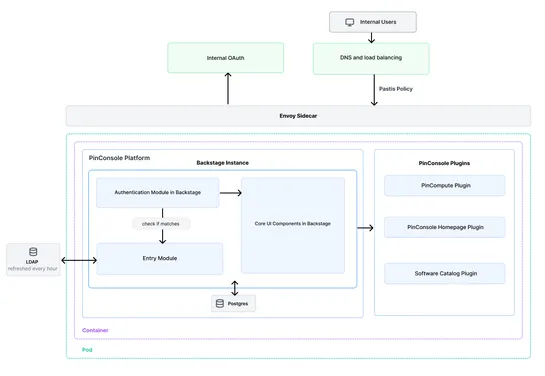
Developer Experience at Pinterest: The Journey to PinConsole

Pinterest rolled outPinConsole, a custom-built Internal Developer Platform powered byBackstage. Years of scattered tools had piled on complexity. This is their clean slate. PinConsole pulls developer workflows into one place, plugging intoPinCompute (Kubernetes),GitHub,Jira, andPagerDuty. It also b.. read more  

Developer Experience at Pinterest: The Journey to PinConsole
Story
@laura_garcia shared a post, 6 months, 1 week ago
Software Developer, RELIANOID

The Importance of Reliability in Airport Systems

✈️ In aviation, reliability isn’t optional—it’s mission-critical. From flight scheduling to baggage handling, every system must perform flawlessly to keep passengers moving. Our latest blog explores how Navitaire by Collins Aerospace is transforming airport operations and how RELIANOID helps ensure ..

The Importance of Reliability in Airport Systems A Look at Navitaire
Story
@laura_garcia shared a post, 6 months, 1 week ago
Software Developer, RELIANOID

The Importance of Reliability in Airport Systems

✈️ In aviation, reliability isn’t optional—it’s mission-critical. From flight scheduling to baggage handling, every system must perform flawlessly to keep passengers moving. Our latest blog explores how Navitaire by Collins Aerospace is transforming airport operations and how RELIANOID helps ensure ..

The Importance of Reliability in Airport Systems A Look at Navitaire
Link
@faun shared a link, 6 months, 1 week ago
FAUN.dev()

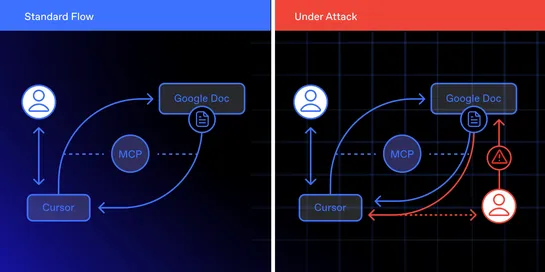
Zero-Click Remote Code Execution: Exploiting MCP & Agentic IDEs

A zero-click exploit is making the rounds—nasty stuff targeting agentic IDEs likeCursor. The trick? Slip a malicious Google Doc into the system. If MCP integration and allow-listedPython executionare on, the document gets auto-pulled, parsed, and runs code. No clicks. No prompts. Justremote code exe.. read more  

Zero-Click Remote Code Execution: Exploiting MCP & Agentic IDEs
Link
@faun shared a link, 6 months, 1 week ago
FAUN.dev()

AI Models Need a Virtual Machine

Microsoft and academic researchers want to give AI models a new kind of home: theAI Model Virtual Machine (MVM). Think of it like theJVM, but for LLMs—an interface layer that standardizes how models plug into host software. The MVM enforcessecurity,isolation, andtool-calling rules, while also unloc.. read more  

Link
@faun shared a link, 6 months, 1 week ago
FAUN.dev()

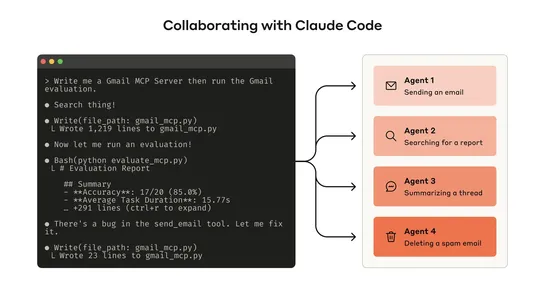
Writing effective tools for AI agents—using AI agents

Anthropic’s sharpening the blueprint for building tools that play nice withLLM agents. TheirModel Context Protocol (MCP)leans hard into three pillars: test in loops, design for humans, format like context matters—because it does. They co-develop tools with agents like Claude Code. That means protot.. read more  

Writing effective tools for AI agents—using AI agents
Link
@faun shared a link, 6 months, 1 week ago
FAUN.dev()

OpenAI announces new mentorship program for budding tech founders

OpenAI introduced a new program called "OpenAI Grove" for early tech entrepreneurs to build with AI. The program is aimed at individuals in the pre-idea to pre-seed stage and offers mentoring, access to tools and models, and in-person workshops. Grove's first cohort will run from Oct. 20 to Nov. 21,.. read more  

The Open Source Security Foundation (OpenSSF) is an industry-backed foundation focused on strengthening the security of the global open source software ecosystem. It brings together major technology companies, cloud providers, open source communities, and security experts to address systemic security challenges that affect how software is built, distributed, and consumed.

OpenSSF was launched in 2021 and operates under the Linux Foundation, combining efforts from earlier initiatives such as the Core Infrastructure Initiative (CII) and industry-led supply chain security programs. Its mission is to make open source software more trustworthy, resilient, and secure by default, without placing unrealistic burdens on maintainers.

The foundation works across several key areas:

- Supply chain security: Developing frameworks, best practices, and tools to secure the software lifecycle from source to deployment. This includes stewardship of projects like sigstore and leadership on SLSA (Supply-chain Levels for Software Artifacts).

- Security tooling: Supporting and incubating open source tools that help developers detect, prevent, and remediate vulnerabilities at scale.

- Vulnerability management: Improving how vulnerabilities are discovered, disclosed, scored, and fixed across open source projects.

- Education and best practices: Publishing guidance, training, and maturity models such as the OpenSSF Best Practices Badge Program, which helps projects assess and improve their security posture.

- Metrics and research: Advancing data-driven approaches to understanding open source security risks and ecosystem health.

OpenSSF operates through working groups and special interest groups (SIGs) that focus on specific problem areas like securing builds, improving dependency management, or automating provenance generation. This structure allows practitioners to collaborate on concrete, actionable solutions rather than high-level policy alone.

By aligning maintainers, enterprises, and security teams, OpenSSF plays a central role in reducing large-scale risks such as dependency confusion, compromised build systems, and malicious package injection. Its work underpins many modern DevSecOps and cloud-native security practices and is increasingly referenced by governments and enterprises as a baseline for secure software development.