Join us

ContentUpdates from The Open Source Security Foundation (OpenSSF) is a...
Link
@faun shared a link, 6 months, 1 week ago
FAUN.dev()

OpenAI reorganizes research team behind ChatGPT's personality

OpenAI just folded itsModel Behavior team—the crew behind AI personality design and anti-sycophant training—into thePost Training group. Behavior tuning now lives inside the same house as model refinement. Joanne Jang, who led Model Behavior, now runsOAI Labs, a fresh research unit digging intopost.. read more  
OpenAI reorganizes research team behind ChatGPT's personality
Link
@faun shared a link, 6 months, 1 week ago
FAUN.dev()

In a first, Google has released data on how much energy an AI prompt uses

Google dropped detailed stats on energy, water, and carbon use per query for its Gemini models. Median energy:0.24 Wh, with TPUs eating58%of that. They’re claiming a33× efficiency boostin the last year—credit goes to model and software tuning. System shift:A public hyperscaler posting this means th.. read more  

In a first, Google has released data on how much energy an AI prompt uses
Link
@faun shared a link, 6 months, 1 week ago
FAUN.dev()

Building Etsy Buyer Profiles with LLMs

Every day, nearly 90M buyers look for unique items out of over 100 million listings on the Etsy. The platform uses large language models to create detailed buyer profiles anonymously capturing their interests. Adjustments in data retrieval and processing have reduced the time and cost of generating .. read more  

Link
@faun shared a link, 6 months, 1 week ago
FAUN.dev()

OpenAI eats jobs, then offers to help you find a new one

OpenAI just fired a shot across LinkedIn’s bow. Its new jobs platform—part ofOpenAI Academy—aims to certify AI skills, then plug users directly into hiring pipelines. Walmart's already on board. Market signal:OpenAI’s not just training people anymore. It's moving in on talent placement, pulling the .. read more  

OpenAI eats jobs, then offers to help you find a new one
Link
@faun shared a link, 6 months, 1 week ago
FAUN.dev()

Cursor looks into selling your data for AI training

Anysphere—the team behind Cursor, the AI coding sidekick—is looking to license user behavior data to the big model labs: OpenAI, Anthropic, and the usual suspects. Why? Training costs are brutal, and this could ease the burn. Strategic Implication:Selling real developer telemetry to model competito.. read more  

Link
@faun shared a link, 6 months, 1 week ago
FAUN.dev()

Easy will always trump simple

Rich Hickey’s classic “Simple Made Easy” talk is making the rounds again—as a mirror held up to dev culture under pressure. The punchline: we keep picking solutions that areeasy but tangled, instead ofsimple and sane. The essay draws a sharp line between that habit and a concept from biology: exapt.. read more  

Link
@faun shared a link, 6 months, 1 week ago
FAUN.dev()

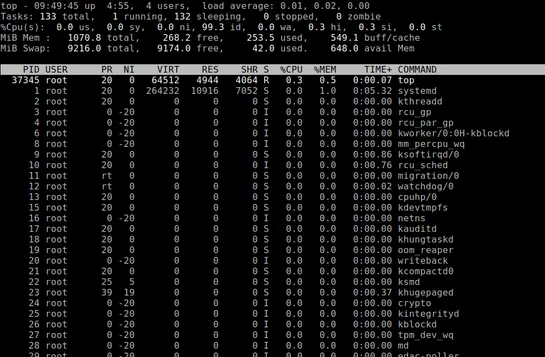
24 Best Command Line Performance Monitoring Tools for Linux

A fresh look at Linux monitoring tools shows the classics still hold—but the visual crowd’s moving in. Old-school command-liners liketopandvmstatremain go-to’s for quick reads. But picks likeNetdata,btop, andMonitbring dashboards, colors, and actual UX. Tools likeiftop,Nmon, andSuricatastretch deep.. read more  

24 Best Command Line Performance Monitoring Tools for Linux
Link
@faun shared a link, 6 months, 1 week ago
FAUN.dev()

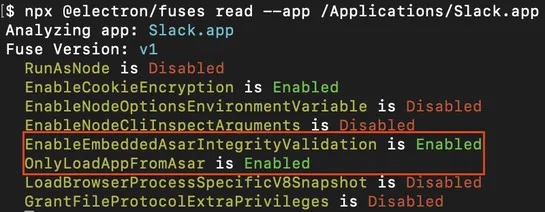
Subverting code integrity checks to locally backdoor Signal, 1Password, Slack, and more

A fresh CVE (2025-55305) just put Electron apps in the hot seat. The bug? Chromium-based apps fail to treatV8 heap snapshot filesas potential attack vectors. That crack lets unsigned JavaScript slip past code signing and run inside heavyweight targets like Slack, 1Password, and Signal. The heart of.. read more  

Subverting code integrity checks to locally backdoor Signal, 1Password, Slack, and more
Link
@faun shared a link, 6 months, 1 week ago
FAUN.dev()

The Hidden AWS Cost Traps No One Warns You About (and How I Avoid Them)

Calling outfive sneaky AWS cost traps—the kind that creep in through overlooked defaults and quiet misconfigs, then blow up your bill while no one's watching... read more  

The Hidden AWS Cost Traps No One Warns You About (and How I Avoid Them)
Link
@faun shared a link, 6 months, 1 week ago
FAUN.dev()

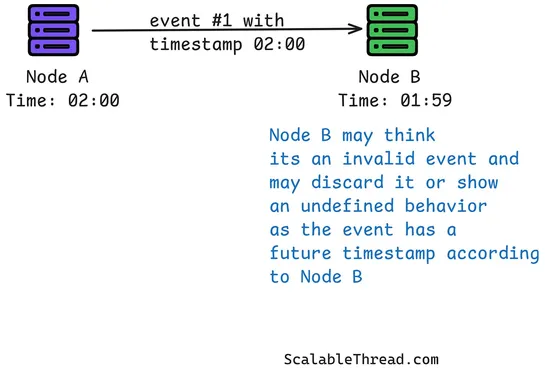
Why "What Happened First?" Is One of the Hardest Questions in Large-Scale Systems

Logical clocks trackevent orderin distributed systems—no need for synced wall clocks. Each node keeps a counter. On every event: tick it. On every message: tack on your counter. When you receive one? Merge and bump. This flips the script. Instead of chasing global time, distributed systems lean int.. read more  

Why "What Happened First?" Is One of the Hardest Questions in Large-Scale Systems
The Open Source Security Foundation (OpenSSF) is an industry-backed foundation focused on strengthening the security of the global open source software ecosystem. It brings together major technology companies, cloud providers, open source communities, and security experts to address systemic security challenges that affect how software is built, distributed, and consumed.

OpenSSF was launched in 2021 and operates under the Linux Foundation, combining efforts from earlier initiatives such as the Core Infrastructure Initiative (CII) and industry-led supply chain security programs. Its mission is to make open source software more trustworthy, resilient, and secure by default, without placing unrealistic burdens on maintainers.

The foundation works across several key areas:

- Supply chain security: Developing frameworks, best practices, and tools to secure the software lifecycle from source to deployment. This includes stewardship of projects like sigstore and leadership on SLSA (Supply-chain Levels for Software Artifacts).

- Security tooling: Supporting and incubating open source tools that help developers detect, prevent, and remediate vulnerabilities at scale.

- Vulnerability management: Improving how vulnerabilities are discovered, disclosed, scored, and fixed across open source projects.

- Education and best practices: Publishing guidance, training, and maturity models such as the OpenSSF Best Practices Badge Program, which helps projects assess and improve their security posture.

- Metrics and research: Advancing data-driven approaches to understanding open source security risks and ecosystem health.

OpenSSF operates through working groups and special interest groups (SIGs) that focus on specific problem areas like securing builds, improving dependency management, or automating provenance generation. This structure allows practitioners to collaborate on concrete, actionable solutions rather than high-level policy alone.

By aligning maintainers, enterprises, and security teams, OpenSSF plays a central role in reducing large-scale risks such as dependency confusion, compromised build systems, and malicious package injection. Its work underpins many modern DevSecOps and cloud-native security practices and is increasingly referenced by governments and enterprises as a baseline for secure software development.