Join us

ContentUpdates from The Open Source Security Foundation (OpenSSF) is a...
Link
@faun shared a link, 6 months ago
FAUN.dev()

v1.34: DRA Consumable Capacity

Kubernetes 1.34 rolls in **consumable capacity** for Dynamic Resource Allocation (DRA). That means device plugins can now carve up resources—GPU memory, NIC bandwidth, etc.—into precise slices for Pods, ResourceClaims, and namespaces. The scheduler tracks it all, so nothing spills over... read more  

Link
@faun shared a link, 6 months ago
FAUN.dev()

v1.34: Pods Report DRA Resource Health

Kubernetes v1.34 lands with an alpha upgrade to **[KEP-4680](https://github.com/kubernetes/enhancements/tree/master/keps/sig-node/4680-add-resource-health-to-pod-status)**, pushing **Dynamic Resource Allocation (DRA)** into smarter territory: health-aware Pods. DRA drivers can now stream device heal.. read more  

Story
@laura_garcia shared a post, 6 months, 1 week ago
Software Developer, RELIANOID

Secure Boot Advanced Targeting (SBAT): Scaling Boot Security 🔐

Discover how SBAT enhances Secure Boot by introducing a smarter way to handle vulnerabilities, reducing overhead, and ensuring your system's boot process stays secure. Learn how it works, how it addresses scalability, and why it's a game-changer for modern boot security across Linux and Windows envi..

KB-Secure Boot Advanced Targeting
Story
@laura_garcia shared a post, 6 months, 1 week ago
Software Developer, RELIANOID

Cyber Security & Cloud Expo Europe in Amsterdam

🔐 On 24–25 September 2025, RELIANOID will be at Cyber Security & Cloud Expo Europe in Amsterdam! Join us to explore how we enable secure, scalable, and Zero Trust–ready application delivery. 👉 https://www.relianoid.com/about-us/events/cyber-security-cloud-expo-2025/ #CyberSecurity#Cloud#ZeroTrust#De..

cybersecurity and cloud expo amsterdam event
Story
@laura_garcia shared a post, 6 months, 1 week ago
Software Developer, RELIANOID

Cyber Security & Cloud Expo Europe in Amsterdam

🔐 On 24–25 September 2025, RELIANOID will be at Cyber Security & Cloud Expo Europe in Amsterdam! Join us to explore how we enable secure, scalable, and Zero Trust–ready application delivery. 👉 https://www.relianoid.com/about-us/events/cyber-security-cloud-expo-2025/ #CyberSecurity#Cloud#ZeroTrust#De..

cybersecurity and cloud expo amsterdam event
Story
@laura_garcia shared a post, 6 months, 1 week ago
Software Developer, RELIANOID

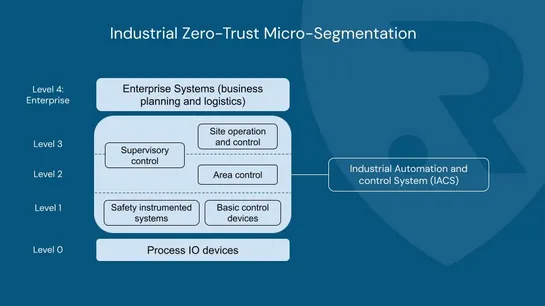
🔐 Industrial networks face increasing complexity and evolving cyber threats.

To strengthen defenses, many organizations are moving beyond traditional segmentation and adopting microsegmentation — a strategy that creates independent, secure zones to better protect critical assets. We’ve prepared a clear diagram to illustrate how defense-in-depth and microsegmentation can be a..

Industrial Zero-Trust Micro-Segmentation
Link
@anjali shared a link, 6 months, 1 week ago
Customer Marketing Manager, Last9

What is Asynchronous Job Monitoring?

Know how asynchronous job monitoring tracks background tasks, ensuring they finish reliably, perform well, and stay visible at scale.

async_job_monitoring
Story
@laura_garcia shared a post, 6 months, 1 week ago
Software Developer, RELIANOID

🚀 We’re heading to TechEx Europe 2025 in Amsterdam on 24–25 September!

Join us at Europe’s premier enterprise technology event to explore the future of AI, cybersecurity, IoT, cloud, and digital transformation—and discover how RELIANOID ensures secure, scalable, and high-performance application delivery for modern enterprises. #TechExEurope#DigitalTransformation#Enterp..

techex amsterdam event
Link
@anjali shared a link, 6 months, 1 week ago
Customer Marketing Manager, Last9

Kubernetes Service Discovery Explained with Practical Examples

Understand Kubernetes Service Discovery with clear examples of Services, Endpoints, DNS, Ingress, and headless setups in action.

kubernetes
Link
@faun shared a link, 6 months, 1 week ago
FAUN.dev()

Esoteric Languages Challenge Coders to Think Way Outside the Box

Daniel Temkin has written a book about44 esoteric programming languages, including Valence, which uses ancient Greek measuring symbols. Temkin emphasizes the significance of esoteric languages in promoting creativity and investigating the complicated nature of modern programming. These languages hav.. read more  

The Open Source Security Foundation (OpenSSF) is an industry-backed foundation focused on strengthening the security of the global open source software ecosystem. It brings together major technology companies, cloud providers, open source communities, and security experts to address systemic security challenges that affect how software is built, distributed, and consumed.

OpenSSF was launched in 2021 and operates under the Linux Foundation, combining efforts from earlier initiatives such as the Core Infrastructure Initiative (CII) and industry-led supply chain security programs. Its mission is to make open source software more trustworthy, resilient, and secure by default, without placing unrealistic burdens on maintainers.

The foundation works across several key areas:

- Supply chain security: Developing frameworks, best practices, and tools to secure the software lifecycle from source to deployment. This includes stewardship of projects like sigstore and leadership on SLSA (Supply-chain Levels for Software Artifacts).

- Security tooling: Supporting and incubating open source tools that help developers detect, prevent, and remediate vulnerabilities at scale.

- Vulnerability management: Improving how vulnerabilities are discovered, disclosed, scored, and fixed across open source projects.

- Education and best practices: Publishing guidance, training, and maturity models such as the OpenSSF Best Practices Badge Program, which helps projects assess and improve their security posture.

- Metrics and research: Advancing data-driven approaches to understanding open source security risks and ecosystem health.

OpenSSF operates through working groups and special interest groups (SIGs) that focus on specific problem areas like securing builds, improving dependency management, or automating provenance generation. This structure allows practitioners to collaborate on concrete, actionable solutions rather than high-level policy alone.

By aligning maintainers, enterprises, and security teams, OpenSSF plays a central role in reducing large-scale risks such as dependency confusion, compromised build systems, and malicious package injection. Its work underpins many modern DevSecOps and cloud-native security practices and is increasingly referenced by governments and enterprises as a baseline for secure software development.