Join us

ContentUpdates and recent posts about NanoClaw..
Link
@faun shared a link, 2 years ago
FAUN.dev()

Aeon: openSUSE for lazy developers

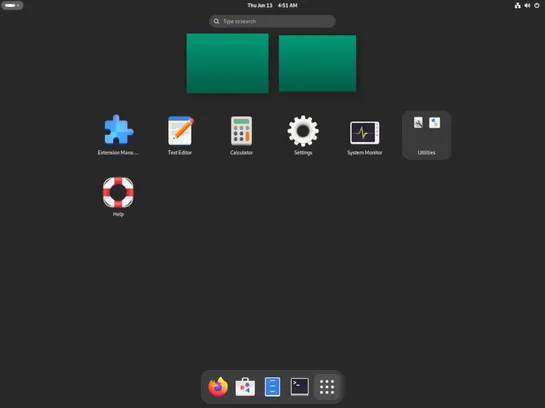
The openSUSE project announced the second release candidate (RC2) of Aeon Desktop, which aims to provide automated system updates using snapshots. Aeon uses transactional-update with Btrfs subvolumes to create and update system snapshots. The installation process involves the Transactional Installat.. read more  
Aeon: openSUSE for lazy developers
Link
@faun shared a link, 2 years ago
FAUN.dev()

As CentOS OS 7 nears end-of-life, what are the alternatives?

Thousands of servers running CentOS 7 will lose support from Red Hat in June 2024. Alternatives include SUSE, Oracle, and Ctrl IQ, offering RHEL-compatible systems. OpenELA provides RHEL source code, and organizations like Rocky Linux and AlmaLinux present viable migration paths... read more  

As CentOS OS 7 nears end-of-life, what are the alternatives?
Link
@faun shared a link, 2 years ago
FAUN.dev()

Helm + Kustomize + Raw Manifests Combination

Combining Helm, Helmfile, Kustomize, and raw manifests can streamline Kubernetes manifest management, offering flexibility and control over deployment workflows. This integration allows for customization of manifests with Helm packages and fine-grained configuration using Kustomize, while also inclu.. read more  

Helm + Kustomize + Raw Manifests Combination
Link
@faun shared a link, 2 years ago
FAUN.dev()

Shipping Is a State of Mind

Many teams continue using legacy release processes, which causes long deployment delays, conflict risks, and larger, riskier deployments. Efficient teams use continuous integration and deployment, leveraging automated testing, preview systems, and feature flags. This approach minimizes delays, reduc.. read more  

Shipping Is a State of Mind
Link
@faun shared a link, 2 years ago
FAUN.dev()

The false dilemma of quality versus speed

Software developers claim there's a speed-quality trade-off because adding features is faster and easier in good code compared to bad code. Cutting corners and skipping practices like refactoring and testing leads to complex code that becomes risky and expensive to change over time. It's a myth that.. read more  

The false dilemma of quality versus speed
Link
@faun shared a link, 2 years ago
FAUN.dev()

What Every Network Admin Should Know About IPv6

IPv6 is pre-enabled on many network devices, posing security risks if ignored. IPv6 was designed to replace IPv4 and address issues like NAT limitations and address exhaustion. It uses a different addressing system with 128-bit hexadecimal addresses and supports stateless autoconfiguration. IPv6 als.. read more  

What Every Network Admin Should Know About IPv6
Link
@faun shared a link, 2 years ago
FAUN.dev()

Leading Observability Interview Questions

The post covers a wide range of topics related to observability, including metrics, logs, traces, and their importance in monitoring system health. It also delves into advanced concepts such as counters and gauges in metrics, log correlation, and distributed tracing challenges in a microservices env.. read more  

Link
@faun shared a link, 2 years ago
FAUN.dev()

Podman Desktop 1.11 Release

Podman Desktop 1.11 introduces an experimental light mode, Rosetta support for Apple Silicon, and improved Kubernetes node and volume listings. The UI has been updated, and multi-arch images are now grouped under manifests. Additional features include advanced preference settings, enhanced extension.. read more  

Podman Desktop 1.11 Release
Link
@faun shared a link, 2 years ago
FAUN.dev()

Why an Engineering Manager Should Not Review Code

In team organization, Engineering Managers (EMs) and Technical Leads (TLs) have distinct roles. With team sizes larger than four, EMs should focus on managing communications, career growth, and planning, while TLs concentrate on architecture and technical direction. Mixing these roles can lead to in.. read more  

Why an Engineering Manager Should Not Review Code
Link
@faun shared a link, 2 years ago
FAUN.dev()

Cracking the SRE Interview

Different companies use varying titles for Site Reliability Engineer roles, such as Site Reliability Engineering (Google), Service Engineering (Microsoft), Systems Development Engineer (Amazon), and Production Engineering (Meta). Key skills required include coding for automation (Python preferred), .. read more  

Cracking the SRE Interview
NanoClaw is an open-source personal AI agent designed to run locally on your machine while remaining small enough to fully understand and audit. Built as a lightweight alternative to larger agent frameworks, the system runs as a single Node.js process with roughly 3,900 lines of code spread across about 15 source files.

The agent integrates with messaging platforms such as WhatsApp and Telegram, allowing users to interact with their AI assistant directly through familiar chat applications. Each conversation group operates independently and maintains its own memory and execution environment.

A core design principle of NanoClaw is security through isolation. Every agent session runs inside its own container using Docker or Apple Container, ensuring that the agent can only access files and resources that are explicitly mounted. This approach relies on operating system–level sandboxing rather than application-level permission checks.

The architecture is intentionally simple: a single orchestrator process manages message queues, schedules tasks, launches containerized agents, and stores state in SQLite. Additional functionality can be added through a modular skills system, allowing users to extend capabilities without increasing the complexity of the core codebase.

By combining a minimal architecture with container-based isolation and messaging integration, NanoClaw aims to provide a transparent, customizable personal AI agent that users can run and control entirely on their own infrastructure.