Join us

ContentUpdates and recent posts about GPT-5.4..
Quiz Advanced
@eon01 published a quiz, 1 day, 11 hours ago
Founder, FAUN.dev

Kubernetes Deep Dive: QoS, Eviction, HPA, Probes, and Sidecars

An advanced 10-question quiz on Kubernetes internals and runtime behavior, aimed at practitioners who run clusters in production. It targets the subtle traps: QoS assignment rules, OOM-kill vs eviction, whether node-pressure eviction honors PodDisruptionBudgets, the exact HPA scaling formula and …

Take quiz
Kubernetes Deep Dive: QoS, Eviction, HPA, Probes, and Sidecars
Quiz Average
@eon01 published a quiz, 1 day, 11 hours ago
Founder, FAUN.dev

Git Fundamentals: Commits, Branches, Merge, and Rebase

A 10-question quiz on how Git actually works under the hood, escalating from easy to hard. It covers what a commit really stores, branches as pointers, fast-forward vs merge commits, what rebase does to your history, the golden rule of …

Take quiz
Git Fundamentals: Commits, Branches, Merge, and Rebase
Quiz Average
@eon01 published a quiz, 1 day, 11 hours ago
Founder, FAUN.dev

SRE Fundamentals: SLOs, Error Budgets, and Reliability Practice

A 10-question quiz on core Site Reliability Engineering concepts, escalating from easy to hard. It covers the SLI/SLO/SLA distinction, error budgets, the four golden signals, toil, blameless postmortems, and availability math (the "nines").

Take quiz
SRE Fundamentals: SLOs, Error Budgets, and Reliability Practice
Quiz Average
@eon01 published a quiz, 1 day, 11 hours ago
Founder, FAUN.dev

Neural Network Fundamentals: From Activations to Gradients

A 10-question quiz on the core mechanics of neural networks, escalating from easy to hard. You will cover activation functions (ReLU, sigmoid, softmax), backpropagation, dropout, the vanishing gradient problem, and training vocabulary like epochs and iterations. Aimed at learners with …

Take quiz
Neural Network Fundamentals: From Activations to Gradients
 Activity
Link
@kala shared a link, 1 day, 12 hours ago
FAUN.dev()

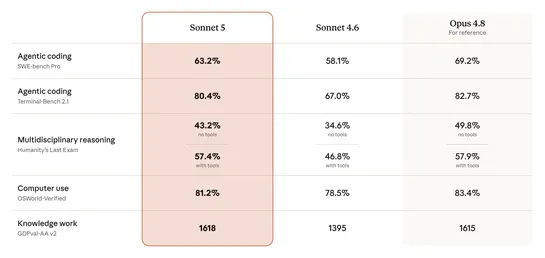
Introducing Claude Sonnet 5

Anthropic launched Claude Sonnet 5, its most agentic Sonnet model, and set it as the default for Free and Pro users... read more  

Introducing Claude Sonnet 5
Link
@varbear shared a link, 1 day, 22 hours ago
FAUN.dev()

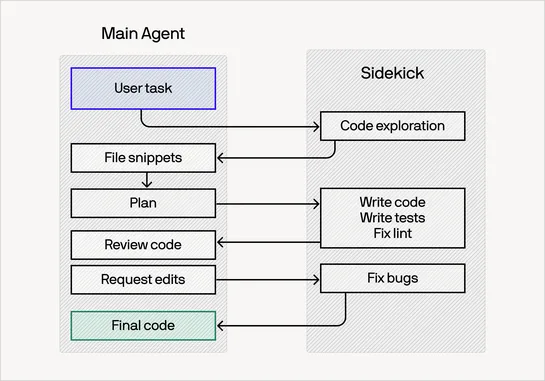
Devin Fusion

Devin Fusion maintains frontier performance at a 35% lower cost on the new FrontierCode benchmark, thanks to its innovative multi-model routing approach. By using both a frontier model and a cost-effective "sidekick" model, Devin Fusion optimizes performance and cost efficiency. The sidekick pattern.. read more  

Devin Fusion
Link
@varbear shared a link, 1 day, 22 hours ago
FAUN.dev()

Introducing Session Switcher. Swap Burp Sessions with One Click!

Doyensec released Session Switcher, a Burp Suite extension. You can save HTTP sessions under names, then swap cookies and headers inside the request editor... read more  

Introducing Session Switcher. Swap Burp Sessions with One Click!
Link
@varbear shared a link, 1 day, 22 hours ago
FAUN.dev()

Jobs and Software is Fu*ked

The writer, a software engineer with 10 years of experience, expresses frustration with the current job market, citing difficulties in navigating filters like Coderpad, hackerrank, and AI proctored exams. They feel disadvantaged by these filters and feel like companies are making it more difficult t.. read more  

Jobs and Software is Fu*ked
Link
@varbear shared a link, 1 day, 22 hours ago
FAUN.dev()

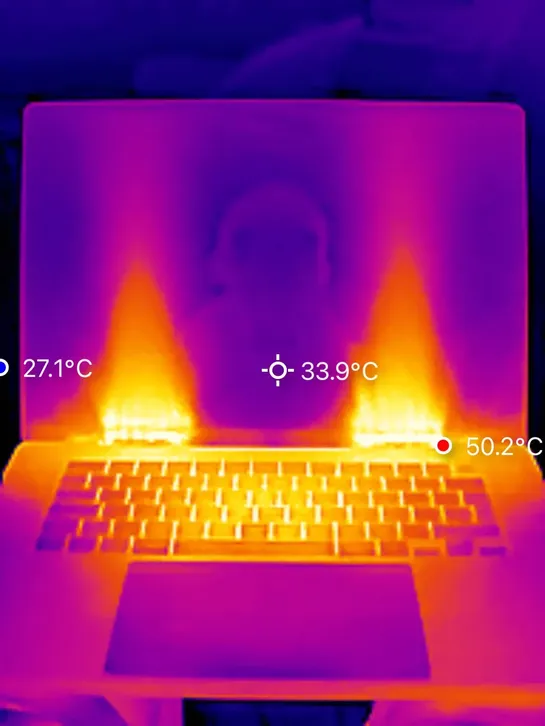
Qwen 3.6 27B is the sweet spot for local development

Qwen 3.6 is a local model that stands out as a general intelligence, offered in two variants: Qwen 3.6 35B A3B and Qwen 3.6 27B. Qwen 3.6 27B has been praised for punching above its weight, making it worth the heat it generates. Running Qwen 3.6 locally with llama.cpp is easier than ever, allowing f.. read more  

Qwen 3.6 27B is the sweet spot for local development
GPT-5.4 is OpenAI’s latest frontier AI model designed to perform complex professional and technical work more reliably. It combines advances in reasoning, coding, tool use, and long-context understanding into a single system capable of handling multi-step workflows across software environments. The model builds on earlier GPT-5 releases while integrating the strong coding capabilities previously introduced with GPT-5.3-Codex.

One of the defining features of GPT-5.4 is its ability to operate as part of agent-style workflows. The model can interact with tools, APIs, and external systems to complete tasks that extend beyond simple text generation. It also introduces native computer-use capabilities, allowing AI agents to operate applications using keyboard and mouse commands, screenshots, and browser automation frameworks such as Playwright.

GPT-5.4 supports context windows of up to one million tokens, enabling it to process and reason over very large documents, long conversations, or complex project contexts. This makes it suitable for tasks such as analyzing codebases, generating technical documentation, working with large spreadsheets, or coordinating long-running workflows. The model also introduces a feature called tool search, which allows it to dynamically retrieve tool definitions only when needed. This reduces token usage and makes it more efficient to work with large ecosystems of tools, including environments with dozens of APIs or MCP servers.

In addition to improved reasoning and automation capabilities, GPT-5.4 focuses on real-world productivity tasks. It performs better at generating and editing spreadsheets, presentations, and documents, and it is designed to maintain stronger context across longer reasoning processes. The model also improves factual accuracy and reduces hallucinations compared with previous versions.

GPT-5.4 is available across OpenAI’s ecosystem, including ChatGPT, the OpenAI API, and Codex. A higher-performance variant, GPT-5.4 Pro, is also available for users and developers who require maximum performance for complex tasks such as advanced research, large-scale automation, and demanding engineering workflows. Together, these capabilities position GPT-5.4 as a model aimed not just at conversation, but at executing real work across software systems.