Join us

ContentUpdates and recent posts about GPT-5.4..
Link
@varbear shared a link, 2 days, 1 hour ago
FAUN.dev()

Samsung, SK hynix, Micron Sued in US Over Memory Price Fixing

Samsung Electronics, SK hynix, and Micron face a lawsuit in the US over alleged memory price fixing. Plaintiffs claim the companies colluded on supply and pricing for DRAM, leading to price increases of about 700% in the past four years. The lawsuit, filed by individual consumers and small businesse.. read more  

Link
@varbear shared a link, 2 days, 1 hour ago
FAUN.dev()

Why Drawing Tablet Brands Won't Collaborate on Linux FLOSS Drivers

The process of creating Linux drivers for drawing tablets can be challenging due to branding issues in the open-source infrastructure. Collaboration from tablet brands is essential for improving support, as demonstrated in recent interactions with Gaomon... read more  

Why Drawing Tablet Brands Won't Collaborate on Linux FLOSS Drivers
Link
@kaptain shared a link, 2 days, 1 hour ago
FAUN.dev()

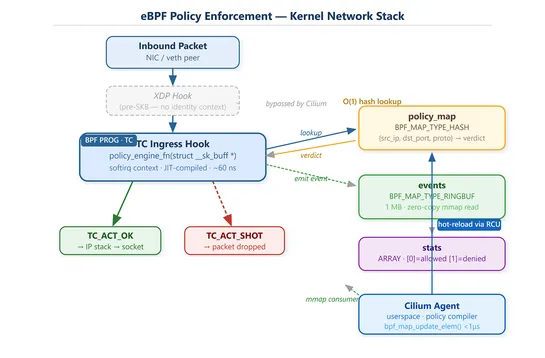
Building an Event-Driven Network Policy Engine with eBPF and Cilium

Running iptables -L on a node in a 500-node cluster can cause the terminal to freeze due to kube-proxy writing 40,000–60,000 rules across various chains. Conntrack tracks each flow with a global spinlock, becoming a bottleneck past 80,000 connections per second. Cilium replaces this path entirely by.. read more  

Building an Event-Driven Network Policy Engine with eBPF and Cilium
Link
@kaptain shared a link, 2 days, 1 hour ago
FAUN.dev()

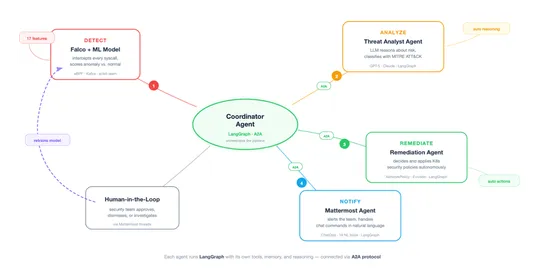
Why cloud native belongs at the heart of agentic AI: Lessons from building a multi-agent security platform on Kubernetes

In March, Willem Berroubache gave a talk at KubeCon + CloudNativeCon Europe 2026 in Amsterdam, addressing questions about building agentic AI on cloud native foundations. The internal security-operations platform at Orange Innovation utilizes A2A protocol for inter-agent coordination, MCP for enviro.. read more  

Why cloud native belongs at the heart of agentic AI: Lessons from building a multi-agent security platform on Kubernetes
Link
@kaptain shared a link, 2 days, 1 hour ago
FAUN.dev()

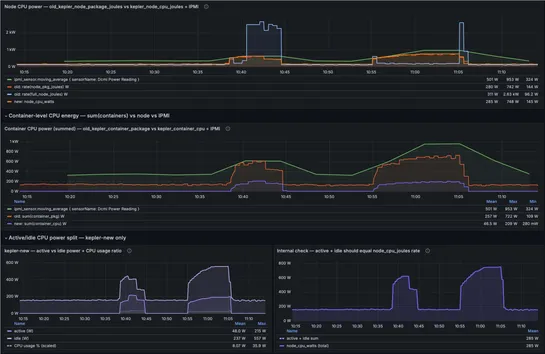
Kepler, re-architected: Improved power accuracy and a community call to action!

Kepler maintainers rewrote Kepler to remove eBPF. They replaced privileged kernel tracing with read-only Linux process data to attribute energy use to Kubernetes workloads... read more  

Kepler, re-architected: Improved power accuracy and a community call to action!
Link
@kaptain shared a link, 2 days, 1 hour ago
FAUN.dev()

Open source maintainership in the age of AI

Kubernetes maintainers accept AI-assisted contributions when contributors disclose AI use, understand the code, and own the change. Maintainers test AI review tools to help them sort issues and pull requests... read more  

Link
@kaptain shared a link, 2 days, 1 hour ago
FAUN.dev()

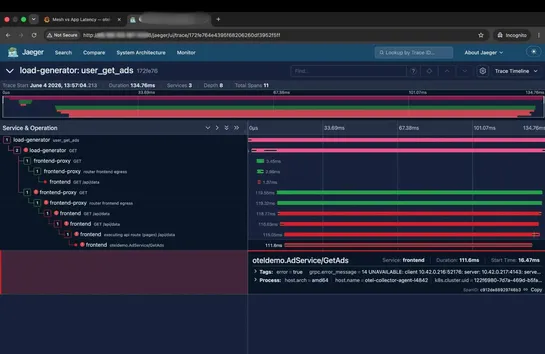
OTel and mesh-derived metrics: A 2026 reference

A blog post by Mesut Oezdil, a DevOps Engineer from Buoyant, discusses how Linkerd's proxy provides network layer metrics with zero changes to application code. The post showcases the overlap and differences between mesh-derived metrics and OpenTelemetry metrics, along with the integration pattern t.. read more  

OTel and mesh-derived metrics: A 2026 reference
Link
@kaptain shared a link, 2 days, 1 hour ago
FAUN.dev()

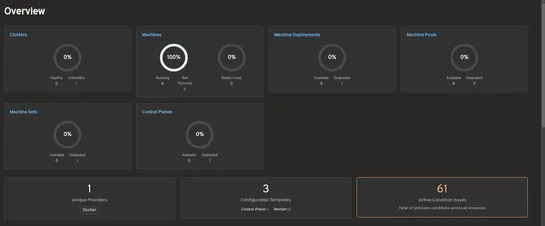
Introducing the Cluster API plugin for Headlamp

Headlamp is an open-source, extensible Kubernetes SIG UI project designed to let you explore, manage, and debug cluster resources directly from a browser. Cluster API (CAPI) is a Kubernetes sub-project that brings declarative, Kubernetes-style APIs to cluster lifecycle management. It lets platform t.. read more  

Introducing the Cluster API plugin for Headlamp
Link
@kala shared a link, 2 days, 1 hour ago
FAUN.dev()

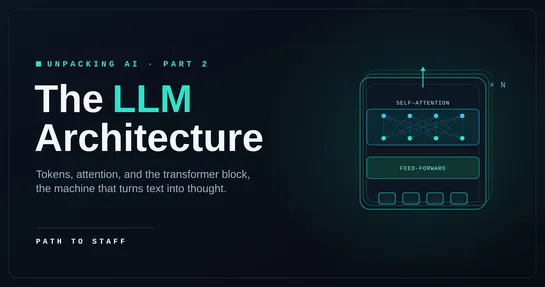
Everything a Senior Engineer Needs to Know About What's Inside an LLM

The shift from RNNs totransformerssolved sequential bottlenecks and long-range decay issues withself-attention. Transformers use encoding, decoding, and tokenization to process sequences efficiently and accurately. This evolution led to models like GPT, which excel at tasks with minimal fine-tuning .. read more  

Everything a Senior Engineer Needs to Know About What's Inside an LLM
Link
@kala shared a link, 2 days, 1 hour ago
FAUN.dev()

GLM-5.2 vs Claude Opus

After a head-to-head coding test, you can use GLM-5.2 as a low-cost open-weights coding model and choose Opus when you need stronger correctness, faster responses, or visual self-checking... read more  

GLM-5.2 vs Claude Opus
GPT-5.4 is OpenAI’s latest frontier AI model designed to perform complex professional and technical work more reliably. It combines advances in reasoning, coding, tool use, and long-context understanding into a single system capable of handling multi-step workflows across software environments. The model builds on earlier GPT-5 releases while integrating the strong coding capabilities previously introduced with GPT-5.3-Codex.

One of the defining features of GPT-5.4 is its ability to operate as part of agent-style workflows. The model can interact with tools, APIs, and external systems to complete tasks that extend beyond simple text generation. It also introduces native computer-use capabilities, allowing AI agents to operate applications using keyboard and mouse commands, screenshots, and browser automation frameworks such as Playwright.

GPT-5.4 supports context windows of up to one million tokens, enabling it to process and reason over very large documents, long conversations, or complex project contexts. This makes it suitable for tasks such as analyzing codebases, generating technical documentation, working with large spreadsheets, or coordinating long-running workflows. The model also introduces a feature called tool search, which allows it to dynamically retrieve tool definitions only when needed. This reduces token usage and makes it more efficient to work with large ecosystems of tools, including environments with dozens of APIs or MCP servers.

In addition to improved reasoning and automation capabilities, GPT-5.4 focuses on real-world productivity tasks. It performs better at generating and editing spreadsheets, presentations, and documents, and it is designed to maintain stronger context across longer reasoning processes. The model also improves factual accuracy and reduces hallucinations compared with previous versions.

GPT-5.4 is available across OpenAI’s ecosystem, including ChatGPT, the OpenAI API, and Codex. A higher-performance variant, GPT-5.4 Pro, is also available for users and developers who require maximum performance for complex tasks such as advanced research, large-scale automation, and demanding engineering workflows. Together, these capabilities position GPT-5.4 as a model aimed not just at conversation, but at executing real work across software systems.