Join us

ContentUpdates and recent posts about GPT-5.3-Codex..
Link
@kaptain shared a link, 1 week, 1 day ago
FAUN.dev()

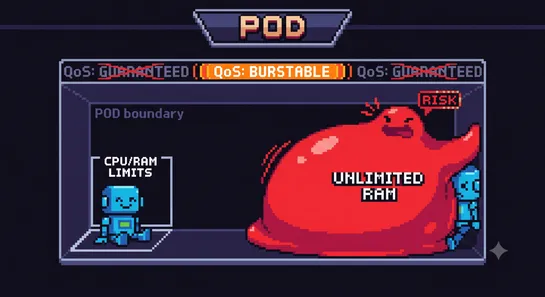
Kubernetes QoS vs. Linux Cgroups: The Mixed-Resource Pod Risk

Designing Kubernetes manifests with mixed configurations can lead to unpredictability in how resources are managed between containers. This is due to the different ways Kubernetes and Linux handle requests, limits, and OOM situations. To avoid operational risks and ensure stability, it is crucial to.. read more  
Kubernetes QoS vs. Linux Cgroups: The Mixed-Resource Pod Risk
Link
@kaptain shared a link, 1 week, 1 day ago
FAUN.dev()

What job interviews taught me about Kubernetes

The recent shift towards Kubernetes adoption can be attributed to the benefits of uniform deployment, standardized knowledge, and traceability it offers. With managed K8s services maturing and Helm simplifying deployment, more companies are choosing Kubernetes regardless of their technical needs. Th.. read more  

Link
@kaptain shared a link, 1 week, 1 day ago
FAUN.dev()

The feedback loops behind Kubernetes

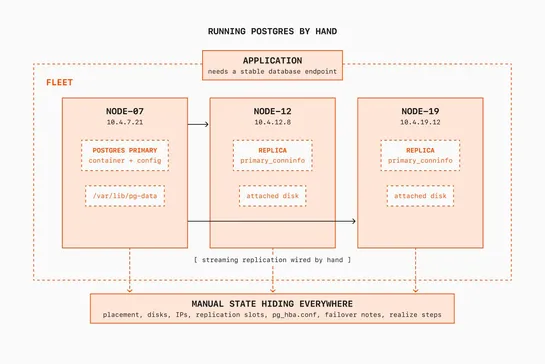
Kubernetes operatoris a closed feedback loop that ensures desired state for running workloads, similar to a thermostat's control. Operators automate manual tasks in managing databases like Postgres, improving efficiency by comparing and converging states. The same loop structure in a Bash script can.. read more  

The feedback loops behind Kubernetes
Link
@kala shared a link, 1 week, 1 day ago
FAUN.dev()

Don't let the LLM speak, just probe it

When an LLM reads "here's some text, here's a criterion - does it satisfy it?", the answer often already exists in its hidden state before it generates a single token. So skip generation entirely: grab the hidden state at the last prompt token (~70% of the way up the model's layers), feed it to a ti.. read more  

Link
@kala shared a link, 1 week, 1 day ago
FAUN.dev()

How LLMs Actually Work

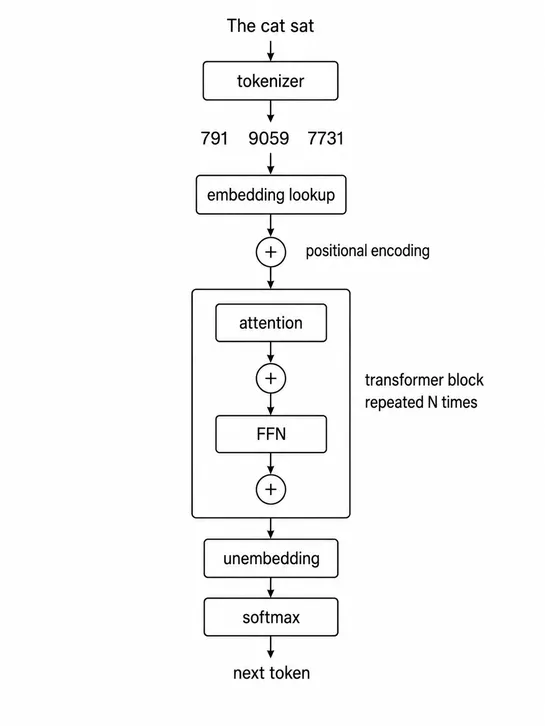
This post covers the core mechanisms inside modern transformer-based LLMs, including tokens, embeddings, positional encoding, attention, multi-head attention, and more. Tokenization converts text into integer IDs, embeddings give tokens meaning through vectors, and positional encoding helps the mode.. read more  

How LLMs Actually Work
Link
@kala shared a link, 1 week, 1 day ago
FAUN.dev()

Build real agentic apps using CUGA: two dozen working examples on a lightweight harness

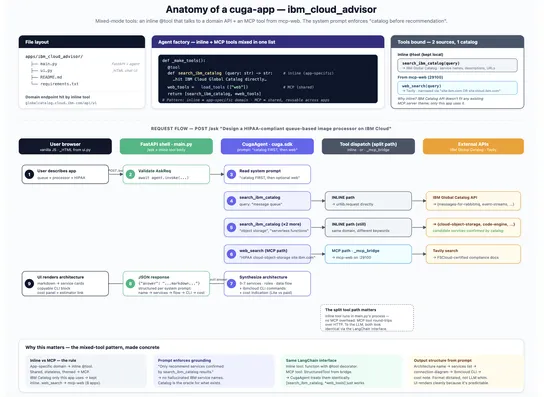
CUGA*, the Agent Harness for the Enterprise from IBM, streamlines agent building by handling planning, execution loop, tool calls, and state plumbing. Using it, you focus on defining tools and prompts while the rest is taken care of, leading to efficient agent development without needing to learn a .. read more  

Build real agentic apps using CUGA: two dozen working examples on a lightweight harness
Link
@kala shared a link, 1 week, 1 day ago
FAUN.dev()

Introducing Claude Tag

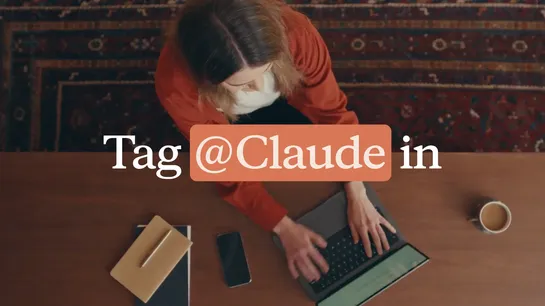
Anthropic's Claude Tag beta gives Slack teams a shared agent they can tag in a channel, assign tasks to, and connect to approved tools. Teams gain three practical benefits: - Claude can keep channel context, so teammates avoid re-explaining project history. - Admins can scope memory and tool access .. read more  

Introducing Claude Tag
Link
@kala shared a link, 1 week, 1 day ago
FAUN.dev()

OpenClaw’s Skill Marketplace and the Emerging AI Supply Chain Threat

Unit 42 researchers found five malicious ClawHub skills that attackers had designed to pass the marketplace's post-incident automated checks... read more  

OpenClaw’s Skill Marketplace and the Emerging AI Supply Chain Threat
Link
@kala shared a link, 1 week, 1 day ago
FAUN.dev()

7,000 Langflow servers are under attack. LangGraph and LangChain have the same holes

Three popular AI agent frameworks had major vulnerabilities, from SQL injection to path traversal, allowing attackers to gain full remote code execution and access sensitive data. Exploits were publicly disclosed, and patches have been released for each framework... read more  

Link
@devopslinks shared a link, 1 week, 1 day ago
FAUN.dev()

I Finally Tried Niri, The New Way Of Tiling Linux Users Are Going Crazy About

Niri lets you keep tiled windows in a scrollable strip, so you can add, move, and focus windows without rebuilding your layout. With Dank Linux, you get that workflow as a complete desktop, with polished defaults and the pieces you expect already wired up... read more  

I Finally Tried Niri, The New Way Of Tiling Linux Users Are Going Crazy About
GPT-5.3-Codex is OpenAI’s advanced agentic coding model, designed to go beyond writing code and operate as a general-purpose collaborator on a computer. It builds on GPT-5.2-Codex by combining stronger coding performance with improved reasoning and professional knowledge, while running about 25% faster. The model is optimized for long-running tasks that involve research, tool use, and complex execution, and it performs at the top of industry benchmarks such as SWE-Bench Pro and Terminal-Bench.

Unlike earlier Codex models that focused primarily on code generation and review, GPT-5.3-Codex can reason, plan, and act across the full software lifecycle. It supports activities such as debugging, deploying, monitoring, writing product requirement documents, creating tests, and analyzing metrics. It can also autonomously build and iterate on complex applications and better interpret underspecified prompts, producing more complete and production-ready results by default.

A defining feature of GPT-5.3-Codex is its interactive, agentic workflow. Users can steer the model while it is working, receive progress updates, and adjust direction without losing context, making it feel more like a teammate than a batch automation tool. The model was even used internally to help debug its own training and deployment processes. GPT-5.3-Codex is available through paid ChatGPT plans in the Codex app, CLI, IDE extension, and web, with API access planned for the future.