Join us

ContentUpdates and recent posts about GPT-5.3-Codex..
Link
@devopslinks shared a link, 1 week, 1 day ago
FAUN.dev()

Why your microVM sandbox solves a particular problem very well, but not the agent security problem.

Use MicroVMs to contain host-escape risk from coding agents. You still need capability controls: grant the agent access to specific files, scoped credentials, approved services, and permitted mutations after you place repos and credentials inside the VM... read more  

Link
@devopslinks shared a link, 1 week, 1 day ago
FAUN.dev()

IaC Isn't Dying. AI Makes it More Important

Teams that use AI to generate infrastructure code need IaC as the system of record that platform teams govern. Engineers can produce changes faster, so platform teams must absorb more work through review, policy, testing, integration, and rollout... read more  

IaC Isn't Dying. AI Makes it More Important
Link
@devopslinks shared a link, 1 week, 1 day ago
FAUN.dev()

Nginx as a Reverse Proxy

How Nginx works as a reverse proxy, from its worker architecture to rate limiting, HTTP/2, security headers, and tuning workers to match the server... read more  

Nginx as a Reverse Proxy
Link
@devopslinks shared a link, 1 week, 1 day ago
FAUN.dev()

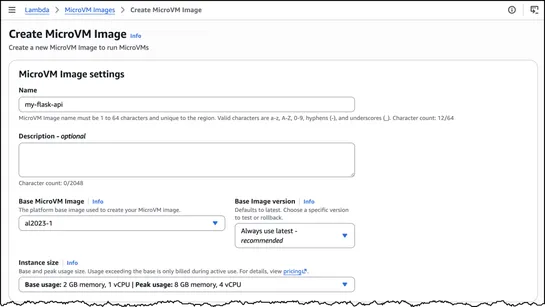
Run isolated sandboxes with full lifecycle control: AWS Lambda introduces MicroVMs

AWS gave developers a Lambda option for running user- or AI-generated code inside stateful Firecracker microVMs. The key use case: AI coding agents can execute untrusted snippets, install dependencies, keep a workspace warm, and destroy the environment after the task ends. Firecracker gives each tas.. read more  

Run isolated sandboxes with full lifecycle control: AWS Lambda introduces MicroVMs
Link
@devopslinks shared a link, 1 week, 1 day ago
FAUN.dev()

In praise of memcached

Choose memcached as the default cache because it keeps the cache boundary clear. It offers no persistence, so your app must rebuild cached values from the source of truth after a restart or eviction. It also pushes failure handling into client code, so engineers must decide how the app behaves durin.. read more  

Story
@laura_garcia shared a post, 1 week, 1 day ago
Software Developer, RELIANOID

Zero Trust in Hybrid Environments

🔐 Zero Trust isn’t just about identity — it’s about where identity is enforced. In hybrid and multi-cloud environments, security breaks when identity stops at login and doesn’t control traffic flow. Our latest article explores why the application delivery layer is becoming the new Zero Trust enfor..

Story
@laura_garcia shared a post, 1 week, 2 days ago
Software Developer, RELIANOID

How to Load Balance Navitaire

✈️ Airline platforms can't afford downtime. Discover how RELIANOID helps improve the availability, performance, and security of Navitaire environments with load balancing, high availability, SSL offloading, and advanced protection capabilities. Read the 3-minute guide. 👇 https://www.relianoid.com/re..

Link
@anjali5 shared a link, 1 week, 3 days ago

How to Fix Developer Productivity at 50+ Engineers

You ship a feature. It works. A week later, someone asks why it's not in staging yet, and you realize it's behind an infrastructure request that's still in review. The ticket isn't urgent enough to escalate. It's also not small enough to ignore. So it waits.

That's what a developer productivity problem feels like at 50 engineers.

developer
GPT-5.3-Codex is OpenAI’s advanced agentic coding model, designed to go beyond writing code and operate as a general-purpose collaborator on a computer. It builds on GPT-5.2-Codex by combining stronger coding performance with improved reasoning and professional knowledge, while running about 25% faster. The model is optimized for long-running tasks that involve research, tool use, and complex execution, and it performs at the top of industry benchmarks such as SWE-Bench Pro and Terminal-Bench.

Unlike earlier Codex models that focused primarily on code generation and review, GPT-5.3-Codex can reason, plan, and act across the full software lifecycle. It supports activities such as debugging, deploying, monitoring, writing product requirement documents, creating tests, and analyzing metrics. It can also autonomously build and iterate on complex applications and better interpret underspecified prompts, producing more complete and production-ready results by default.

A defining feature of GPT-5.3-Codex is its interactive, agentic workflow. Users can steer the model while it is working, receive progress updates, and adjust direction without losing context, making it feel more like a teammate than a batch automation tool. The model was even used internally to help debug its own training and deployment processes. GPT-5.3-Codex is available through paid ChatGPT plans in the Codex app, CLI, IDE extension, and web, with API access planned for the future.