Join us

ContentUpdates and recent posts about Flask..
Link
@faun shared a link, 11 months ago
FAUN.dev()

Scaling beyond IPv4: integrating IPv6 Amazon EKS clusters into existing Istio Service Mesh

Amazon EKS now powers IPv6 dual-stack VPC clusters. It doles out /80 prefixes via the VPC CNI flagsENABLE_V6_EGRESSandENABLE_V4_EGRESS.  AWS ships an Istio multi-cluster playbook—single-VPC to multi-VPC. It rigs remote reader secrets and east-west gateways, fusing IPv4 and IPv6 for service discovery.. read more  
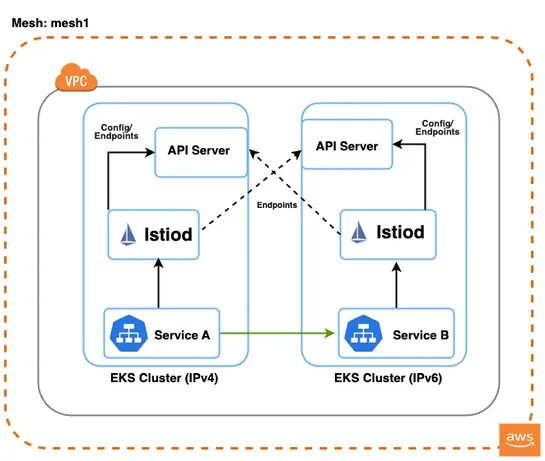
Scaling beyond IPv4: integrating IPv6 Amazon EKS clusters into existing Istio Service Mesh
Link
@faun shared a link, 11 months ago
FAUN.dev()

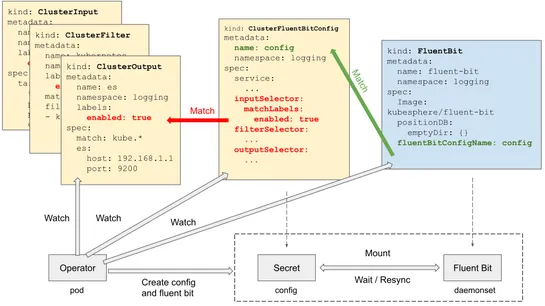
How To Deploy Fluent Bit in a Kubernetes-Native Way

Fluent Operator tapsCRDsto tameFluent Bitin Kubernetes. It channels inputs, filters, parsers, outputs into auto-generated configs. Then spins up the DaemonSet. TheFluent Bit Watcherwrapper hot-swaps configs on CRD tweaks. No pods restart... read more  

How To Deploy Fluent Bit in a Kubernetes-Native Way
Link
@faun shared a link, 11 months ago
FAUN.dev()

Closing the gap: How KubeVirt, Kubernetes, and open ecosystems are reshaping virtualisation

KubeVirt spins up VMs inside Kubernetes clusters. It hooks intoPortworxfor stateful volumes. It tapsOpenShiftorRancherto match VMware’s arsenal. Declarative YAML meetsGitOpspipelines, unified schedulers and RBAC. Teams juggle VMs and containers on one toolchain. License bills shrink. Infra shift:Le.. read more  

Closing the gap: How KubeVirt, Kubernetes, and open ecosystems are reshaping virtualisation
Link
@faun shared a link, 11 months ago
FAUN.dev()

Critical Container Registry Security Flaw: How Multi-Architecture Manifests Create Attack Vectors

ContainerHijack hijacksDocker Image Manifest V2 Schema 2. It taints images inDocker Hub,Amazon ECR,GCR. Scanners shrug. Signature checks buckle. Defenders deploypolicy-as-code admission controllers. They lock down Terraform ECR push policies.Falco rulesflag strange layers, ghost pushes, rogue proces.. read more  

Link
@faun shared a link, 11 months ago
FAUN.dev()

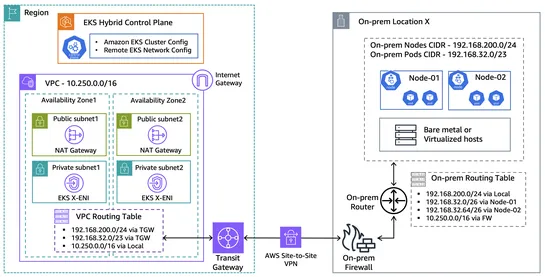
Deep dive into cluster networking for Amazon EKS Hybrid Nodes

EKS Hybrid Nodes corrals on-prem and edge servers as remote Kubernetes nodes over Direct Connect or VPN. It rides onCiliumorCalico, with BGP or static routes. For local load balancing, it spins upMetalLBat Layer 2/3. For NLB/ALB sync, it taps theAWS Load Balancer Controller. Workflows stay unified... read more  

Deep dive into cluster networking for Amazon EKS Hybrid Nodes
Link
@faun shared a link, 11 months ago
FAUN.dev()

Enterprise Strategy Group Validates Tintri VMstore Kubernetes Data Services

ESG spots Tintri VMstore’sCSI driverpackingAuto-QoS,real-time I/O analyticsandpredictive tuningfor sub-ms container and VM workloads. That driver fires upinstant cloneandsnapshottest environments. It enforces policy-drivenRPO/RTOprotection. It unifies VM, container and database control. Infra shift.. read more  

Enterprise Strategy Group Validates Tintri VMstore Kubernetes Data Services
Story
@idjuric660 shared a post, 11 months ago
Technical Content Writer, Mailtrap

Choosing the Best SMTP Providers – Top 5 SMTP Providers Compliance Comparison

Amazon SES Mailgun Sendgrid Mailtrap.io

When you manage millions of transactional emails or orchestrate extensive marketing campaigns, the nuances of data protection, privacy, and regulatory adherence can make or break your operations. This is precisely why you need to hawk over compliance, and set a goal to find a provider that: - Safegu..

1-green_background-1040x540
Story
@laura_garcia shared a post, 11 months ago
Software Developer, RELIANOID

Enjoy your weekend and take it easy!

https://www.relianoid.com/about-us/contact-us/ #Relianoid#WeAreRelianoid#247Support#ExtremeSupport#AlwaysHereForYou#TechSupportExperts#DedicatedSupport#MissionCriticalCare#TakeItEasy#HappyFriday#FridaysDoneRight#RelaxWeGotThis#ITSupportTeam#BehindTheScenesHeroes#ReliableByNature..

Reminder_friday_weekend_relianoid
Link
@anjali shared a link, 11 months ago
Customer Marketing Manager, Last9

How sum_over_time Works in Prometheus

Understand how sum_over_time() aggregates metrics in Prometheus, handles gaps, and why step size and staleness can affect accuracy.

Kibana logs
Story
@idjuric660 shared a post, 11 months, 1 week ago
Technical Content Writer, Mailtrap

I Compared 5 Best SMTP Providers for FinTech Companies: Which One Should You Use

Amazon SES Mailgun Sendgrid Mailtrap.io

Reliably sending critical and time-sensitive emails while staying compliant with international data regulation laws is key for any FinTech company out there. In this article, I’ll provide you with 5 SMTP providers for FinTech that will allow you to achieve all of the above, and more. To get you star..

blue_background-960x498
Flask is an open-source web framework written in Python and created by Armin Ronacher in 2010. It is known as a microframework, not because it is weak or incomplete, but because it provides only the essential building blocks for developing web applications. Its core focuses on handling HTTP requests, defining routes, and rendering templates, while leaving decisions about databases, authentication, form handling, and other components to the developer. This minimalistic design makes Flask lightweight, flexible, and easy to learn, but also powerful enough to support complex systems when extended with the right tools.

At the heart of Flask are two libraries: Werkzeug, which is a WSGI utility library that handles the low-level details of communication between web servers and applications, and Jinja2, a templating engine that allows developers to write dynamic HTML pages with embedded Python logic. By combining these two, Flask provides a clean and pythonic way to create web applications without imposing strict architectural patterns.

One of the defining characteristics of Flask is its explicitness. Unlike larger frameworks such as Django, Flask does not try to hide complexity behind layers of abstraction or dictate how a project should be structured. Instead, it gives developers complete control over how they organize their code and which tools they integrate. This explicit nature makes applications easier to reason about and gives teams the freedom to design solutions that match their exact needs. At the same time, Flask benefits from a vast ecosystem of extensions contributed by the community. These extensions cover areas such as database integration through SQLAlchemy, user session and authentication management, form validation with CSRF protection, and database migration handling. This modular approach means a developer can start with a very simple application and gradually add only the pieces they require, avoiding the overhead of unused components.

Flask is also widely appreciated for its simplicity and approachability. Many developers write their first web application in Flask because the learning curve is gentle, the documentation is clear, and the framework itself avoids unnecessary complexity. It is particularly well suited for building prototypes, REST APIs, microservices, or small to medium-sized web applications. At the same time, production-grade deployments are supported by running Flask applications on WSGI servers such as Gunicorn or uWSGI, since the development server included with Flask is intended only for testing and debugging.

The strengths of Flask lie in its minimalism, flexibility, and extensibility. It gives developers the freedom to assemble their application architecture, choose their own libraries, and maintain tight control over how things work under the hood. This is attractive to experienced engineers who dislike being boxed in by heavy frameworks. However, the same freedom can become a limitation. Flask does not include features like an ORM, admin interface, or built-in authentication system, which means teams working on very large applications must take on more responsibility for enforcing patterns and maintaining consistency. In situations where a project requires an opinionated, all-in-one solution, Django or another full-stack framework may be a better fit.

In practice, Flask has grown far beyond its initial positioning as a lightweight tool. It has been used by startups for rapid prototypes and by large companies for production systems. Its design philosophy—keep the core simple, make extensions easy, and let developers decide—continues to attract both beginners and professionals. This balance between simplicity and power has made Flask one of the most enduring and widely used Python web frameworks.