Join us

ContentUpdates and recent posts about Unsloth..
Story
@alicemgray86 shared a post, 1 day, 2 hours ago
Damco Solutions

AS400 Modernization Services in 2026: From Green Screen to Modern UX

For years, the green screen became the unofficial symbol of stability inside enterprise IT.

Story
@elsie-rainee shared a post, 1 day, 2 hours ago
Full Stack Engineer, WPWeb Infotech

Artificial Intelligence vs Machine Learning: What's the Difference?

Confused by AI vs machine learning? This guide breaks down what sets them apart, how they work together, and what it means for you.
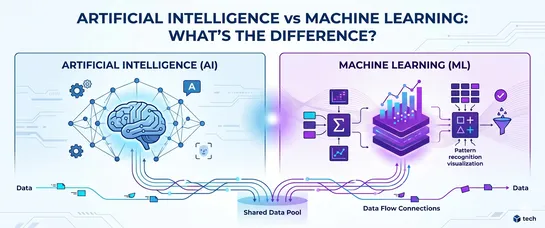
Artificial Intelligence vs Machine Learning
Story
@laura_garcia shared a post, 1 day, 10 hours ago
Software Developer, RELIANOID

DevOpsDays Taipei

We're heading to DevOpsDays Taipei 2026! Join us on June 25–26 in Taipei to explore the latest in DevOps, AI, platform engineering, cloud-native technologies, and security alongside hundreds of technology professionals from across Asia. Learn more about the event and meet RELIANOID there. 👇 https://..
devopsdays_taipei_taiwan_june_2026_relianoid
Story
@laura_garcia shared a post, 2 days, 11 hours ago
Software Developer, RELIANOID

GLOBAL DATA SEGREGATION & PRIVACY POLICY

Data privacy, sovereignty, and compliance matter. Learn how RELIANOID manages global data governance, regional privacy requirements, and secure data handling practices across Europe, the United States, and Asia. Read our Global Data Segregation & Privacy Policy. https://www.relianoid.com/security-co..

RELIANOID COMPLIANCE GLOBAL DATA SEGREGATION & PRIVACY POLICY
Link
@anjali5 shared a link, 2 days, 14 hours ago

How AI SRE Works: A Three-Stage Workflow for Enterprise Infrastructure

One challenge we've been thinking about recently is the amount of time spent assembling context during incident response.

The information often already exists across CMDBs, monitoring systems, and incident management platforms, but engineers still have to correlate it before they can act.

Here's a short write-up on a three-stage AI SRE workflow for impact analysis, alert classification, and incident context management.

AISRE
Story Palark Team Trending
@shurup shared a post, 4 days, 9 hours ago
@palark

9 new CNCF projects from 2025: OpenTofu, kgateway, Cozystack, and others

Kubernetes OpenTofu Kubernetes Gateway API

Followingthe recent overviewof newly added CNCF projects in 2025, the next batch of Open Source tools for Cloud Native needs include: - KitOpsfor packaging AI/ML models into all-in-one bundles and deploying them. - OpenTofu, a Terraform fork created by the community. - kagent, a framework for buildi..
New CNCF Sandbox projects in 2025
Story
@laura_garcia shared a post, 4 days, 12 hours ago
Software Developer, RELIANOID

Load Balancing IYC BLUE with RELIANOID

⚓ How do you ensure a yacht and fleet management platform stays available 24/7, even across challenging maritime networks? Discover how 𝗥𝗘𝗟𝗜𝗔𝗡𝗢𝗜𝗗 delivers 𝘩𝘪𝘨𝘩 𝘢𝘷𝘢𝘪𝘭𝘢𝘣𝘪𝘭𝘪𝘵𝘺, 𝘴𝘦𝘤𝘶𝘳𝘪𝘵𝘺, 𝘢𝘯𝘥 𝘱𝘦𝘳𝘧𝘰𝘳𝘮𝘢𝘯𝘤𝘦 for 𝙄𝙔𝘾 𝘽𝙇𝙐𝙀 with intelligent load balancing, SSL offloading, API routing, and resilient failover. R..
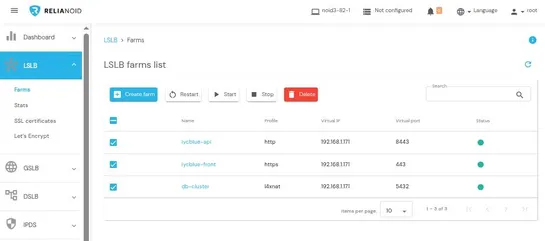
iycblue_load_balancing_virtual_services
Link
@varbear shared a link, 6 days, 8 hours ago
FAUN.dev()

Hacking Google with A.I. for $500,000

A security researcher used an AI fuzzing harness against 1,500+ Google APIs and earned $500,000 in bug bounties, surfacing access-control flaws across Google Voice, Widevine, AdExchange, and internal Cloud Console GraphQL endpoints... read more  
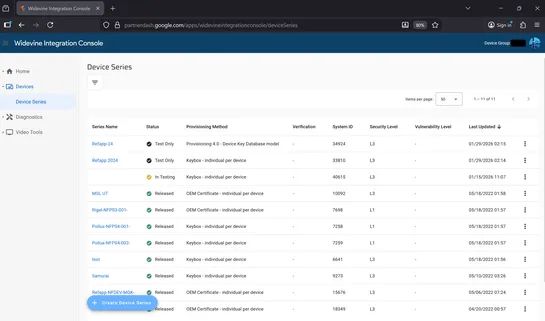
Hacking Google with A.I. for $500,000
Link
@varbear shared a link, 6 days, 8 hours ago
FAUN.dev()

The Smallest Brain You Can Build

Devarsh Ranpara builds a single-input perceptron from scratch in Python with browser demos, using the weight, bias, and decision boundary to show why a line forced through zero cannot separate classes that sit far from it... read more  

Link
@varbear shared a link, 6 days, 8 hours ago
FAUN.dev()

I built a Go microservices framework in 2017.

Aafaq Zahid open-sourced Keel, a Go microservices framework he extracted from eight years of production systems... read more  

I built a Go microservices framework in 2017.
Unsloth is an open-source toolkit for training and fine-tuning large language models faster and with less memory than a standard Hugging Face stack. Its core library replaces PyTorch's default autograd with custom backpropagation kernels written in OpenAI's Triton language, which is where most of its speed and memory savings come from. It supports LoRA, QLoRA, full fine-tuning, reinforcement learning, pretraining, and 4-bit, 16-bit, and FP8 training, across more than 500 text, vision, audio, and embedding models.

The practical draw is hardware reach. QLoRA workflows in Unsloth let you fine-tune an 8B model on a single 12 GB consumer GPU, and the project headlines roughly 2x faster training with about 70 percent less VRAM versus baseline implementations, though the exact figures vary by model, GPU, and config. A 2026 update added faster mixture-of-experts training, with models like Qwen3-30B-A3B fine-tunable on about 17.5 GB of VRAM. It runs on NVIDIA (including Blackwell and DGX Spark), AMD, and Intel GPUs, with free Colab and Kaggle notebooks for trying it without local hardware.

It fits cleanly into the local-AI workflow. Unsloth integrates with Hugging Face transformers and TRL, and uses llama.cpp to save and run models, exporting to GGUF for Ollama or LM Studio as well as safetensors. As of 2026 it also ships Unsloth Studio, a local no-code GUI that covers the full lifecycle from dataset creation to training to running and comparing GGUF and safetensors models, with tool-calling, web search, and an OpenAI-compatible API, all running offline on Mac and Windows, with the core library under the Apache 2.0 license.