Join us

ContentUpdates and recent posts about Tor..
Link
@faun shared a link, 7 months, 2 weeks ago
FAUN.dev()

SLI Evolution Stages

A new SLI evolution model lays out a maturity roadmap—from rebranded latency/error metrics to ones that actually track business impact. It replaces shallow signals and pulls in the stuff that matters: how service failures hit user goals, tasks, and bottom lines... read more  
SLI Evolution Stages
Link
@faun shared a link, 7 months, 2 weeks ago
FAUN.dev()

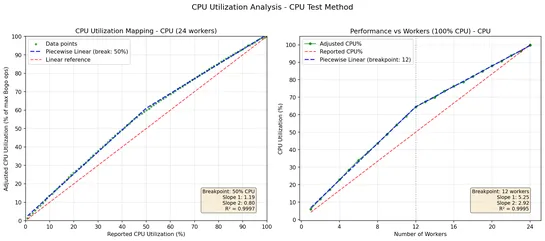
%CPU Utilization Is A Lie

Stress tests on the Ryzen 9 5900X uncovered a big gap between **reported CPU utilization** and what the chip actually pushes. Around 50% on paper? Could mean close to full throttle in reality—thanks to sneaky behaviors from **SMT resource sharing** and **Turbo frequency scaling**. **Takeaway:** Raw.. read more  

%CPU Utilization Is A Lie
Link
@faun shared a link, 7 months, 2 weeks ago
FAUN.dev()

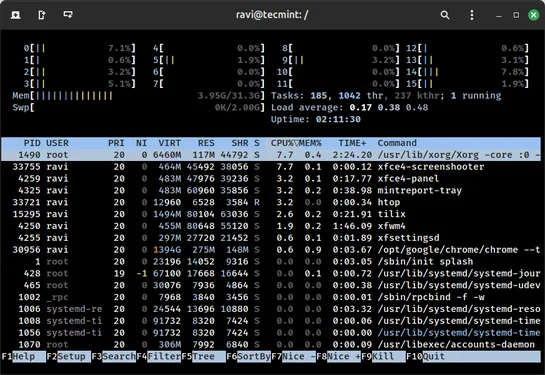
Best 20 Linux Commands for Daily Use in Production Servers

A fresh roundup drops20 go-to Linux commandsfor production sysadmins, dialing in on modern defaults likehtop > top,ss > netstat, andip > ifconfig. The shift? Faster tools that actually get updates. Built with systemd in mind, too. Expect the usual suspects—journalctl,rsync,crontab—all still pulling.. read more  

Best 20 Linux Commands for Daily Use in Production Servers
Link
@faun shared a link, 7 months, 2 weeks ago
FAUN.dev()

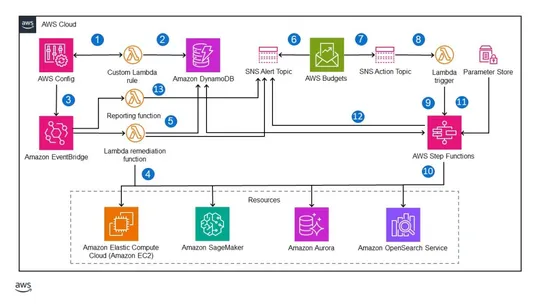
Introducing Budget Controls for AWS: Automatically Manage Your Cloud Costs

**Budget Controls for AWS** just got better. The open-source tool now reins in more than just EC2. It wrangles **RDS Aurora**, **SageMaker**, and **OpenSearch** too. Under the hood, it taps **AWS Budgets**, **AWS Config**, and **custom tags** to watch spend like a hawk. Hit a budget threshold? It c.. read more  

Introducing Budget Controls for AWS: Automatically Manage Your Cloud Costs
Link
@faun shared a link, 7 months, 2 weeks ago
FAUN.dev()

Fast, Secure Kubernetes with AKS Automatic

Azure dropped **AKS Automatic**, a new managed Kubernetes tier that tries to do it all—so you don’t have to. It comes with baked-in best practices: autoscaling via HPA, VPA, KEDA, and Karpenter. Automated patching. Node repair. Monitoring. All wired up by default. You still get full access to the .. read more  

Fast, Secure Kubernetes with AKS Automatic
Link
@faun shared a link, 7 months, 2 weeks ago
FAUN.dev()

v1.34: Decoupled Taint Manager Is Now Stable

Kubernetes 1.34 graduates the taint eviction controller to GA. Now, the node lifecycle controller only applies taints, while a dedicated taint eviction controller manages pod eviction. First split in 1.29, now stable in 1.34... read more  

Link
@faun shared a link, 7 months, 2 weeks ago
FAUN.dev()

v1.34: Recovery From Volume Expansion Failure (GA)

Kubernetes v1.34 bumps **automated recovery from botched PVC expansions** to GA. Users can now fix bad volume size requests—no admin, no drama. It cleans up unused quota, slows down retry spam, and surfaces progress with new PVC status fields... read more  

Link
@faun shared a link, 7 months, 2 weeks ago
FAUN.dev()

v1.34: Pods Report DRA Resource Health

Kubernetes v1.34 lands with an alpha upgrade to **[KEP-4680](https://github.com/kubernetes/enhancements/tree/master/keps/sig-node/4680-add-resource-health-to-pod-status)**, pushing **Dynamic Resource Allocation (DRA)** into smarter territory: health-aware Pods. DRA drivers can now stream device heal.. read more  

Link
@faun shared a link, 7 months, 2 weeks ago
FAUN.dev()

Kubernetes Security: Best Practices to Protect Your Cluster

A new JetBrains IDE plugin throws Kubernetes security best practices straight into your deployment manifests—right where they belong. Think: checks for `runAsRoot`, privileged mode, `hostPath`, host ports, and sketchy sysctls. No hand-waving. It enforces stuff like: - Default `runAsNonRoot` - Drop .. read more  

Kubernetes Security: Best Practices to Protect Your Cluster
Link
@faun shared a link, 7 months, 2 weeks ago
FAUN.dev()

v1.34: DRA Consumable Capacity

Kubernetes 1.34 rolls in **consumable capacity** for Dynamic Resource Allocation (DRA). That means device plugins can now carve up resources—GPU memory, NIC bandwidth, etc.—into precise slices for Pods, ResourceClaims, and namespaces. The scheduler tracks it all, so nothing spills over... read more  

Tor (The Onion Router) is an open-source network and software suite designed to protect user privacy and enable anonymous communication on the internet. It works by routing network traffic through a distributed, volunteer-run network of relays, encrypting data in multiple layers so that no single relay knows both the source and destination of the traffic. Tor is widely used to defend against traffic analysis, surveillance, and censorship. By obscuring IP addresses and routing paths, it helps users browse the web anonymously, publish information safely, and access services without revealing their location or identity. The network supports standard web traffic as well as specialized .onion services, which allow websites and services to operate anonymously without exposing their physical hosting location. Beyond web browsing, Tor is used as a foundational privacy layer for secure messaging, whistleblowing platforms, journalism, activism, academic research, and secure system administration. It is also integrated into many privacy-focused operating systems and tools. While Tor can reduce traceability, it does not make users invulnerable and must be used with proper operational security to avoid deanonymization risks. Tor is developed and maintained by the Tor Project, a nonprofit organization dedicated to advancing digital privacy and freedom worldwide