Join us

ContentUpdates and recent posts about Snapper..
Link
@faun shared a link, 8 months, 4 weeks ago
FAUN.dev()

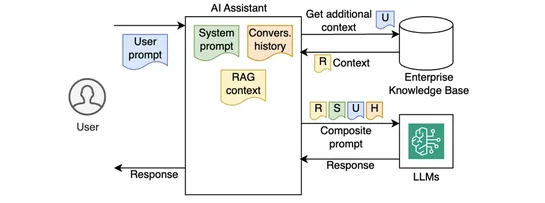
Combining GenAI & Agentic AI to build scalable, autonomous systems

Agentic AI doesn’t just crank out content—it takes the wheel. Where GenAI reacts, Agentic AI plans, perceives, and acts. Think less autocomplete, more autonomous ops. Hook them together, and you get a full-stack brain: content creation, real-time decisions, adaptive workflows, all learning as they .. read more  
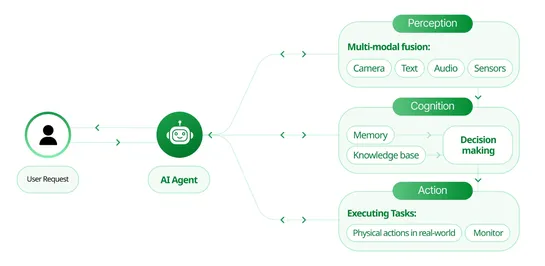
Combining GenAI & Agentic AI to build scalable, autonomous systems
Link
@faun shared a link, 8 months, 4 weeks ago
FAUN.dev()

Some thoughts on LLMs and Software Development

Most LLMs still play autocomplete sidekick. But seasoned devs? They get better results when the model reads and rewrites actual source files. That gap—between how LLMs are designed to work and how prosactuallyuse them—messes with survey data and muddies the picture on real gains in code quality and.. read more  

Link
@faun shared a link, 8 months, 4 weeks ago
FAUN.dev()

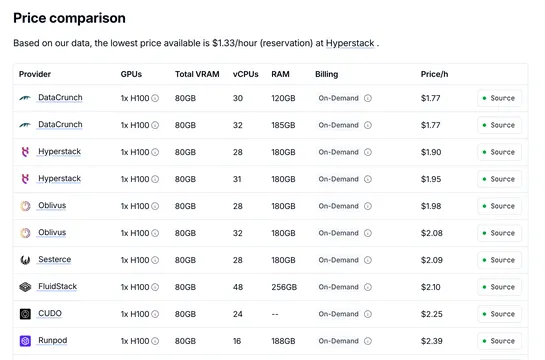
Are OpenAI and Anthropic Really Losing Money on Inference?

DeepSeek R1 running on H100s puts input-token costs near$0.003 per million—while output tokens still punch in north of$3. That’s a 1,000x spread. So if a job leans heavy on input—think code linting or parsing big docs—those margins stay fat, even with cautious compute. System shift:This lop-sided .. read more  

Are OpenAI and Anthropic Really Losing Money on Inference?
Link
@faun shared a link, 8 months, 4 weeks ago
FAUN.dev()

Effectively building AI agents on AWS Serverless

AWS just dropped support for buildingserverless agentic AI systems. You’ll need the Strands Agents SDK, Bedrock AgentCore (preview), plus trusty tools like Lambda and ECS. What’s new? Agentic AI flips the script. Instead of dumb prompt-in, response-out bots, you getgoal-driven loopswith memory, too.. read more  

Effectively building AI agents on AWS Serverless
Link
@faun shared a link, 8 months, 4 weeks ago
FAUN.dev()

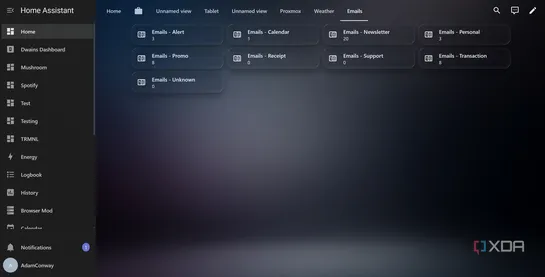
I set up an email triage system using Home Assistant and a local LLM, here's how you can too

A DIY email triage rig usingHome Assistant, IMAP, andOllamawires up local LLM smarts with YAML-fueled automation. At the core: an8B dolphin-llamamodel running on GPU, chewing through messy HTML emails, tagging them, and firing off priority-sorted summaries via notifications. Why it matters:A signal.. read more  

I set up an email triage system using Home Assistant and a local LLM, here's how you can too
Link
@faun shared a link, 8 months, 4 weeks ago
FAUN.dev()

Observability in Go: What Real Engineers Are Saying in 2025

Go observability still feels like pulling teeth. Manual instrumentation? Tedious. Span coverage? Spotty. Telemetry volume? Totally out of hand. Even with OpenTelemetry gaining traction, Go lags behind Java and Python when it comes to auto-instrumentation and clean context propagation. Devs are hunt.. read more  

Observability in Go: What Real Engineers Are Saying in 2025
Link
@faun shared a link, 8 months, 4 weeks ago
FAUN.dev()

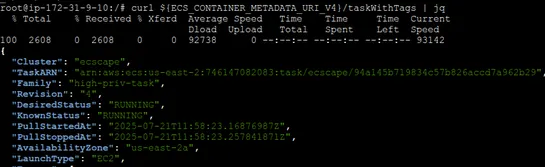
ECScape: Understanding IAM Privilege Boundaries in Amazon ECS

A new ECS security mess—ECScape—lets low-privileged tasks on EC2 act like the ECS agent. That’s bad. Real bad. Why? Because it opens the door to stealing IAM credentials from other ECS tasks sharing the same host. Here’s the trick: The attacker hits the instance metadata service (IMDS) and fakes a .. read more  

ECScape: Understanding IAM Privilege Boundaries in Amazon ECS
Link
@faun shared a link, 8 months, 4 weeks ago
FAUN.dev()

Availability Models: Because “Highly Available” Isn’t Saying Much

Antithesis and Jepsen want to kill hand-wavy "high availability" talk. Instead, they push for clearavailability models—majority,total,sticky, etc.—that spell out when an operationactuallyworks during failures. It's about precision, not platitudes. Why it matters:This reframes availability from a va.. read more  

Availability Models: Because “Highly Available” Isn’t Saying Much
Link
@faun shared a link, 8 months, 4 weeks ago
FAUN.dev()

How to prepare for the Bitnami Changes coming soon

The Bitnami team has delayed the deletion of the Bitnami public catalog until September 29th. They will conduct a series of brownouts to prepare users for the upcoming changes, with the affected applications list being published on the day of each brownout. Users are advised to switch to Bitnami Sec.. read more  

Link
@faun shared a link, 8 months, 4 weeks ago
FAUN.dev()

Google Develops KFuzzTest For Fuzzing Internal Linux Kernel Functions

Google droppedKFuzzTest, a lean fuzzing tool built to hit Linux kernel internals—way past just syscalls. It brings a clean API, docs, and sample targets to get fuzzing fast. Why it matters:KFuzzTest marks a shift. Kernel fuzzing’s no longer just about hammering syscalls—it’s going deeper into the g.. read more  

Snapper is a command-line tool developed by SUSE for managing filesystem snapshots. It allows users to create, delete, compare, and restore snapshots of their system or data. A snapshot is a read-only point-in-time copy of a filesystem, useful for recovering from system changes or errors. Snapper integrates deeply with the SUSE ecosystem and works primarily with Btrfs, though it also supports LVM with thin provisioning. It can automatically take snapshots before and after software updates or system modifications, helping users track what changed and roll back if necessary. By using pre and post snapshots, Snapper provides a simple way to undo changes or restore files without requiring full system backups. It also supports automatic cleanup routines to manage disk space efficiently. In practice, Snapper serves as both a safety net and a diagnostic tool, making it easier to maintain system stability and recover quickly from mistakes or failed updates.