Join us

ContentUpdates and recent posts about Slurm..
Link
@faun shared a link, 10 months ago
FAUN.dev()

MCP Security Issues Threatening AI Infrastructure

Docker just dropped theMCP ToolkitandMCP Gateway, tightening up the Model Context Protocol with serious armor. We're talking six major server-side holes patched—OAuth RCE, command injection, leaked creds—plugged. How? With container-wrapped isolation, real-time network filters, first-class OAuth ha.. read more  
Link
@faun shared a link, 10 months ago
FAUN.dev()

Introducing the Amazon DynamoDB data modeling MCP tool

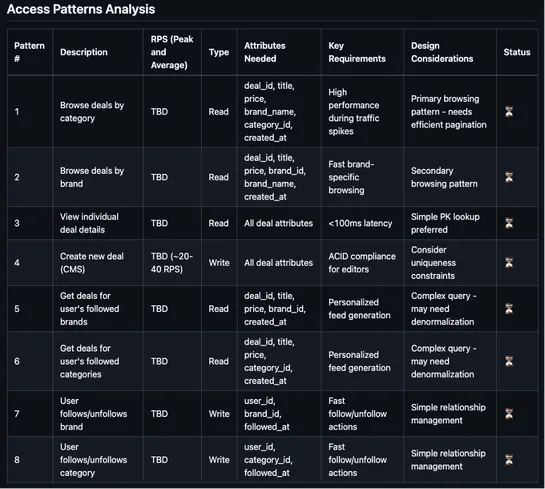
Amazon just dropped theDynamoDB MCP data modeling tool—a natural language assistant that turns app specs into DynamoDB schemas without the boilerplate. It plugs intoAmazon QandVS Code, tracks access patterns, estimates costs, and throws in real-time design trade-offs... read more  

Introducing the Amazon DynamoDB data modeling MCP tool
Link
@faun shared a link, 10 months ago
FAUN.dev()

Event-Driven Agents in Action

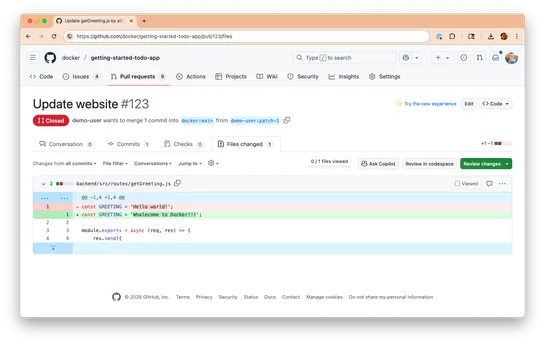
Docker wired up an event-driven AI agent usingMastraand theDocker MCP Gatewayto handle tutorial PRs—comment, close, the works. It runs a crew of agents powered byQwen3andGemma3, synced through GitHub webhooks and MCP tools, all spun up with Docker Compose. System shift:Agentic frameworks are starti.. read more  

Event-Driven Agents in Action
Link
@faun shared a link, 10 months ago
FAUN.dev()

Building an AI Home Security System Using .NET, Python, CLIP, Semantic Kernel, Telegram, and Raspberry Pi 4

The post details the process of creating an AI home security system using .NET, Python, Semantic Kernel, a Telegram Bot, Raspberry Pi 4, and Open AI. It covers the hardware and software requirements, as well as the steps to install and test the camera module and the PIR sensor. It also includes code.. read more  

Link
@faun shared a link, 10 months ago
FAUN.dev()

Forcing LLMs to be evil during training can make them nicer in the long run

Researchers built an automated pipeline to hunt down the neuron patterns behind bad LLM behavior—sycophancy,hallucinations,malice, the usual suspects. Then they trained models to watch for those patterns in real time. Anthropic didn’t just steer modelsaftertraining like most. They baked the correct.. read more  

Forcing LLMs to be evil during training can make them nicer in the long run
Link
@faun shared a link, 10 months ago
FAUN.dev()

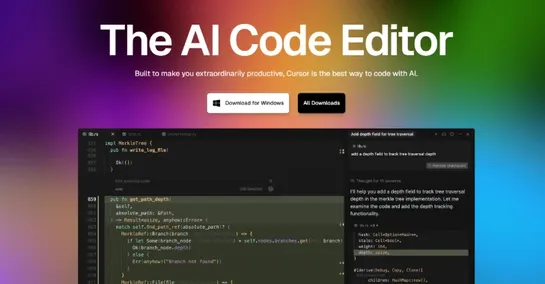
Cursor AI Code Editor Fixed Flaw Allowing Attackers to Run Commands via Prompt Injection

XM Cyber dropped a practical guide for rolling outContinuous Threat Exposure Management (CTEM)with its platform—geared for those eyeing 2025 readiness. It dives into wiring up real-time exposure visibility, validating actual risk, and tightening up remediation across complex enterprise setups. Why .. read more  

Cursor AI Code Editor Fixed Flaw Allowing Attackers to Run Commands via Prompt Injection
Link
@faun shared a link, 10 months ago
FAUN.dev()

Manus AI Launches ‘Wide Research,’ Pitting 100-Agent Swarms Against ‘Deep Research‘ from Google and OpenAI

Manus just droppedWide Research—a swarm of 100+ AI agents, each spun up as a Turing-complete VM. They don’t follow orders. They solve massive tasks in parallel, straight from natural language prompts. Forget rigid chains of command. These agents don’t play roles—they run jobs. No hierarchies. No br.. read more  

Manus AI Launches ‘Wide Research,’ Pitting 100-Agent Swarms Against ‘Deep Research‘ from Google and OpenAI
Link
@faun shared a link, 10 months ago
FAUN.dev()

GPT-5 is here

GPT-5 tightens reasoning and lands cleaner hits inmath,science,finance, andlaw. It outpaces GPT-4—not just wider, but deeper... read more  

GPT-5 is here
Link
@faun shared a link, 10 months ago
FAUN.dev()

Anthropic says OpenAI engineers using Claude Code ahead of GPT-5 launch

Anthropic just shut the door on OpenAI, yanking access to theClaude Code APIafter spotting ChatGPT engineers poking around—likely prepping forGPT-5. Claude Codeisn’t just an internal toy. It’s a serious coding co-pilot, used in the wild by devs who want answers without babysitting a model. Market .. read more  

Link
@faun shared a link, 10 months ago
FAUN.dev()

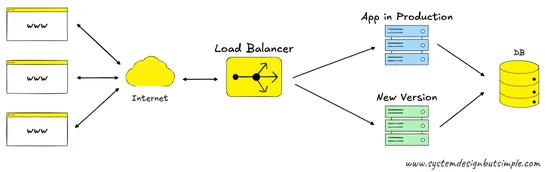
Blue‑Green Deployment in 1 diagram and 195 words

Blue-Green deployment runs two matching environments so you can flip traffic with zero downtime—and yank it back fast if something breaks. Kubernetes + IstioandSpinnakerhandle the heavy lifting. They steer traffic between versions and keep infra lean... read more  

Blue‑Green Deployment in 1 diagram and 195 words
Slurm Workload Manager is an open-source, fault-tolerant, and highly scalable cluster management and scheduling system widely used in high-performance computing (HPC). Designed to operate without kernel modifications, Slurm coordinates thousands of compute nodes by allocating resources, launching and monitoring jobs, and managing contention through its flexible scheduling queue.

At its core, Slurm uses a centralized controller (slurmctld) to track cluster state and assign work, while lightweight daemons (slurmd) on each node execute tasks and communicate hierarchically for fault tolerance. Optional components like slurmdbd and slurmrestd extend Slurm with accounting and REST APIs. A rich set of commands—such as srun, squeue, scancel, and sinfo—gives users and administrators full visibility and control.

Slurm’s modular plugin architecture supports nearly every aspect of cluster operation, including authentication, MPI integration, container runtimes, resource limits, energy accounting, topology-aware scheduling, preemption, and GPU management via Generic Resources (GRES). Nodes are organized into partitions, enabling sophisticated policies for job size, priority, fairness, oversubscription, reservation, and resource exclusivity.

Widely adopted across academia, research labs, and enterprise HPC environments, Slurm serves as the backbone for many of the world’s top supercomputers, offering a battle-tested, flexible, and highly configurable framework for large-scale distributed computing.