Join us

ContentUpdates and recent posts about Sigstore..
Link
@varbear shared a link, 5 months, 1 week ago
FAUN.dev()

Introducing Code Wiki: Accelerating your code understanding

Google just droppedCode Wikiin public preview. It builds live, structured docs straight from your codebase - and stays synced as things change. Docs evolve with your repo. Automatically. A Gemini-powered chat agent sits at the center, armed with full-repo context, clickable code links, and diagrams .. read more  
Introducing Code Wiki: Accelerating your code understanding
Link
@varbear shared a link, 5 months, 1 week ago
FAUN.dev()

Practical coding with AI Assistance

Developers using AI agents like Cursor are hitting a wall: vague, messy blob-code. Especially in frameworks likeLangChain, where sketchy training data can produce long-winded or broken output. The problem? AI generates "just vibes" instead of structure. The fix: go in with a plan. Aspec-driven, cont.. read more  

Practical coding with AI Assistance
Link
@varbear shared a link, 5 months, 1 week ago
FAUN.dev()

What’s new in Flutter 3.38

Flutter 3.38 drops with Dart 3.10’s newdot shorthand- on by default. Less boilerplate, more signal. Android getspredictive back gestures, the web getsstateful hot reload, and Windows devs finally getmulti-monitor support. Overlay controls are tighter. Previews play nicer with your IDE. Under the hoo.. read more  

What’s new in Flutter 3.38
Link
@kaptain shared a link, 5 months, 1 week ago
FAUN.dev()

AWS Backup now supports Amazon EKS

AWS Backup just added support forAmazon EKS. Now you can back up cluster state and persistent volumes, no agents, no third-party hacks. It handles scheduling, retention, and immutability out of the box. Restore full clusters or drill down to specific components, even across Regions and accounts... read more  

Link
@kaptain shared a link, 5 months, 1 week ago
FAUN.dev()

ConfigHub: Why Your Internal Developer Platform Needs It

See why GitOps often feels like a sprawl of configs, discover how to manage Configuration as Data for your Kubernetes platform, and learn how ConfigHub can help... read more  

Link
@kaptain shared a link, 5 months, 1 week ago
FAUN.dev()

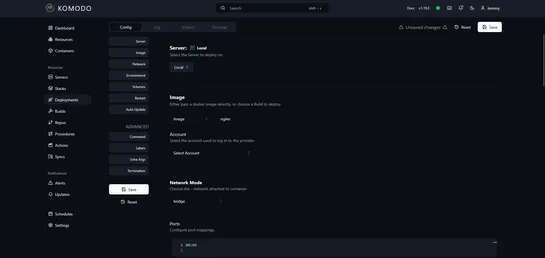
Using Komodo to Run Docker Commands from a Web Interface

Komodo drops a slick browser-based UI for wrangling Docker - containers, images, networks, and Compose stacks - through a real-time visual dashboard. Think native Docker meets one-click redeploys, host curation via agents, and reusable container configs that don’t make you hate YAML... read more  

Using Komodo to Run Docker Commands from a Web Interface
Link
@kaptain shared a link, 5 months, 1 week ago
FAUN.dev()

KServe becomes a CNCF incubating project

KServe is upgrading.The CNCF pulled it into incubation, backing it astheKubernetes-native way to serve both generative and predictive AI. Translation: it’s not a side project anymore - it’s core infra. Version 0.15 steps up with tighter integrations across the stack:vLLM,Envoy Gateway,llm-d,Knative,.. read more  

KServe becomes a CNCF incubating project
Link
@kaptain shared a link, 5 months, 1 week ago
FAUN.dev()

Amazon Elastic Kubernetes Service gets independent affirmation of its zero operator access design

Amazon EKS just went full Fort Knox. It now runs on azero operator accessmodel - meaning even AWS can’t peek inside your Kubernetes control or data plane. The setup leans on theNitro System’s confidential compute,guarded APIs, andmulti-party approval pipelines. NCC Group also kicked the tires and ga.. read more  

Link
@kaptain shared a link, 5 months, 1 week ago
FAUN.dev()

Streamline Complex AI Inference on Kubernetes with NVIDIA Grove

NVIDIA releasedGrove, a Kubernetes API baked intoDynamo, to wrangle the chaos of modern AI inference. It pulls apart your big, messy model into clean, discrete chunks - prefill, decode, routing - and runs them like a single, orchestrated act. The trick?Custom hierarchical resources. They let Grove h.. read more  

Link
@kaptain shared a link, 5 months, 1 week ago
FAUN.dev()

Prepare for the Kubernetes Administrator Certification and Pass

A tight 2-hour YouTube course built for theCKA examgrind. It's all real-world tasks: cluster setup, upgrades, troubleshooting. No fluff, just shell commands and Kubernetes in action. It walks through the gritty bits:etcdbackup and restore, node affinity, tolerations, and how to set upIngresslike som.. read more  

Prepare for the Kubernetes Administrator Certification and Pass
Sigstore is an open source initiative designed to make software artifact signing and verification simple, automatic, and widely accessible. Its primary goal is to improve software supply chain security by enabling developers and organizations to cryptographically prove the origin and integrity of the software they build and distribute.

At its core, sigstore removes many of the traditional barriers associated with code signing. Instead of managing long-lived private keys manually, sigstore supports keyless signing, where identities are issued dynamically using OpenID Connect (OIDC) providers such as GitHub Actions, Google, or Microsoft. This dramatically lowers operational complexity and reduces the risk of key compromise.

The sigstore ecosystem is composed of several key components:

- Cosign: A tool for signing, verifying, and storing signatures for container images and other artifacts. Signatures are stored alongside artifacts in OCI registries, rather than embedded in them.

- Fulcio: A certificate authority that issues short-lived X.509 certificates based on OIDC identities, enabling keyless signing.

- Rekor: A transparency log that records signing events in an append-only, tamper-evident ledger. This provides public auditability and detection of suspicious or malicious signing activity.

Together, these components allow anyone to verify who built an artifact, when it was built, and whether it has been tampered with, using publicly verifiable cryptographic proofs. This aligns closely with modern supply chain security practices such as SLSA (Supply-chain Levels for Software Artifacts).

sigstore is widely adopted in the cloud-native ecosystem and integrates with tools like Kubernetes, container registries, CI/CD pipelines, and package managers. It is commonly used to sign container images, Helm charts, binaries, and SBOMs, and is increasingly becoming a baseline security requirement for production software delivery.

The project is governed by the OpenSSF (Open Source Security Foundation) and supported by major industry players.