Join us

ContentUpdates and recent posts about Sigstore..
Link
@faun shared a link, 1 year, 1 month ago
FAUN.dev()

What If We Could Rebuild Kafka From Scratch?

Toss those partitions. Instead, pivot to key-centric streams—perfect for fine-tuned consumer management. Say goodbye to head-of-line blocking. Lean into topic hierarchies for slick, pattern-based subscriptions. Want to avoid outdated headaches? Tackle that with concurrency control. Broker-side schem.. read more  
Link
@faun shared a link, 1 year, 1 month ago
FAUN.dev()

AI predicted the next pope. Did it get it right?

A.I. algorithm incorrectly predicted Italian Cardinal Parolin as next pope; new model analyzes voting trends and predicts U.S. Cardinal Prevost as a compromise candidate. Model may improve with inclusion of more political and geographical data, but current analysis offers insights into potential pap.. read more  

Link
@faun shared a link, 1 year, 1 month ago
FAUN.dev()

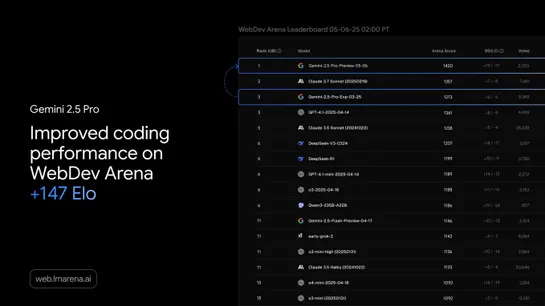
Google debuts an updated Gemini 2.5 Pro AI model ahead of I/O

Gemini 2.5 Pro Preview (I/O edition)is here, flexing its muscles in code editing and web app creation. This newcomer muscles its way to the top of theWebDev Arena Leaderboard. As if that wasn't enough, it scores a jaw-dropping84.8%on VideoMME for video analysis. And guess what? The price tag hasn’t .. read more  

Google debuts an updated Gemini 2.5 Pro AI model ahead of I/O
Link
@faun shared a link, 1 year, 1 month ago
FAUN.dev()

Stop overbuilding evals

Over-engineering smothers momentum. Get it to prod yesterday. Imperfection? Own it. Tweak with real folks in the wild. Feature flags and sanity checks? Priceless. Theory's just noise until reality weighs in... read more  

Link
@faun shared a link, 1 year, 1 month ago
FAUN.dev()

Claude’s AI research mode now runs for up to 45 minutes before delivering reports

Anthropic's Claude just supercharged its Research feature, cranking out reports from hundreds of sources in a blazing 45 minutes.But stay sharp—AI has a knack for inventing phantom sources... read more  

Claude’s AI research mode now runs for up to 45 minutes before delivering reports
Link
@faun shared a link, 1 year, 1 month ago
FAUN.dev()

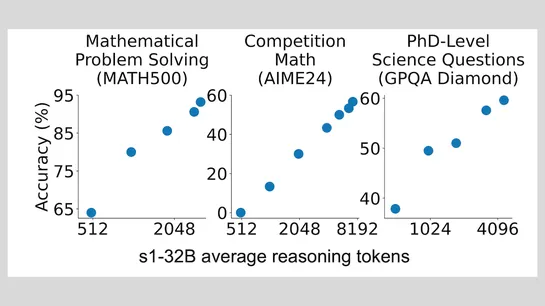
Researchers Fine-Tune LLM for Reasoning with Only 1,000 Examples

Meet the"Wait" token trick—a clever nudge that sharpens a model's reasoning. It mirrors OpenAI's o1-preview magic using only 1,000 examples. And guess what? Not a speck of reinforcement learning in sight... read more  

Researchers Fine-Tune LLM for Reasoning with Only 1,000 Examples
Link
@faun shared a link, 1 year, 1 month ago
FAUN.dev()

Most AI spending driven by FOMO, not ROI, CEOs tell IBM

Only25%of AI projects actually deliver returns on investment. Yet,61%of CEOs are ready to double down and scale their AI agents. Surprisingly,64%jumped in headfirst, investing before the payoff even showed its face... read more  

Most AI spending driven by FOMO, not ROI, CEOs tell IBM
Link
@faun shared a link, 1 year, 1 month ago
FAUN.dev()

Amid DeepSeek Threat Sundar Pichai-Led Google Ups AI-Generated Coding By Over 30% To Boost Productivity

Google now churns out more than 55% of its code with AI, a big leap from last year's 25%.Meanwhile, CEO Sundar Pichai plays it cool, warning we're still in the AI toddler phase. But they're not just tinkering. Google's diving headfirst into AI Modes with Search, aiming to flip the script for a billi.. read more  

Amid DeepSeek Threat Sundar Pichai-Led Google Ups AI-Generated Coding By Over 30% To Boost Productivity
Link
@faun shared a link, 1 year, 1 month ago
FAUN.dev()

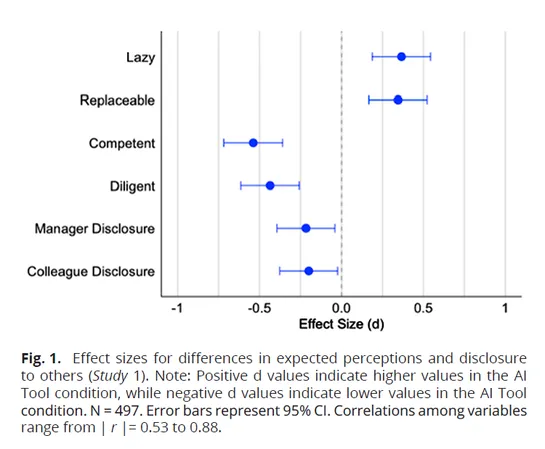
AI use damages professional reputation, study suggests

Duke University reveals a startling twist: AI tools like ChatGPT don't just supercharge work; they also slap users with unfair labels.Lazy. Replaceable. These biases stick to everyone, demographics be damned. Even when productivity soars, fellow workers and bosses often question AI users' competence.. read more  

AI use damages professional reputation, study suggests
Link
@faun shared a link, 1 year, 1 month ago
FAUN.dev()

3: Think Deeper, Act Faster

Qwen3sets itself apart with its dazzlingHybrid modes. Flip between deep thought and rapid-fire replies. A magician capable of juggling complexity and speed. Themassive 235B modelthrows elbows with the high rollers in AI town. Meanwhile, the nimble30B MoE variantdazzles with its frugality, flexing st.. read more  

3: Think Deeper, Act Faster
Sigstore is an open source initiative designed to make software artifact signing and verification simple, automatic, and widely accessible. Its primary goal is to improve software supply chain security by enabling developers and organizations to cryptographically prove the origin and integrity of the software they build and distribute.

At its core, sigstore removes many of the traditional barriers associated with code signing. Instead of managing long-lived private keys manually, sigstore supports keyless signing, where identities are issued dynamically using OpenID Connect (OIDC) providers such as GitHub Actions, Google, or Microsoft. This dramatically lowers operational complexity and reduces the risk of key compromise.

The sigstore ecosystem is composed of several key components:

- Cosign: A tool for signing, verifying, and storing signatures for container images and other artifacts. Signatures are stored alongside artifacts in OCI registries, rather than embedded in them.

- Fulcio: A certificate authority that issues short-lived X.509 certificates based on OIDC identities, enabling keyless signing.

- Rekor: A transparency log that records signing events in an append-only, tamper-evident ledger. This provides public auditability and detection of suspicious or malicious signing activity.

Together, these components allow anyone to verify who built an artifact, when it was built, and whether it has been tampered with, using publicly verifiable cryptographic proofs. This aligns closely with modern supply chain security practices such as SLSA (Supply-chain Levels for Software Artifacts).

sigstore is widely adopted in the cloud-native ecosystem and integrates with tools like Kubernetes, container registries, CI/CD pipelines, and package managers. It is commonly used to sign container images, Helm charts, binaries, and SBOMs, and is increasingly becoming a baseline security requirement for production software delivery.

The project is governed by the OpenSSF (Open Source Security Foundation) and supported by major industry players.