Join us

ContentUpdates and recent posts about Sigstore..
Link
@faun shared a link, 1 year ago
FAUN.dev()

Empowering Accessibility: Transforming Lives with Lovable.dev and Azure OpenAI

Lovable.devchops down app-building to mere hours with its knack for connectingAzureAPIs through natural language. Forget the weeks-long slog.GPT-4 OmniandAzure OCRtackle everything from expense reporting to advanced voice solutions. AI turns mundane tasks into innovation arenas... read more  

Empowering Accessibility: Transforming Lives with Lovable.dev and Azure OpenAI
Link
@faun shared a link, 1 year ago
FAUN.dev()

Enterprise AI Without GPU Burn: Salesforce’s xGen-small Optimizes for Context, Cost, and Privacy

xGen-small flips the script.It slashes model size yet juggles 256K tokens like a caffeinated ninja. So much for the old bigger-faster-better mantra. By mixing precise data curation, scalable pre-training, and ironclad privacy, this Salesforce gem rolls out enterprise-ready AI that’s as budget-friend.. read more  

Enterprise AI Without GPU Burn: Salesforce’s xGen-small Optimizes for Context, Cost, and Privacy
Link
@faun shared a link, 1 year ago
FAUN.dev()

Getting Started with Semantic Kernel

Semantic Kernelis a developer's best friend, an open-source dynamo for crafting AI apps withlarge language models (LLMs). It cuts through complexity like a hot knife through butter... read more  

Link
@faun shared a link, 1 year ago
FAUN.dev()

Exploring Google’s Agent Development Kit (ADK)

Google's Agent Development Kit(ADK) cranks up agent creation with LLMs. It dishes out unique agent types, slick orchestration patterns, and a debugging process that's anything but flimsy. Thanks toADK's open-source framework, you can engineer intricate systems that thrive on transparency and auditab.. read more  

Exploring Google’s Agent Development Kit (ADK)
Link
@faun shared a link, 1 year ago
FAUN.dev()

The illusion of conscious AI

Anthropic's Kyle Fishtosses around a bold 15% chance that chatbots might be conscious. Meanwhile,neuroscientistsraise an eyebrow and point out our shaky grasp of how intelligence relates to consciousness... read more  

The illusion of conscious AI
Link
@faun shared a link, 1 year ago
FAUN.dev()

HUMAIN and NVIDIA Announce Strategic Partnership to Build AI Factories of the Future in Saudi Arabia

HUMAINjust inked a deal withNVIDIAto spark AI factories in Saudi Arabia, cranking up to500 megawattsvia a colossal sea of GPUs. Picture18,000 NVIDIA GB300 Grace BlackwellAI supercomputers flexing their muscles, crafting massive sovereign AI models. Saudi's digital metamorphosis and Industry 4.0 ambi.. read more  

HUMAIN and NVIDIA Announce Strategic Partnership to Build AI Factories of the Future in Saudi Arabia
Link
@faun shared a link, 1 year ago
FAUN.dev()

Identifying Hidden Cloud Waste in Your Code

Vadim Soloveyblows the whistle on our love affair with so-called "efficient" code. It's smoke and mirrors, he insists. Behind the illusion lurk costly inefficiencies. Solovey demands we shift focus—ditch those endless cloud tweaks for something deeper:code-level fixes. Enter execution profiling and .. read more  

Link
@faun shared a link, 1 year ago
FAUN.dev()

AI in Incident Management: Balancing Automation & Expertise

AI-driven incident management holds great promise, but what happens when AI fails? Engineers risk losing critical system understanding as AI takes over routine tasks, highlighting the need for human oversight and collaboration in this AI-enhanced future... read more  

Link
@faun shared a link, 1 year ago
FAUN.dev()

Tales from the cloud trenches: The Attacker doth persist too much, methinks

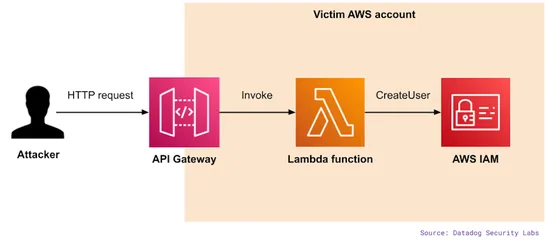
Hackers snagged some leaked AWS keys and conjured up a "persistence-as-a-service" scheme. They weaved through API Gateways and Lambda like ghostly threads. Dodging revocation? Easy. They whipped up dynamic IAM users faster than you can say "security breach." Telegram buzzed with ConsoleLogin events—.. read more  

Tales from the cloud trenches: The Attacker doth persist too much, methinks
Link
@faun shared a link, 1 year ago
FAUN.dev()

How we optimized LLM use for cost, quality, and safety to facilitate writing postmortems

Postmortem Optimization:Slashing LLM costs while preserving quality and safety. Who said AI can’t spruce up even the most mind-numbing tasks?.. read more  

Sigstore is an open source initiative designed to make software artifact signing and verification simple, automatic, and widely accessible. Its primary goal is to improve software supply chain security by enabling developers and organizations to cryptographically prove the origin and integrity of the software they build and distribute.

At its core, sigstore removes many of the traditional barriers associated with code signing. Instead of managing long-lived private keys manually, sigstore supports keyless signing, where identities are issued dynamically using OpenID Connect (OIDC) providers such as GitHub Actions, Google, or Microsoft. This dramatically lowers operational complexity and reduces the risk of key compromise.

The sigstore ecosystem is composed of several key components:

- Cosign: A tool for signing, verifying, and storing signatures for container images and other artifacts. Signatures are stored alongside artifacts in OCI registries, rather than embedded in them.

- Fulcio: A certificate authority that issues short-lived X.509 certificates based on OIDC identities, enabling keyless signing.

- Rekor: A transparency log that records signing events in an append-only, tamper-evident ledger. This provides public auditability and detection of suspicious or malicious signing activity.

Together, these components allow anyone to verify who built an artifact, when it was built, and whether it has been tampered with, using publicly verifiable cryptographic proofs. This aligns closely with modern supply chain security practices such as SLSA (Supply-chain Levels for Software Artifacts).

sigstore is widely adopted in the cloud-native ecosystem and integrates with tools like Kubernetes, container registries, CI/CD pipelines, and package managers. It is commonly used to sign container images, Helm charts, binaries, and SBOMs, and is increasingly becoming a baseline security requirement for production software delivery.

The project is governed by the OpenSSF (Open Source Security Foundation) and supported by major industry players.