Join us

ContentUpdates and recent posts about Sigstore..
Link
@anjali shared a link, 8 months, 3 weeks ago
Customer Marketing Manager, Last9

What is Database Monitoring

Database monitoring tracks performance, health, and availability, helping detect issues early and maintain optimal operations.

Db_monitoring
Story
@laura_garcia shared a post, 8 months, 3 weeks ago
Software Developer, RELIANOID

🔒 Incident Response in 2025: Lessons Learned

June–August 2025 brought a surge in high-profile cyber incidents—from UNFI’s food supply disruption and Qantas’ customer data breach to sector-wide attacks on insurers. At the same time, AI-powered detection and new resilience features showed how fast response capabilities are evolving. At RELIANOID..
Incident Response june, july, august 2025
Story
@idjuric660 shared a post, 8 months, 3 weeks ago
Technical Content Writer, Mailtrap

Send Emails with Windsurf and Mailtrap

Node.js Mailtrap.io

Learn how to seamlessly integrate Mailtrap with Windsurf to send transactional emails using simple AI prompts.

Story
@laura_garcia shared a post, 8 months, 4 weeks ago
Software Developer, RELIANOID

Japan Ushers in a New Era of Cybersecurity with the Active Cyberdefence Law

Japan has taken a bold step in reshaping its national cybersecurity posture with the new Active Cyberdefence Law (ACD) — a proactive response to the growing wave of cyber threats affecting critical infrastructure, airlines, and financial institutions. 🚨 Key highlights of the ACD Law: Legal authority..
Japan's Active Cyberdefence Law
Story
@laura_garcia shared a post, 8 months, 4 weeks ago
Software Developer, RELIANOID

🚀 Introduction to NFV

Network Functions Virtualization (NFV) is transforming networking by moving critical functions like firewalls, routers, and load balancers from specialized hardware into software running on standard servers. This shift brings flexibility, scalability, and cost efficiency, enabling organizations to a..
kb NFV Network functions virtualization
Story
@laura_garcia shared a post, 9 months ago
Software Developer, RELIANOID

🌐 ISO/IEC 27001 Compliance Alignment at RELIANOID

At RELIANOID, security isn’t just a feature—it’s part of our foundation. Both our organization and load balancing platform are strongly aligned with the ISO/IEC 27001:2022 ISMS framework and its Annex A controls. This means our clients in finance, healthcare, public sector, and enterprise environmen..
iso27001 image ssnn
Story
@idjuric660 shared a post, 9 months ago
Technical Content Writer, Mailtrap

I Tested 6 Postmark Alternatives: Here’s What I Found

Let’s not kid ourselves, Postmark is a great email service inalmostevery regard. However, if you’re reading this, the chances are that it doesn’t fit your needs anymore, and you’d like to switch it up a little bit. Luckily, you’ve come to the right place! I’ve interviewed our very own deliverability..

Link
@faun shared a link, 9 months ago
FAUN.dev()

Database Sharding in 1 diagram and 204 words

Sharding breaks a heavyweight database into bite-sized chunks spread across servers. That means better scalability, less strain on any one node. The key? Picking the right shard key. Get that wrong, and you’re in cross-shard query hell. Modulo, range, and consistent hashing each slice the pie diff.. read more  
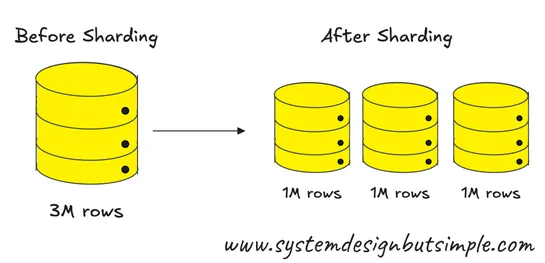
Database Sharding in 1 diagram and 204 words
Link
@faun shared a link, 9 months ago
FAUN.dev()

AI Agents and Test Suites: Lessons from the Trenches

AI agents can help wrangletest suite maintenance—if you treat them likejunior devs. That means tight prompts, clear boundaries, and someone keeping an eye on them. Teams get better results when they feed agents sharp context and task them with small, scoped jobs instead of vague laundry lists... read more  

AI Agents and Test Suites: Lessons from the Trenches
Link
@faun shared a link, 9 months ago
FAUN.dev()

Why I chose OCaml as my primary language

OCaml’s grown up. Multicore support is in. So are user-defined effects. Under the hood, affine types, staged metaprogramming, and effect typing are steering it toward resource-safe programming—with actual thrust. Its type system still slaps: powerful modules, GADTs, algebraic types, and now first-c.. read more  

Sigstore is an open source initiative designed to make software artifact signing and verification simple, automatic, and widely accessible. Its primary goal is to improve software supply chain security by enabling developers and organizations to cryptographically prove the origin and integrity of the software they build and distribute.

At its core, sigstore removes many of the traditional barriers associated with code signing. Instead of managing long-lived private keys manually, sigstore supports keyless signing, where identities are issued dynamically using OpenID Connect (OIDC) providers such as GitHub Actions, Google, or Microsoft. This dramatically lowers operational complexity and reduces the risk of key compromise.

The sigstore ecosystem is composed of several key components:

- Cosign: A tool for signing, verifying, and storing signatures for container images and other artifacts. Signatures are stored alongside artifacts in OCI registries, rather than embedded in them.

- Fulcio: A certificate authority that issues short-lived X.509 certificates based on OIDC identities, enabling keyless signing.

- Rekor: A transparency log that records signing events in an append-only, tamper-evident ledger. This provides public auditability and detection of suspicious or malicious signing activity.

Together, these components allow anyone to verify who built an artifact, when it was built, and whether it has been tampered with, using publicly verifiable cryptographic proofs. This aligns closely with modern supply chain security practices such as SLSA (Supply-chain Levels for Software Artifacts).

sigstore is widely adopted in the cloud-native ecosystem and integrates with tools like Kubernetes, container registries, CI/CD pipelines, and package managers. It is commonly used to sign container images, Helm charts, binaries, and SBOMs, and is increasingly becoming a baseline security requirement for production software delivery.

The project is governed by the OpenSSF (Open Source Security Foundation) and supported by major industry players.