Join us

ContentUpdates and recent posts about Sigstore..
Link
@faun shared a link, 7 months, 1 week ago
FAUN.dev()

What are Error Budgets? A Guide to Managing Reliability

OneUptime shows how to put **error budgets** to work—keeping feature velocity in check without tanking reliability. The goal: ship fast, stay within SLOs. They do it by tracking **burn rates**, syncing across teams, and tuning SLOs to match how users actually use the product. Less guesswork, more s.. read more  

Link
@faun shared a link, 7 months, 1 week ago
FAUN.dev()

KubeCon + CloudNativeCon North America 2025 Co-Located Event Deep Dive: Kubernetes on Edge Day

The inaugural Edge Day launched as a co-located event at KubeCon + CloudNativeCon EU in 2022, focusing on edge computing and the evolution from centralized data centers to the network edge. The event brings together academic research, enterprise use cases, and insights from the Kubernetes community... read more  

KubeCon + CloudNativeCon North America 2025 Co-Located Event Deep Dive: Kubernetes on Edge Day
Link
@faun shared a link, 7 months, 1 week ago
FAUN.dev()

Fluentd to Fluent Bit: A Migration Guide

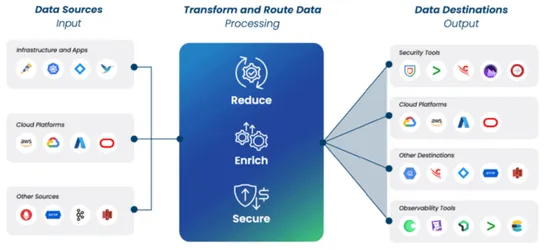
Fluent Bit just edged out Fluentd as the CNCF’s go-to log processor. Why? It's fast—up to 40× faster. Built in C. Embedded plugins. Native OpenTelemetry. Full observability baked in. It handles routing, schema changes, and telemetry across containers and edge systems without flinching. No Ruby here.. read more  

Fluentd to Fluent Bit: A Migration Guide
Link
@faun shared a link, 7 months, 1 week ago
FAUN.dev()

Intelligent Kubernetes Load Balancing at Databricks

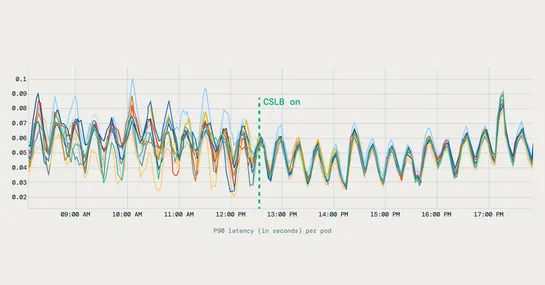
Databricks replaced default Kubernetes load balancing for a **proxyless, client-side gRPC setup**, wired up through a custom control plane. No more **CoreDNS**. No more **kube-proxy**. Clients now get live endpoint discovery through **xDS**, plus smarter routing tricks like **Power of Two Choices** .. read more  

Intelligent Kubernetes Load Balancing at Databricks
Link
@faun shared a link, 7 months, 1 week ago
FAUN.dev()

Top 10 Kubernetes Deployment Errors: Causes and Fixes (And Tips)

Misconfigured YAML. Broken image refs. Botched resource settings. Most Kubernetes deploys don't fail mysteriously—they fail predictably. This guide breaks down the top 10 culprits: things like `CrashLoopBackOff`, bad image pulls, and `OOMKills`. More importantly, it shows how to dodge them with bet.. read more  

Top 10 Kubernetes Deployment Errors: Causes and Fixes (And Tips)
Link
@faun shared a link, 7 months, 1 week ago
FAUN.dev()

v1.34: Pod Level Resources Graduated to Beta

Kubernetes v1.34 bumps **Pod Level Resources** to Beta—and flips them on by default. Now you can set CPU, memory, and hugepages limits for the whole Pod, not just per container. That means smoother scheduling, stricter resource caps, and less sidecar thrashing. **Why it matters:** This shifts Kuber.. read more  

Link
@faun shared a link, 7 months, 1 week ago
FAUN.dev()

Why Rancher's Founders Pivoted From Kubernetes to Agentic AI

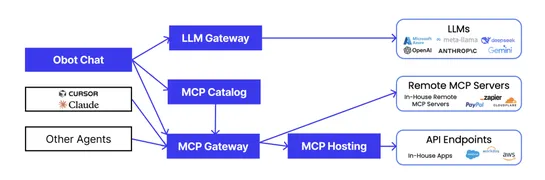
Obot.ai just dropped out of stealth with $35M in seed and a big swing: it’s building a control plane for agentic AI, anchored on the now-standard **Model Context Protocol (MCP)**. Its **MCP Gateway** handles registry, secure proxying, RBAC, and observability for MCP servers. Think API gateway, but .. read more  

Why Rancher's Founders Pivoted From Kubernetes to Agentic AI
Story FAUN.dev() Team
@eon01 shared a post, 7 months, 1 week ago
Founder, FAUN.dev

Data-Driven Developer Journalism: Announcing FAUN.dev News, a Smarter Way to Read Developer News

We launched a new news experience at FAUN.dev that uses advanced retrieval to deliver context-rich, insightful news for developers.

FAUN.dev Developer Journalism
News FAUN.dev() Team
@varbear shared an update, 7 months, 1 week ago
FAUN.dev()

Perplexity AI's Comet Browser Launches Globally, Free for All Users

Perplexity AI launches the Comet browser globally, offering it for free to enhance internet usage with features like the Comet Assistant and Background Assistants, aiming to foster curiosity and productivity.

 Activity
@kala gave 🐾 to Red Hat GitLab Breach: 570GB Data Stolen by Crimson Collective , 7 months, 1 week ago.
Sigstore is an open source initiative designed to make software artifact signing and verification simple, automatic, and widely accessible. Its primary goal is to improve software supply chain security by enabling developers and organizations to cryptographically prove the origin and integrity of the software they build and distribute.

At its core, sigstore removes many of the traditional barriers associated with code signing. Instead of managing long-lived private keys manually, sigstore supports keyless signing, where identities are issued dynamically using OpenID Connect (OIDC) providers such as GitHub Actions, Google, or Microsoft. This dramatically lowers operational complexity and reduces the risk of key compromise.

The sigstore ecosystem is composed of several key components:

- Cosign: A tool for signing, verifying, and storing signatures for container images and other artifacts. Signatures are stored alongside artifacts in OCI registries, rather than embedded in them.

- Fulcio: A certificate authority that issues short-lived X.509 certificates based on OIDC identities, enabling keyless signing.

- Rekor: A transparency log that records signing events in an append-only, tamper-evident ledger. This provides public auditability and detection of suspicious or malicious signing activity.

Together, these components allow anyone to verify who built an artifact, when it was built, and whether it has been tampered with, using publicly verifiable cryptographic proofs. This aligns closely with modern supply chain security practices such as SLSA (Supply-chain Levels for Software Artifacts).

sigstore is widely adopted in the cloud-native ecosystem and integrates with tools like Kubernetes, container registries, CI/CD pipelines, and package managers. It is commonly used to sign container images, Helm charts, binaries, and SBOMs, and is increasingly becoming a baseline security requirement for production software delivery.

The project is governed by the OpenSSF (Open Source Security Foundation) and supported by major industry players.