Join us

ContentUpdates and recent posts about Sigstore..
Story Palark Team
@shurup shared a post, 6 months, 3 weeks ago
@palark

New features introduced in Kubernetes 1.34

Kubernetes

Recently, the latest Kubernetes version, v1.34, was released with 13 new alpha features on board. They include: - KYAML, a new dialect of YAML for Kubernetes manifests, which is still compatible with all existing tooling; - asynchronous API calls to kube-apiserver during scheduling; - various enhanc..

kubernetes 1.34 release
Story
@laura_garcia shared a post, 6 months, 3 weeks ago
Software Developer, RELIANOID

🚀 Load Balancing and High Availability of Skype for Business with RELIANOID

Unified communication platforms like Skype for Business play a critical role in keeping teams connected through instant messaging, voice, and video — but maintaining high performance and availability is key. That’s where RELIANOID ADC comes in. 💪 In our latest article, we explain how to optimize Sky..

Link
@anjali shared a link, 6 months, 3 weeks ago
Customer Marketing Manager, Last9

Choosing the Right APM for Go: 11 Tools Worth Your Time

Explore 11 APM tools built for Go—from lightweight open-source options to enterprise-grade platforms that simplify debugging.

go
Link
@faun shared a link, 7 months ago
FAUN.dev()

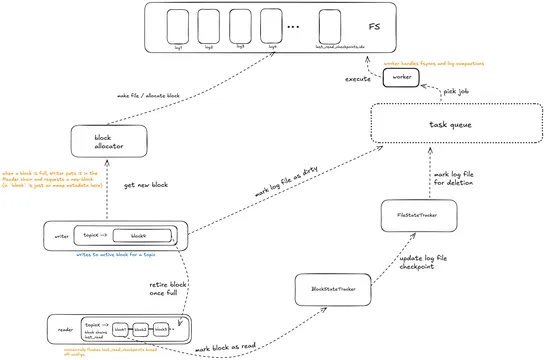
walrus: ingesting data at memory speeds

Walrusis a lock-free, single-nodeWrite Ahead Log in Rustthat rips through a million ops/sec and moves 1 GB/s of write bandwidth - on bare-metal, nothing fancy. It leans on mmap-backed sparse files, atomic counters, and zero-copy reads to get there. Each topic gets its own line of 10MB memory-mapped .. read more  

walrus: ingesting data at memory speeds
Link
@faun shared a link, 7 months ago
FAUN.dev()

OpenAI Agent Builder: A Complete Guide to Building AI Workflows Without Code

OpenAI’sAgent Builderdrops the guardrails. It’s a no-code, drag-and-drop playground for building, testing, and shipping AI workflows - logic flows straight from your brain to the screen. Tweak interfaces inWidget Studio. Plug into real systems with theAgents SDK. Just one catch: it’s locked behind P.. read more  

Link
@faun shared a link, 7 months ago
FAUN.dev()

Inside Husky’s query engine: Real-time access to 100 trillion events

SteamPipe just gutted its real-time storage engine and rebuilt it inRust. Expect faster performance and better scaling. Now runs oncolumnar storage, ships withvectorized queries, and rolls anobject store-backed WAL. Serious firepower for time series data. System shift:Another sign that high-throughp.. read more  

Link
@faun shared a link, 7 months ago
FAUN.dev()

Development gets better with Age

A longtime AWS insider, Werner Vogels, breaks down the shift from slow-and-steady software growth to the generative AI rocket ride. Capabilities soared. Guardrails? Not so much. No docs, no handrails - just launch and learn. AWS didn’t chase the hype. It pulled a classic AWS move: doubled down on B2.. read more  

Development gets better with Age
Link
@faun shared a link, 7 months ago
FAUN.dev()

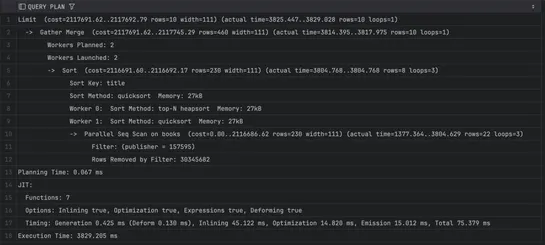
Advanced PostgreSQL Indexing: Multi-Key Queries and Performance Optimization

Advanced PostgreSQL tuning gets real results: composite indexes and CTEs can cut query latency hard when slicing huge datasets. AddLATERALjoins and indexed subqueries into the mix, and you’ve got a top-N query pattern that holds up—even when hammering long ID lists... read more  

Advanced PostgreSQL Indexing: Multi-Key Queries and Performance Optimization
Link
@faun shared a link, 7 months ago
FAUN.dev()

I'm Building a Browser for Reverse Engineers

A researcher rolled their ownChromium forkwith a customDevTools Protocol (CDP) domain- not for fun, but to surgically probe browser internals. It reaches into Canvas, WebGL, and other trickier APIs, dodging the usual sandbox and spoofing all the bot blockers they'd rather you leave alone. It injects.. read more  

I'm Building a Browser for Reverse Engineers
Link
@faun shared a link, 7 months ago
FAUN.dev()

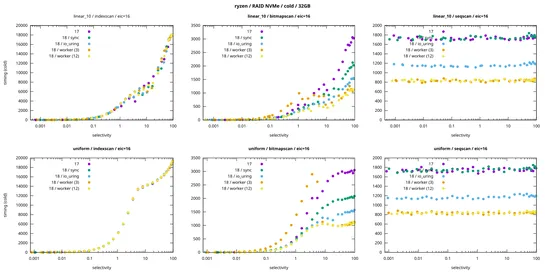
Going down the rabbit hole of Postgres 18 features by Tudor Golubenco

PostgreSQL 18 just hit stable. Big swing! Async IO infrastructureis in. That means lower overhead, tighter storage control, and less CPU getting chewed up by I/O. Adddirect IO, and the database starts flexing beyond traditional bottlenecks. OAuth 2.0? Native now. No hacks needed. UUIDv7? Built-in su.. read more  

Going down the rabbit hole of Postgres 18 features by Tudor Golubenco
Sigstore is an open source initiative designed to make software artifact signing and verification simple, automatic, and widely accessible. Its primary goal is to improve software supply chain security by enabling developers and organizations to cryptographically prove the origin and integrity of the software they build and distribute.

At its core, sigstore removes many of the traditional barriers associated with code signing. Instead of managing long-lived private keys manually, sigstore supports keyless signing, where identities are issued dynamically using OpenID Connect (OIDC) providers such as GitHub Actions, Google, or Microsoft. This dramatically lowers operational complexity and reduces the risk of key compromise.

The sigstore ecosystem is composed of several key components:

- Cosign: A tool for signing, verifying, and storing signatures for container images and other artifacts. Signatures are stored alongside artifacts in OCI registries, rather than embedded in them.

- Fulcio: A certificate authority that issues short-lived X.509 certificates based on OIDC identities, enabling keyless signing.

- Rekor: A transparency log that records signing events in an append-only, tamper-evident ledger. This provides public auditability and detection of suspicious or malicious signing activity.

Together, these components allow anyone to verify who built an artifact, when it was built, and whether it has been tampered with, using publicly verifiable cryptographic proofs. This aligns closely with modern supply chain security practices such as SLSA (Supply-chain Levels for Software Artifacts).

sigstore is widely adopted in the cloud-native ecosystem and integrates with tools like Kubernetes, container registries, CI/CD pipelines, and package managers. It is commonly used to sign container images, Helm charts, binaries, and SBOMs, and is increasingly becoming a baseline security requirement for production software delivery.

The project is governed by the OpenSSF (Open Source Security Foundation) and supported by major industry players.