Join us

ContentUpdates and recent posts about Rust..
Link
@kaptain shared a link, 3 weeks, 4 days ago
FAUN.dev()

Building a fault-tolerant metrics storage system at Airbnb

Airbnb built a metrics system that ingests50M samples/s, stores2.5PBof logical time series, and hosts1.3B active series. They use tenant-per-service grouping andshuffle sharding. They enforce per-tenant guardrails and a consolidatedcontrol plane. They shard queries and compaction. They run zone-awar.. read more  

Building a fault-tolerant metrics storage system at Airbnb
Link
@kaptain shared a link, 3 weeks, 4 days ago
FAUN.dev()

v1.36: User Namespaces in are finally GA

Kubernetesv1.36promotesUser Namespacesto GA on Linux. It brings rootless workload isolation. Kubelet leans on kernelID-mapped mounts. It sidesteps expensivechownby remappingUID/GIDat mount time and confines privileged processes. No more mass-chown screams... read more  

Link
@kala shared a link, 3 weeks, 4 days ago
FAUN.dev()

Introducing Coregit

Coregit reimplements Git's object model inTypeScriptand runs onCloudflare Workersas a serverless edge Git API. Its commit endpoint accepts up to 1,000 file changes per request and replaces 105+ GitHub calls with one. Yes - one. It acknowledges writes inDurable Objects(~2ms), then flushes objects toR.. read more  

Link
@kala shared a link, 3 weeks, 4 days ago
FAUN.dev()

The PR you would have opened yourself

ASkillports models fromtransformerstomlx-lm. It bootstraps an env, discovers variants, downloads checkpoints, writes MLX implementations, and runs layered tests. It produces disclosed PRs with per-layer diffs, dtype checks, generation examples, numerical comparisons, and a reproducible, non-agentict.. read more  

The PR you would have opened yourself
Link
@kala shared a link, 3 weeks, 4 days ago
FAUN.dev()

A GitHub agentic workflow

The developer automated parsing of unstructured release notes withGitHub agentic workflows. The pipeline compilesMarkdowntoYAML, then runs an agent. The setup requires afine-grained Copilot token. It enforces a hardenedsandboxpolicy and forbids Marketplace actions. CI runs a compile-then-compare che.. read more  

A GitHub agentic workflow
Link
@kala shared a link, 3 weeks, 4 days ago
FAUN.dev()

How LLMs Work — A Visual Deep Dive

A complete walkthrough of how large language models like ChatGPT are built, from raw internet text to a conversational assistant... read more  

How LLMs Work — A Visual Deep Dive
Link
@kala shared a link, 3 weeks, 4 days ago
FAUN.dev()

Introducing Ternary Bonsai: Top Intelligence at 1.58 Bits

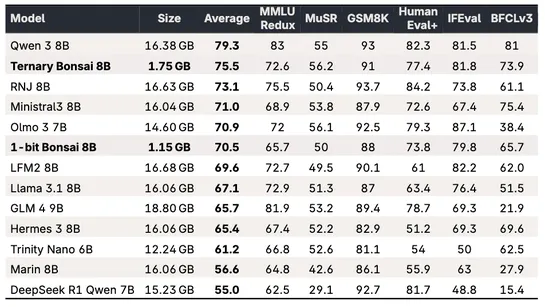
PrismML unveilsTernary Bonsai: a family of1.58-bitLMs in1.7B,4B, and8Bsizes. Models use ternary weights {-1,0,+1} with group-wise quantization. Weights are ternary (-1,0,+1). Each group of128weights shares anFP16scale. That cuts memory by ~9x versus 16-bit and boosts benchmark scores. The8Bhits 75.5.. read more  

Introducing Ternary Bonsai: Top Intelligence at 1.58 Bits
Link
@devopslinks shared a link, 3 weeks, 4 days ago
FAUN.dev()

Betterleaks: The Gitleaks Successor Built for Faster Secrets Scanning

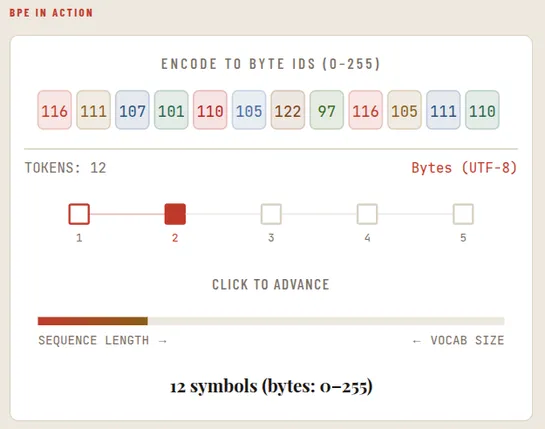
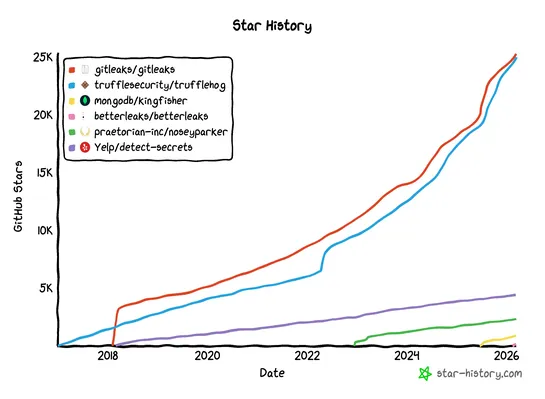
BetterleakssupplantsGitleaksas a drop-in CLI. Scans run faster. It's written inPure Go- no CGO - and performs parallel git scans. It replaces entropy heuristics with token-efficient detection viaBPE. It addsCELrule validation. Its roadmap includes LLM assist and auto-revocation... read more  

Betterleaks: The Gitleaks Successor Built for Faster Secrets Scanning
Link
@devopslinks shared a link, 3 weeks, 4 days ago
FAUN.dev()

pgit: I Imported the Linux Kernel into PostgreSQL

pgitingested 20 years of the Linux kernel: 1.43M commits, 24.4M file versions. The dataset lives inPostgreSQLwithpg-xpatch- 2.7GB on disk. A 2-hour import on a 24-core EPYC built a queryableSQLDB. Most delta-decompressed queries return in <10s. No preprocessing required... read more  

pgit: I Imported the Linux Kernel into PostgreSQL
Link
@devopslinks shared a link, 3 weeks, 4 days ago
FAUN.dev()

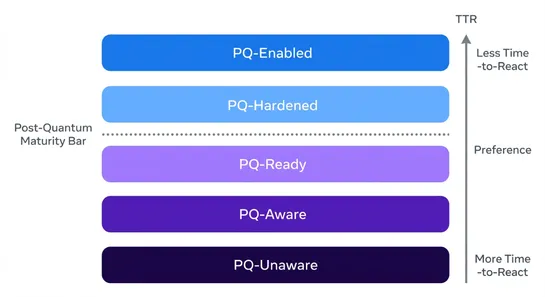
Post-Quantum Cryptography Migration at Meta: Framework, Lessons, and Takeaways

Quantum computers could decrypt data stored today in anticipation of future decryption, posing security risks despite the estimated decade-long timeline. Industry-wide PQC standards are being published by NIST to defend against such threats, including algorithms like ML-KEM and ML-DSA. The industry .. read more  

Post-Quantum Cryptography Migration at Meta: Framework, Lessons, and Takeaways
Rust is a systems programming language originally developed at Mozilla and now stewarded by the Rust Foundation. It is designed to enable developers to build fast, reliable, and secure software by preventing entire classes of bugs at compile time. Rust achieves this through its ownership model, which enforces strict rules around memory access, lifetimes, and mutability, eliminating common issues such as null pointer dereferences, use-after-free errors, and data races.

Unlike traditional systems languages such as C and C++, Rust provides strong safety guarantees while maintaining low-level control and predictable performance. Its zero-cost abstractions allow developers to write expressive, high-level code that compiles down to efficient machine instructions. Rust’s type system and concurrency model make it especially well suited for multithreaded and security-critical software.

Rust is widely used across domains including operating systems, browsers, networking infrastructure, cryptography, blockchain, and embedded systems. It has also gained strong adoption in large-scale production environments due to its excellent tooling, package ecosystem (Cargo and crates.io), and emphasis on long-term maintainability. Today, Rust is recognized as a leading language for building safe, high-performance infrastructure software.