Join us

ContentUpdates and recent posts about Rust..
Link
@faun shared a link, 1 year ago
FAUN.dev()

DR 101: Assembling Your Incident Response Team

A disaster recovery plan relies on a coordinated incident response team. The speed and coordination of this team are crucial for minimizing downtime and keeping the organization running smoothly during a crisis. Key roles within the incident response team include incident commander, technical lead, .. read more  
Link
@faun shared a link, 1 year ago
FAUN.dev()

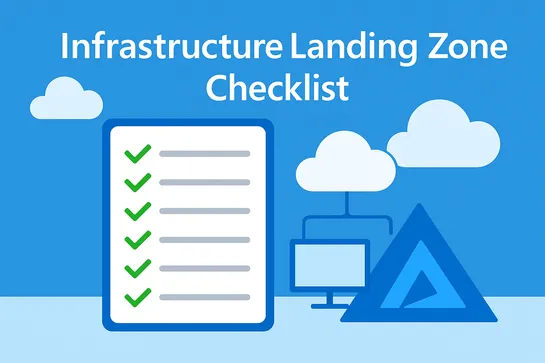
Building Azure Right: A Practical Checklist for Infrastructure Landing Zones

Azure fans are pros at dodging groundwork, which, surprise, leads to chaos; lay down a rock-solid Landing Zone to hack your costs and cut the pandemonium.GrabInfrastructure as Code tools like Terraformto smooth out deployments. Make sureRBACdoesn’t dive into the horror of unmonitored access... read more  

Building Azure Right: A Practical Checklist for Infrastructure Landing Zones
Link
@faun shared a link, 1 year ago
FAUN.dev()

Scaling Azure Microservices for Holiday Peak Traffic

Automation hacks away scaling migrainesfor microservices drowning in peak traffic. WithAzure DevOps CI/CDpipelines andIaC, scaling morphs into a cost-effective breeze. JustCosmos DB autoscalingcan shave off up to$7,200a year. Automation’s the unsung hero of cloud efficiency—no capes needed... read more  

Scaling Azure Microservices for Holiday Peak Traffic
Link
@faun shared a link, 1 year ago
FAUN.dev()

Shared Database Pattern in Microservices: When Rules Get Broken

Every shared access point is a potential failure point. The risks are real and can be catastrophic. Safe implementation includes strict data ownership, schema change protocol, data integrity protection, and auditing. Moving to a structured API layer and data separation can help mitigate risks and pl.. read more  

Link
@faun shared a link, 1 year ago
FAUN.dev()

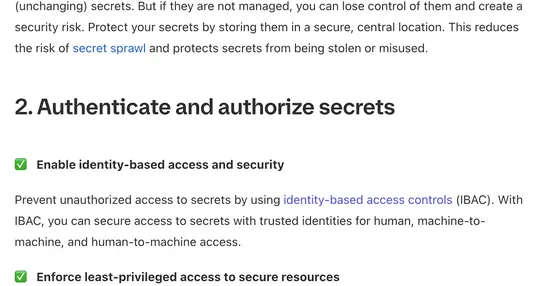
The 18-point secrets management checklist

By 2027, user blunders will cause a staggering 99% of cloud breaches, according to the experts who swear they know these things. Lock down secrets management by centralizing and automating with tools likeOktaorMicrosoft Entra ID. Don't skimp on IBAC and least-privileged access. Guard your cloud fort.. read more  

The 18-point secrets management checklist
Link
@faun shared a link, 1 year ago
FAUN.dev()

The 4 R’s of Pipeline Reliability: Data Systems That Last

RAG applicationslean on pipelines that can crumble if the4 R's frameworkisn't in place: reliable architecture, resumability, recoverability, redundancy. Ingenious stuff!.. read more  

The 4 R’s of Pipeline Reliability: Data Systems That Last
Link
@faun shared a link, 1 year ago
FAUN.dev()

Announcing Red Hat Enterprise Linux for AWS

RHEL 10for AWS makes its debut, complete with AWS-tailored performance profiles, beefed-up security, and a seamless CLI. Ready to tango with the cloud like a pro... read more  

Announcing Red Hat Enterprise Linux for AWS
Link
@faun shared a link, 1 year ago
FAUN.dev()

Bringing Kubernetes Back to Debian

KubernetesonDebianjust got its act together. The team axed the messy vendoring, shrunk the tarball bulk by over half, and tidied up dependency chaos. Now every dependency snuggles into Debian nicely, kicking out those pesky proprietary blobs. This means a secure, policy-friendly package and—drumroll.. read more  

Bringing Kubernetes Back to Debian
Link
@faun shared a link, 1 year ago
FAUN.dev()

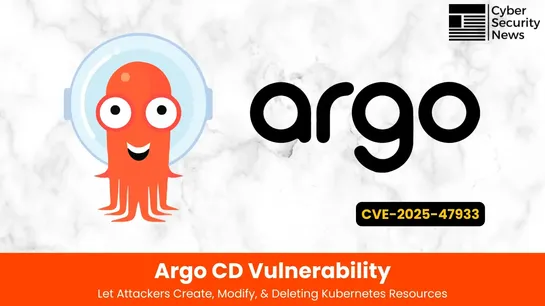
Argo CD Vulnerability Let Attackers Create, Modify, & Deleting Kubernetes Resources

CVE-2025-47933inArgo CDshreds security and hands injected JavaScript the keys to your Kubernetes kingdom. With a terrifyingCVSS score of 9.1, this one's no joke. Patch it, yesterday!.. read more  

Argo CD Vulnerability Let Attackers Create, Modify, & Deleting Kubernetes Resources
Link
@faun shared a link, 1 year ago
FAUN.dev()

Another Lightweight Kubernetes Distro Choice as k0s Joins CNCF Sandbox

k0s, the streamlined Kubernetes flavor pioneered by theCNCF Sandbox, strips it down to one slick binary. It's tailor-made for edge AI, shedding the bulky baggage. UnlikeK3s, k0s thrives on meager resources, sipping energy while skipping the tangled installation dance. Just 1-2 GB of RAM, and you're .. read more  

Rust is a systems programming language originally developed at Mozilla and now stewarded by the Rust Foundation. It is designed to enable developers to build fast, reliable, and secure software by preventing entire classes of bugs at compile time. Rust achieves this through its ownership model, which enforces strict rules around memory access, lifetimes, and mutability, eliminating common issues such as null pointer dereferences, use-after-free errors, and data races.

Unlike traditional systems languages such as C and C++, Rust provides strong safety guarantees while maintaining low-level control and predictable performance. Its zero-cost abstractions allow developers to write expressive, high-level code that compiles down to efficient machine instructions. Rust’s type system and concurrency model make it especially well suited for multithreaded and security-critical software.

Rust is widely used across domains including operating systems, browsers, networking infrastructure, cryptography, blockchain, and embedded systems. It has also gained strong adoption in large-scale production environments due to its excellent tooling, package ecosystem (Cargo and crates.io), and emphasis on long-term maintainability. Today, Rust is recognized as a leading language for building safe, high-performance infrastructure software.