Join us

ContentUpdates and recent posts about Rust..
Link
@faun shared a link, 9 months, 3 weeks ago
FAUN.dev()

Supply chain attack compromises npm packages to spread backdoor malware

A fresh supply chain ambush—Scavenger—slipped into npm through the front door. Attackers phished maintainers of high-profile packages likeis,eslint-plugin-prettier, andsynckit, then dropped cross-platform JavaScript malware straight into the codebase. Real-time C2 channels included. They typosquatt.. read more  
Link
@faun shared a link, 9 months, 3 weeks ago
FAUN.dev()

Amazon DocumentDB Serverless is now available

Amazon DocumentDB Serverless is out of preview and ready to roll. It auto-scales compute and memory usingDCUsfor MongoDB-compatible clusters. No migration needed—just upgrade your existing instance and go. Available starting in version5.0, with per-second billing based on DCU burn. What’s new:Fixed.. read more  

Link
@faun shared a link, 9 months, 3 weeks ago
FAUN.dev()

Beyond IAM access keys: Modern authentication approaches for AWS

AWS wants long-term IAM access keys gone. In their place:temporary creds via IAM roles,IAM Identity Center,CloudShell, andOIDC integrations. The push covers everything—CLI tools, local dev, compute, CI/CD, even old-school on-prem. The message is clear: rotate automatically, grant minimally, and sto.. read more  

Link
@faun shared a link, 9 months, 3 weeks ago
FAUN.dev()

Cloudflare and the infinite sadness of migrations

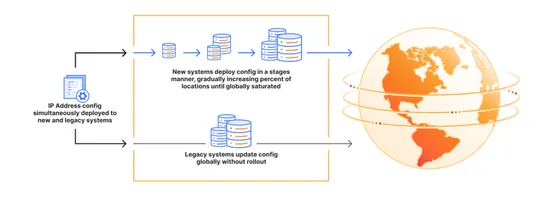
A recent Cloudflare DNS outage traced back to legacy gear tangled with global config changes. Turns out, incomplete migrations can still pack a punch. Their newer topology system does support progressive rollouts—but running it side-by-side with the old one just made the blast radius bigger. System.. read more  

Cloudflare and the infinite sadness of migrations
Link
@faun shared a link, 9 months, 3 weeks ago
FAUN.dev()

Zero Trust and Cloud-Native Windows

Microsoft’s moving the cheese again—this time steering Windows deep into the cloud. The old on-prem management playbook? Getting dusty. At the core:Intune, pushingZero Trustlike it means it. Identity-based access, always-on compliance, real-time config—no more trusting the device just because it’s .. read more  

Link
@faun shared a link, 9 months, 3 weeks ago
FAUN.dev()

vCluster: The Performance Paradox – How Virtual Clusters Save Millions Without Sacrificing Speed

vClustercuts Kubernetes infra costs by running virtual clusters as pods inside a shared host. No more spinning up full control planes for every tenant. Itslean Syncerfilters API traffic to keep clusters from melting down.Shared controllersand a built-insleep modekeep idle workloads quiet—and cheap... read more  

Link
@faun shared a link, 9 months, 3 weeks ago
FAUN.dev()

From Borg to Broken: why Kubernetes 2.0 is an apology letter

Kubernetes 2.0 is kicking YAML to the curb.After years of living and breathing.yamlfiles, the project is eyeing a hard break. Maintainers haven’t said it outright, but the message is clear: YAML isn’t cutting it anymore. System shift:This could signal a real usability reboot—maybe even a less painf.. read more  

From Borg to Broken: why Kubernetes 2.0 is an apology letter
Link
@faun shared a link, 9 months, 3 weeks ago
FAUN.dev()

Retiring Docker Content Trust

Docker’s sunsettingDocker Content Trust (DCT)in 2025, starting withDocker Official Images. Not many used it, andNotary v1is toast. So they’re moving to modern signing tools likeSigstoreandNotation. Migration guides are on the way. What’s really happening:The container world’s ditching old trustboxe.. read more  

Link
@faun shared a link, 9 months, 3 weeks ago
FAUN.dev()

How to use cache mounts to speed up Docker builds

Depot just droppedNVMe-backed cache mounts—persistent, high-speed, and wired for true incremental Docker builds. Yes, even inephemeral CI. It hooks intonative BuildKit cache mounts, supporting bothsharedandexclusiveaccess. No more fragile registry caches. No more arcane CI cache duct tape... read more  

Link
@faun shared a link, 9 months, 3 weeks ago
FAUN.dev()

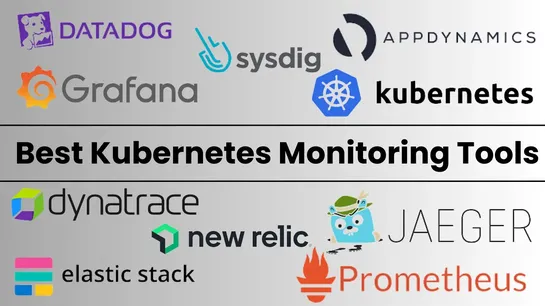
20 Best Kubernetes Monitoring Tools in 2025

Kubernetes monitoring isn't just about scraping metrics anymore. It's grown up into full-stack observability—metrics, logs, traces, plus flashy toys like AI-powered anomaly detection, real-time dashboards, and distributed tracing that actually works. The big players—Prometheus,Grafana,Datadog,Dynat.. read more  

20 Best Kubernetes Monitoring Tools in 2025
Rust is a systems programming language originally developed at Mozilla and now stewarded by the Rust Foundation. It is designed to enable developers to build fast, reliable, and secure software by preventing entire classes of bugs at compile time. Rust achieves this through its ownership model, which enforces strict rules around memory access, lifetimes, and mutability, eliminating common issues such as null pointer dereferences, use-after-free errors, and data races.

Unlike traditional systems languages such as C and C++, Rust provides strong safety guarantees while maintaining low-level control and predictable performance. Its zero-cost abstractions allow developers to write expressive, high-level code that compiles down to efficient machine instructions. Rust’s type system and concurrency model make it especially well suited for multithreaded and security-critical software.

Rust is widely used across domains including operating systems, browsers, networking infrastructure, cryptography, blockchain, and embedded systems. It has also gained strong adoption in large-scale production environments due to its excellent tooling, package ecosystem (Cargo and crates.io), and emphasis on long-term maintainability. Today, Rust is recognized as a leading language for building safe, high-performance infrastructure software.