Join us

ContentUpdates and recent posts about Pulumi..
Link
@simme shared a link, 4 weeks, 1 day ago
Senior Engineering Manager, @canonical

Boring code is an organizational tell

Boring code is an organizational symptom, not an aesthetic failure. Co-change patterns in version control reveal team boundaries before any retrospective does; ownership concentration predicts defects better than code complexity metrics. With agents removing the friction that contained clever code accumulation, the incentive structures that produce boring code have never mattered more.

gradients
Story
@cloudsignals shared a post, 1 month ago
Director - Cloud Engineering, osttra

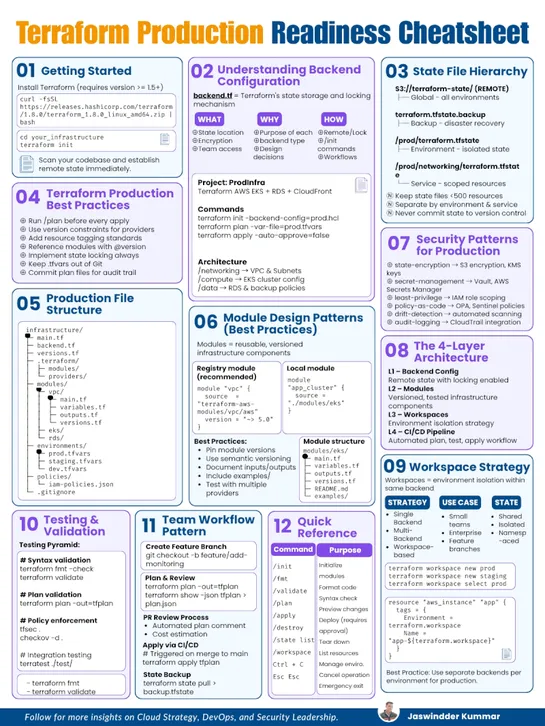
Terraform Production Readiness Cheatsheet

Terraform Terragrunt

Terraform working isn’t enough. Learn what it takes to make it production-ready — from backend design to security and automated pipelines.

Terraform Production Readiness Cheatsheet
Story
@cloudsignals shared a post, 1 month ago
Director - Cloud Engineering, osttra

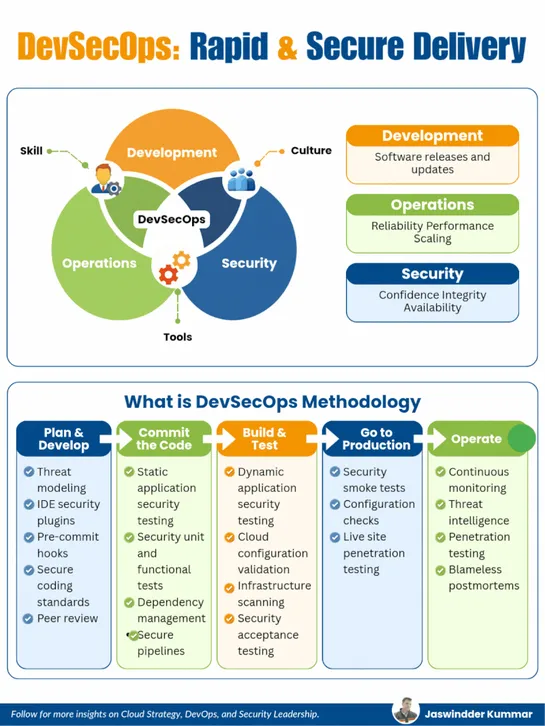
DevSecOps: Rapid & Secure Delivery

SonarQube Vault Kyverno Open Policy Agent (OPA) Trivy

If security is your last step, you’re already too late. This guide shows how to build a DevSecOps pipeline where security is continuous, automated, and invisible to delivery speed.

DevSecOps - Rapid & Secure Delivery
Link
@varbear shared a link, 1 month ago
FAUN.dev()

GitHub backs down, kills Copilot PR ‘tips’ after backlash

GitHub revoked Copilot's ability to inject tips into other users' pull requests after reports that Copilot Review inserted aRaycastlink. They disabled agent tips in PR comments, blamed a programming-logic bug, and said they won't turn tips into ads... read more  

GitHub backs down, kills Copilot PR ‘tips’ after backlash
Link
@varbear shared a link, 1 month ago
FAUN.dev()

SQLite Features You Didn’t Know It Had: JSON, text search, CTE, STRICT, generated columns, WAL

SQLite packsJSONextraction, expression indexes,FTS5full-text search,CTEs, window functions, andWALinto a single file. It enforcesstrict tables, supportsgenerated columns, and indexes JSON expressions for fast semi-structured queries... read more  

Link
@varbear shared a link, 1 month ago
FAUN.dev()

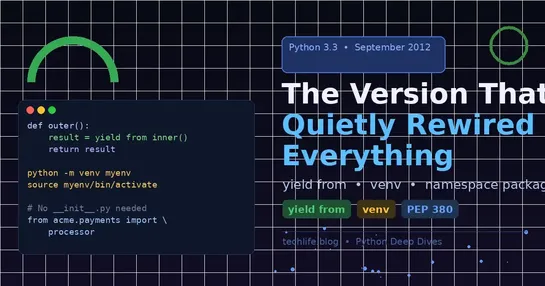
Python 3.3: The Version That Quietly Rewired Everything

Python 3.3 introduced three key features that have had a lasting impact on Python development. Firstly, yield from simplified the composition of generators by allowing easy delegation between them. Secondly, venv standardized virtual environments in Python, improving isolation and reproducibility of.. read more  

Python 3.3: The Version That Quietly Rewired Everything
Link
@varbear shared a link, 1 month ago
FAUN.dev()

I told Claude Code to build me an executive assistant. This is what my work as CTO looks like now

CTO at ZAR shares his experience managing 10 engineers, shipping code, and operating at the C-level with an AI assistant named Claude Code. The system allows him to maintain context across multiple workstreams, automate tasks, and scale his productivity. In just three weeks, he has documented 82 mee.. read more  

Link
@varbear shared a link, 1 month ago
FAUN.dev()

Email address obfuscation: What works in 2026?

The article catalogs obfuscation methods:HTML entities,SVG in an object,display:none, JavaScript decoders, custom encodings, andAES‑256. It coversmailtoobfuscation, redirects (302/301,.htaccess), interaction-gated reveals, accessibility caveats, and ahoneypot-based spam-statistics system... read more  

Link
@kaptain shared a link, 1 month ago
FAUN.dev()

How GitHub uses eBPF to improve deployment safety

GitHub hosts its own source code on github.com, creating a circular dependency. To mitigate this, GitHub maintains mirrors of its code and built assets. By using eBPF, GitHub can selectively monitor and block calls that create circular dependencies in their deployment system... read more  

How GitHub uses eBPF to improve deployment safety
Link
@kaptain shared a link, 1 month ago
FAUN.dev()

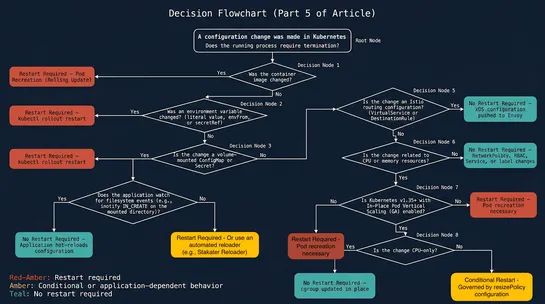
When Kubernetes restarts your pod - And when it doesn’t

Production internals guide verified against Kubernetes 1.35 GA. Engineers need to understand terminology differences to avoid flawed runbooks and bad on-call decisions. Kubelet watches the pod spec, not other resources like ConfigMaps or Secrets, to explain the majority of config update investigatio.. read more  

When Kubernetes restarts your pod - And when it doesn’t
Pulumi is an open-source infrastructure-as-code platform that allows you to define, deploy, and manage cloud resources using familiar general-purpose programming languages like Python, JavaScript, Go, and TypeScript.

Pulumi represents a major shift in the Infrastructure-as-Code (IaC) landscape by moving away from proprietary domain-specific languages (DSLs) and static configuration files like YAML or JSON. Instead, it leverages the power of standard programming languages, allowing engineers to use loops, functions, classes, and existing package managers to define their cloud environments. This means you can apply software engineering best practices—such as unit testing, modularity, and CI/CD integration—directly to your infrastructure setups on providers like AWS, Azure, Google Cloud, and Kubernetes.

The platform works by utilizing a "State" mechanism similar to Terraform, where it tracks the current deployment against your desired code. When you run a Pulumi program, it builds a resource graph to determine the most efficient way to provision or update your services. Because it uses real code, it provides superior IDE support, including auto-completion and type-checking, which significantly reduces the syntax errors and "trial-and-error" deployments common with text-based configuration tools.

Furthermore, Pulumi excels in hybrid and multi-cloud environments by providing a unified workflow for both infrastructure and application delivery. It bridges the gap between developers and platform engineers, as both can now speak the same language—literally.