Join us

ContentUpdates and recent posts about Pelagia..
Link
@varbear shared a link, 2 months, 4 weeks ago
FAUN.dev()

Software engineering when machine writes the code

In 1968, computer scientists identified the "software crisis" - the existing methods of programming were struggling to handle the power of computers. Today, AI coding assistants are accelerating productivity, but concerns arise about understanding the code they generate, the implications for debuggi.. read more  

Link
@varbear shared a link, 2 months, 4 weeks ago
FAUN.dev()

Unconventional PostgreSQL Optimizations

PostgreSQL 18 now supportsvirtual generated columns, indexable expressions without burning storage. Perfect for standardizing queries in analytics-heavy pipelines. Pair that withplanner constraint exclusion(constraint_exclusion=on), and Postgres can dodge irrelevant table scans based on constraints... read more  

Unconventional PostgreSQL Optimizations
Link
@varbear shared a link, 2 months, 4 weeks ago
FAUN.dev()

The challenges of soft delete

"Soft delete" sounds gentle. It isn't. Slapping adeleted_atcolumn on every table pollutes queries, drags down migrations, and leaves tombstones all over production. This post digs into saner options:PostgreSQL triggers,event archiving in the app layer, andCDC via WAL. Each separates the dead stuff f.. read more  

Link
@varbear shared a link, 2 months, 4 weeks ago
FAUN.dev()

How I Taught GitHub Copilot Code Review to Think Like a Maintainer

Vibe coding has made contributing to open source easier, but the high number of contributions to the AI agent framework goose has posed a challenge. An AI Code Review agent like Copilot can help review PRs, but tuning its feedback is crucial for reducing noise and increasing value. By providing clea.. read more  

Link
@kaptain shared a link, 2 months, 4 weeks ago
FAUN.dev()

Experimenting with Gateway API using kind

A new guide shows how to runGateway APIlocally withkindandcloud-provider-kind. It spins up a one-node Kubernetes cluster in Docker - complete with LoadBalancer Services and a Gateway API controller. Cloud vibes, zero cloud bill. Fire it up to deploy demo apps, test routing, or poke around with CRD e.. read more  

Link
@kaptain shared a link, 2 months, 4 weeks ago
FAUN.dev()

Cluster API v1.12: Introducing In-place Updates and Chained Upgrades

Cluster API v1.12.0 addsin-place updatesandchained upgrades, so machines can swap parts without going down, and clusters can jump versions without drama. KubeadmControlPlaneandMachineDeploymentsnow choose between full rollouts or surgical patching, depending on what changed. The goal: keep clusters .. read more  

Link
@kaptain shared a link, 2 months, 4 weeks ago
FAUN.dev()

Ingress NGINX: Statement from the Steering and Security Response Committees

Kubernetes is cutting offIngress NGINXin March 2026. No more updates. No bug fixes. No security patches. Done. Roughly half of cloud-native setups still rely on it, but it's been understaffed for years. If you're one of them, it's time to move. There’s no plug-and-play replacement, but the ecosystem.. read more  

Link
@kaptain shared a link, 2 months, 4 weeks ago
FAUN.dev()

Run a Private Personal AI with Clawdbot + DMR

Clawdbot just plugged intoDocker Model Runner (DMR). That means you can now run your own OpenAI-compatible assistant, locally, on your hardware. No cloud. No per-token fees. No data leaking into the void!.. read more  

Run a Private Personal AI with Clawdbot + DMR
Link
@kaptain shared a link, 2 months, 4 weeks ago
FAUN.dev()

New Conversion from cgroup v1 CPU Shares to v2 CPU Weight

A new quadratic formula now mapscgroup v1 CPU sharestocgroup v2 CPU weight. Why? Because the old linear approach messed with CPU fairness; especially at low share values. This fix nails prioritization where it counts. It lands at theOCI runtime layer, live inrunc v1.3.2andcrun v1.23, so containers f.. read more  

Link
@kala shared a link, 3 months ago
FAUN.dev()

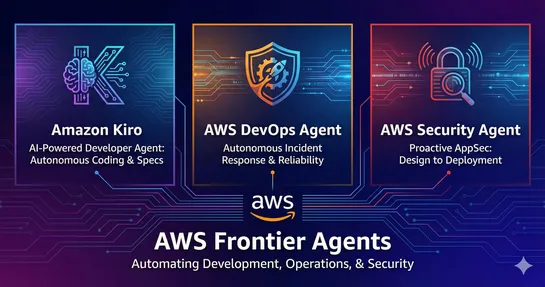
AWS Frontier Agents: Kiro, DevOps Agent, and Security Agent

“Frontier Agents” drop straight into incident workflows. They kick off investigations on their own, whether triggered by alarms or a human hand, pulling together logs, metrics, and deployment context fast. Findings show up where they’re needed: Slack threads, tickets, operator dashboards. No shell c.. read more  

AWS Frontier Agents: Kiro, DevOps Agent, and Security Agent
Pelagia is a Kubernetes controller that provides all-in-one management for Ceph clusters installed by Rook. It delivers two main features:

Aggregates all Rook Custom Resources (CRs) into a single CephDeployment resource, simplifying the management of Ceph clusters.
Provides automated lifecycle management (LCM) of Rook Ceph OSD nodes for bare-metal clusters. Automated LCM is managed by the special CephOsdRemoveTask resource.

It is designed to simplify the management of Ceph clusters in Kubernetes installed by Rook.

Being solid Rook users, we had dozens of Rook CRs to manage. Thus, one day we decided to create a single resource that would aggregate all Rook CRs and deliver a smoother LCM experience. This is how Pelagia was born.

It supports almost all Rook CRs API, including CephCluster, CephBlockPool, CephFilesystem, CephObjectStore, and others, aggregating them into a single specification. We continuously work on improving Pelagia's API, adding new features, and enhancing existing ones.

Pelagia collects Ceph cluster state and all Rook CRs statuses into single CephDeploymentHealth CR. This resource highlights of Ceph cluster and Rook APIs issues, if any.

Another important thing we implemented in Pelagia is the automated lifecycle management of Rook Ceph OSD nodes for bare-metal clusters. This feature is delivered by the CephOsdRemoveTask resource, which automates the process of removing OSD disks and nodes from the cluster. We are using this feature in our everyday day-2 operations routine.