Join us

ContentUpdates and recent posts about Pelagia..
Link
@faun shared a link, 9 months, 2 weeks ago
FAUN.dev()

Introducing Approvals in Pulumi ESC

Pulumi ESC just leveled up withApprovals—structured reviews for environment config changes, straight from Console, CLI, SDK, or VS Code. Think pull requests, but for your infra settings. No more YOLO updates. Teams can now lock down config changes with required sign-offs. More control. Cleaner logs.. read more  
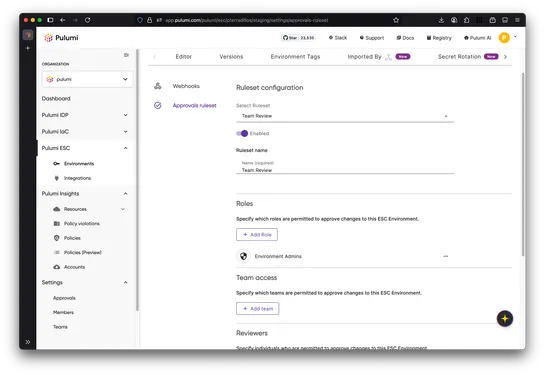
Introducing Approvals in Pulumi ESC
Link
@faun shared a link, 9 months, 2 weeks ago
FAUN.dev()

Kali Linux can now run in Apple containers on macOS systems

Cybersecurity professionals can now launch Kali Linux in a virtualized container on macOS Sequoia using Apple's new containerization framework. Apple announced a new framework at WWDC 2025, allowing Apple Silicon hardware to run isolated Linux distros in a virtualized environment. There are limitati.. read more  

Link
@faun shared a link, 9 months, 2 weeks ago
FAUN.dev()

Cloud native is not just for hyperscalers

CNCF just dropped anAI workload conformance program, built like the Kubernetes one—so AI tools play nice across clusters. Portability, meet your referee. It’s tightening the loop betweenOpenTelemetry and OpenSearch, turning ad-hoc hacks into actual cross-project coordination. AndBackstage and GitOp.. read more  

Cloud native is not just for hyperscalers
Link
@faun shared a link, 9 months, 2 weeks ago
FAUN.dev()

MariaDB Kubernetes Operator 25.08.0 Adds AI Vector Support and Disaster Recovery Enhancements

MariaDB Kubernetes Operator 25.08.0 drops some real upgrades. First up:physical backups. Now supported through native MariaDB tools and Kubernetes CSI snapshots—huge win if you're dealing with chunky datasets and tight recovery windows. It alsodefaults to MariaDB 11.8, which brings in anative vect.. read more  

MariaDB Kubernetes Operator 25.08.0 Adds AI Vector Support and Disaster Recovery Enhancements
Link
@faun shared a link, 9 months, 2 weeks ago
FAUN.dev()

How I eliminated networking complexity

A fresh pattern’s gaining traction:Docker + Tailscale sidecarsreplacing old-school reverse proxies and clunky VPNs. Each service runs as its ownmesh-routed node, containerized and independent. The trick?Network namespace sharing.App containers hook into the Tailscale mesh with no exposed ports, no .. read more  

Link
@faun shared a link, 9 months, 2 weeks ago
FAUN.dev()

AI inference supercharges on Google Kubernetes Engine

Google Cloud's pushingGKEbeyond container orchestration, framing it as an AI inference engine. Meet the new crew: theInference Gateway(smart load balancer, talks models and hardware),custom compute classes, and aDynamic Workload Schedulerthat tunes for both speed and spend. The setup handles GPU an.. read more  

Link
@faun shared a link, 9 months, 2 weeks ago
FAUN.dev()

Kubernetes Will Solve YAML Headaches with KYAML

Kubernetes is eyeing a YAML remix. Version 1.34 may bring inKYAML—a stricter, YAML-compatible subset built to cut down on sloppy configs and sneaky formatting bugs. KYAML keeps the good parts: comments, trailing commas, unquoted keys. But it dumps YAML’s whitespace drama. Existing manifests and Hel.. read more  

Kubernetes Will Solve YAML Headaches with KYAML
Link
@faun shared a link, 9 months, 2 weeks ago
FAUN.dev()

Kubernetes Observability: Pillars, Tools & Best Practices

Kubernetes observability isn’t just about catching metrics or tailing logs. It’s about stitching togethermetrics, logs, and tracesto see what’s actually happening—across services, over time, and through the chaos. Thing is, Kubernetes doesn’t come with this built in. So teams hack together toolchai.. read more  

Link
@faun shared a link, 9 months, 2 weeks ago
FAUN.dev()

Cloudera Acquires Taikun for Managing Kubernetes and Cloud

Cloudera acquired Taikun for seamless deployment of data and AI workloads in any environment. This move reinforces Cloudera's commitment to flexibility and innovation in managing complex IT infrastructures... read more  

Link
@faun shared a link, 9 months, 2 weeks ago
FAUN.dev()

Introducing Headlamp AI Assistant

Headlamp just dropped an AI Assistant plugin that foldsLLM-driven actions and queriesstraight into the Kubernetes UI. It taps intocontext-aware promptsto spot issues, restart deployments, and hunt down flaky pods—without leaving the interface. System shift:This pushes Kubernetes toward intent-based.. read more  

Pelagia is a Kubernetes controller that provides all-in-one management for Ceph clusters installed by Rook. It delivers two main features:

Aggregates all Rook Custom Resources (CRs) into a single CephDeployment resource, simplifying the management of Ceph clusters.
Provides automated lifecycle management (LCM) of Rook Ceph OSD nodes for bare-metal clusters. Automated LCM is managed by the special CephOsdRemoveTask resource.

It is designed to simplify the management of Ceph clusters in Kubernetes installed by Rook.

Being solid Rook users, we had dozens of Rook CRs to manage. Thus, one day we decided to create a single resource that would aggregate all Rook CRs and deliver a smoother LCM experience. This is how Pelagia was born.

It supports almost all Rook CRs API, including CephCluster, CephBlockPool, CephFilesystem, CephObjectStore, and others, aggregating them into a single specification. We continuously work on improving Pelagia's API, adding new features, and enhancing existing ones.

Pelagia collects Ceph cluster state and all Rook CRs statuses into single CephDeploymentHealth CR. This resource highlights of Ceph cluster and Rook APIs issues, if any.

Another important thing we implemented in Pelagia is the automated lifecycle management of Rook Ceph OSD nodes for bare-metal clusters. This feature is delivered by the CephOsdRemoveTask resource, which automates the process of removing OSD disks and nodes from the cluster. We are using this feature in our everyday day-2 operations routine.