Join us

ContentUpdates and recent posts about Pelagia..
Link
@faun shared a link, 9 months ago
FAUN.dev()

How to Deploy a Kubernetes App on AWS EKS

AWS EKS takes the grunt work out of running Kubernetes. It handles the control plane, automates upgrades, hooks into IAM and VPC, and scales without breaking a sweat. Witheksctlandkubectl, devs can launch clusters fast, drop in their YAML, and wire up services through built-in load balancers... read more  
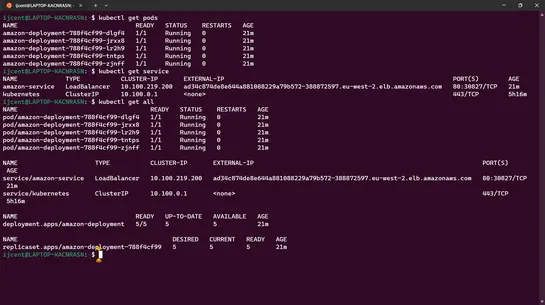
How to Deploy a Kubernetes App on AWS EKS
Link
@faun shared a link, 9 months ago
FAUN.dev()

Critical Kubernetes Capsule Vulnerability Allows Arbitrary Namespace Label Injection

Capsule v0.10.3had a problem. Tenant users could sneak their own labels into system namespaces—an easy way to punch holes in Kubernetes multi-tenancy. v0.10.4shuts that down. It tightens namespace validation and clamps down on label injection... read more  

Link
@faun shared a link, 9 months ago
FAUN.dev()

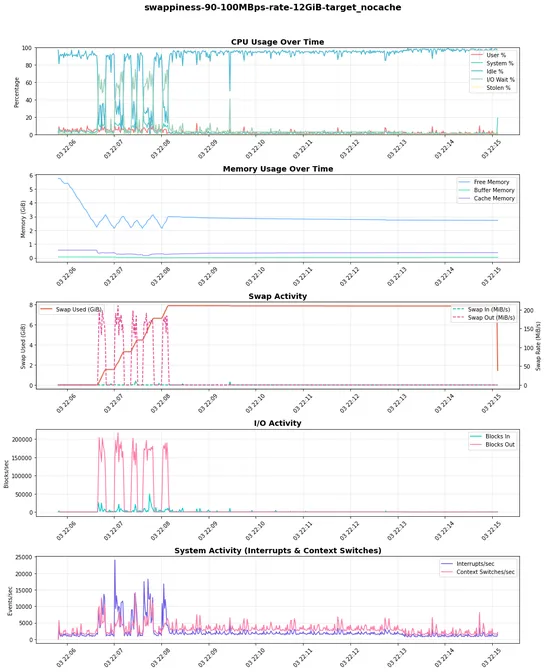
Tuning Linux Swap for Kubernetes: A Deep Dive

Kubernetes v1.34makesNodeSwapofficial. For the first time, swap on Linux nodes is fully supported—breaking with the old norm of just turning it off. Why it matters: NodeSwap gives the kubelet a pressure valve. Instead of firing off OOM kills, it can push some memory to disk. But this isn’t a free w.. read more  

Tuning Linux Swap for Kubernetes: A Deep Dive
Link
@faun shared a link, 9 months ago
FAUN.dev()

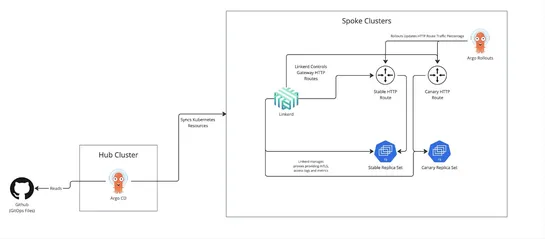
How Imagine Learning Reduced Operational Overhead by 20% With Linkerd

Imagine Learning tore down its old platform and rebuilt it onLinkerdwithAWS EKS, layering inArgo CDandArgo Rollouts. The result? GitOps deploys, canary releases via the Gateway API, and mTLS baked in from the start. The payoff: Over80%cut in compute costs. 97%fewer service mesh CVEs. 20%drop in op.. read more  

How Imagine Learning Reduced Operational Overhead by 20% With Linkerd
Link
@faun shared a link, 9 months ago
FAUN.dev()

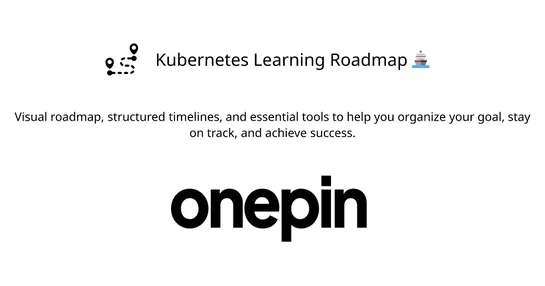
Kubernetes Learning Roadmap

The Kubernetes Learning Roadmap covers key concepts such as understanding Kubernetes use cases, installing Kubernetes locally, interacting with Kubernetes using YAML and kubectl, managing deployments and replica sets, and networking in Kubernetes. Additionally, it includes topics like managing envir.. read more  

Kubernetes Learning Roadmap
Story
@laura_garcia shared a post, 9 months ago
Software Developer, RELIANOID

💻 Linux Tip: ss Command Cheatsheet

The ss (Socket Statistics) command is a faster, more powerful alternative to netstat—perfect for troubleshooting and monitoring network connections. From checking listening ports 🔎 to analyzing load balancer traffic ⚡, our new Cheatsheet gives you the key commands in one place. 👉 Read the 1-minute g..

Story
@laura_garcia shared a post, 9 months ago
Software Developer, RELIANOID

🔹 Load Balancing and High Availability for Skype for Business 🔹

In today’s enterprises, Skype for Business is more than just a communication tool—it’s the backbone of collaboration, meetings, and customer interactions. But what happens when downtime strikes? 🚫 Missed client calls 🚫 Halted internal collaboration 🚫 Reduced productivity That’s why High Availability..

Link
@excelredtech shared a link, 9 months ago

Why Java Still Dominates in Full-Stack Development

Java remains a top choice for enterprise-level applications due to its stability, security, and rich ecosystem. A Java full stack developer course helps learners master frameworks like Spring Boot and Hibernate, equipping them to build scalable apps end-to-end. With its cross-platform capability and strong community support, Java continues to offer excellent career opportunities for developers who want to stay relevant in today’s tech industry.

Why Java Still Dominates in Full-Stack Development
Story
@girishkumarb shared a post, 9 months ago
SEO Executive, uCertify

Top 10 Azure Services Every Developer Should Know About in 2025

Microsoft Azure continues to dominate cloud computing in 2025, offering developers a wide range of tools to build, deploy, and scale applications efficiently. Key services like App Services, Functions, SQL Database, Cosmos DB, Blob Storage, DevOps, Kubernetes Service, AI Services, Key Vault, and Monitor are essential for modern development. Mastering these helps developers streamline workflows, integrate AI, secure data, and deliver high-performing applications—making Azure knowledge a must-have skill in today’s tech landscape.

Microsoft Azure cloud platform tools and services for developers in 2025
Story
@idjuric660 shared a post, 9 months ago
Technical Content Writer, Mailtrap

Send Emails with Lovable and Mailtrap

Mailtrap.io

Learn how to integrate Mailtrap with your Lovable application to send transactional emails, manage contacts, and create powerful email workflows without writing complex code.

lovable-logo
Pelagia is a Kubernetes controller that provides all-in-one management for Ceph clusters installed by Rook. It delivers two main features:

Aggregates all Rook Custom Resources (CRs) into a single CephDeployment resource, simplifying the management of Ceph clusters.
Provides automated lifecycle management (LCM) of Rook Ceph OSD nodes for bare-metal clusters. Automated LCM is managed by the special CephOsdRemoveTask resource.

It is designed to simplify the management of Ceph clusters in Kubernetes installed by Rook.

Being solid Rook users, we had dozens of Rook CRs to manage. Thus, one day we decided to create a single resource that would aggregate all Rook CRs and deliver a smoother LCM experience. This is how Pelagia was born.

It supports almost all Rook CRs API, including CephCluster, CephBlockPool, CephFilesystem, CephObjectStore, and others, aggregating them into a single specification. We continuously work on improving Pelagia's API, adding new features, and enhancing existing ones.

Pelagia collects Ceph cluster state and all Rook CRs statuses into single CephDeploymentHealth CR. This resource highlights of Ceph cluster and Rook APIs issues, if any.

Another important thing we implemented in Pelagia is the automated lifecycle management of Rook Ceph OSD nodes for bare-metal clusters. This feature is delivered by the CephOsdRemoveTask resource, which automates the process of removing OSD disks and nodes from the cluster. We are using this feature in our everyday day-2 operations routine.