Join us

ContentUpdates and recent posts about NanoClaw..
Link
@kala shared a link, 4 months, 1 week ago
FAUN.dev()

Jensen Huang's Stark Warning: China's 1 Million AI Workers vs America's 20,000

Nvidia CEO Jensen Huang, in some leaked comments, didn’t mince words: U.S. export bans aren’t hobbling China’s AI game - they’re fueling it. He pointed to Huawei’s 910C chip edging close to H100 territory, a forecast putting China ahead in AI compute by 2027, and a fast-growing local chip industry n.. read more  

Jensen Huang's Stark Warning: China's 1 Million AI Workers vs America's 20,000
Link
@kala shared a link, 4 months, 1 week ago
FAUN.dev()

Context Management in Amp

Amp stretches the context window into something more useful. It pulls in system prompts, tool info, runtime metadata, even AGENTS.md files - fuel for agentic behavior. It gives devs serious control: edit messages, fork threads, drop in files with @mentions, hand off conversations, or link threads to.. read more  

Context Management in Amp
Link
@kala shared a link, 4 months, 1 week ago
FAUN.dev()

Google to release Nano Banana Pro next week

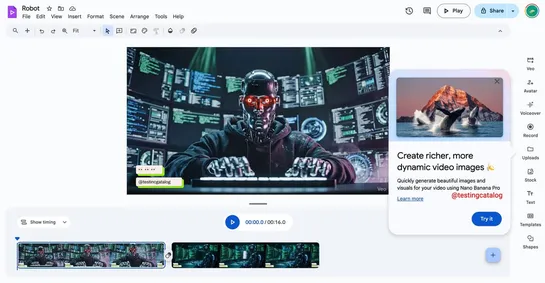
Google dropsGemini 3and the newNano Banana Pronext week. Big swing at image generation - now tied tight to Gemini 3 Pro. Early glimpses in Google Vids hint Nano Banana Pro is built for sharper visuals in creative tools. System shift:Google’s stacking its apps behind a single backbone: Gemini 3 Pro. .. read more  

Google to release Nano Banana Pro next week
Link
@kala shared a link, 4 months, 1 week ago
FAUN.dev()

Inside Cursor - Sixty days with the AI coding decacorn

Cursor is shaking up recruiting by treating the hiring process as more about the person than the job, resulting in a fast-growing team of exceptional individuals drawn in by the company's compelling mission and focus on challenging technical problems. Women in product and engineering roles are a kno.. read more  

Link
@kala shared a link, 4 months, 1 week ago
FAUN.dev()

The Fatal Math Error Killing Every AI Architecture - Including The New Ones

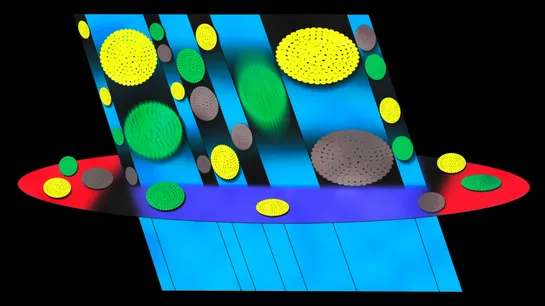
LLMs are fading as JEPA (Joint Embedding Predictive Architecture) emerges with joint, embedding, predictive architecture. JEPA is a step towards true intelligence by avoiding the flat, finite spreadsheet trap of Euclidean space and opting for a toroidal model... read more  

Link
@kala shared a link, 4 months, 1 week ago
FAUN.dev()

Introducing structured output for Custom Model Import in Amazon Bedrock

Amazon Bedrock’s Custom Model Import just got structured output support. Now LLMs can lock their responses to your JSON schema - no prompt hacks, no cleanup after... read more  

Link
@kala shared a link, 4 months, 1 week ago
FAUN.dev()

Building a Healthcare Robot from Simulation to Deployment with NVIDIA Isaac

NVIDIA just droppedIsaac for Healthcare v0.4, and it’s a big one. Headliner: the newSO-ARM starter workflow- a full-stack sim2real pipeline built for surgical robotics. It covers the whole loop: spin up synthetic and real-world data capture, train withGR00t N1.5, and deploy straight to 6-DOF hardwar.. read more  

Link
@kala shared a link, 4 months, 1 week ago
FAUN.dev()

LaTeX, LLMs and Boring Technology 

LLMs are tearing down LaTeX's old walls. Syntax hell, cryptic errors, clunky formatting - easier now. Whether baked into editors or running solo, these models smooth the pain. Why does it work so well? LaTeX has history. Mountains of examples. It's the perfect training set. That puts newer contender.. read more  

Link
@devopslinks shared a link, 4 months, 1 week ago
FAUN.dev()

Visibility at Scale: How Detects Sensitive Data Exposure

Segment gutted its old permissions table—bloated, slow, tangled in logic - and replaced it with a lean, service-based setup. The new stack runs onPostgres,Redis, and a sharply tunedGo API, cutting query times from 1400ms to under 100ms. Clean, fast, and centralized... read more  

Visibility at Scale: How Detects Sensitive Data Exposure
Link
@devopslinks shared a link, 4 months, 1 week ago
FAUN.dev()

Terraform vs. Pulumi vs. Crossplane: Choosing the right IaC Tool for your platform

Terraform, Pulumi, and Crossplane take very different routes to Infrastructure as Code.Terraformsticks to a declarative HCL model with a massive provider ecosystem.Pulumiflips the script—developers write infrastructure in real languages, so logic is testable and dynamic.Crossplane? It runs inside Ku.. read more  

Terraform vs. Pulumi vs. Crossplane: Choosing the right IaC Tool for your platform
NanoClaw is an open-source personal AI agent designed to run locally on your machine while remaining small enough to fully understand and audit. Built as a lightweight alternative to larger agent frameworks, the system runs as a single Node.js process with roughly 3,900 lines of code spread across about 15 source files.

The agent integrates with messaging platforms such as WhatsApp and Telegram, allowing users to interact with their AI assistant directly through familiar chat applications. Each conversation group operates independently and maintains its own memory and execution environment.

A core design principle of NanoClaw is security through isolation. Every agent session runs inside its own container using Docker or Apple Container, ensuring that the agent can only access files and resources that are explicitly mounted. This approach relies on operating system–level sandboxing rather than application-level permission checks.

The architecture is intentionally simple: a single orchestrator process manages message queues, schedules tasks, launches containerized agents, and stores state in SQLite. Additional functionality can be added through a modular skills system, allowing users to extend capabilities without increasing the complexity of the core codebase.

By combining a minimal architecture with container-based isolation and messaging integration, NanoClaw aims to provide a transparent, customizable personal AI agent that users can run and control entirely on their own infrastructure.