Join us

ContentUpdates and recent posts about NanoClaw..
Link
@devopslinks shared a link, 4 months, 1 week ago
FAUN.dev()

Creating VMs in separate ZFS filesystems

A dev split KVM/QEMU VMs out of a shared ZFS directory and into their own ZFS filesystems. Why? Snapshot rollbacks. Finer-grained storage control. Clean. The new setup rides a fresh ZFS pool tuned with a 64KBrecordsizefor QCOW2 images. That lines up virtual disk performance with the real IO under th.. read more  
Link
@devopslinks shared a link, 4 months, 1 week ago
FAUN.dev()

Notes on switching to Helix from vim

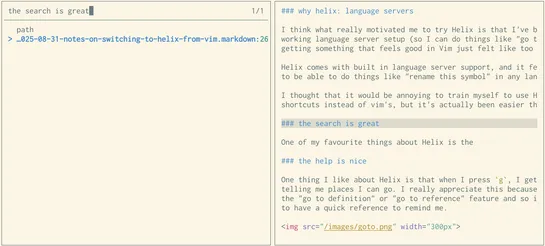
Helix keeps things lean - and that's the point. It ships withLSP support, multi-cursor editing, and smart search baked in. No dotfile gymnastics required. That alone has peeled some loyalists off Vim and Neovim. Still rough around the edges. No persistent undo. No auto-reload. Markdown support's a b.. read more  

Notes on switching to Helix from vim
Link
@devopslinks shared a link, 4 months, 1 week ago
FAUN.dev()

How Google, Amazon, and CrowdStrike broke millions of systems

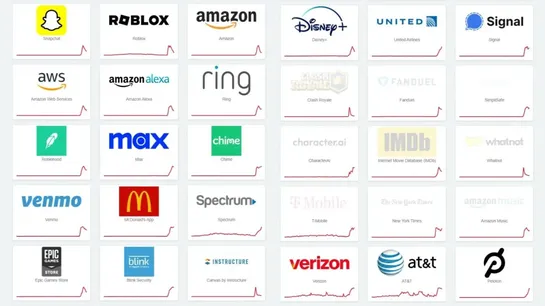
AWS. Google Cloud. Azure. CrowdStrike. All hit hard by dumb bugs with big blast radii - race conditions, nulls, misfired configs. Small cracks. Massive fallout. AWS's DNS automation knocked out its DynamoDB endpoint, dragging 113 services down with it. Google Cloud’s global APIs fell over from a str.. read more  

How Google, Amazon, and CrowdStrike broke millions of systems
Story
@laura_garcia shared a post, 4 months, 1 week ago
Software Developer, RELIANOID

EU's Cybersecurity standards for IoT devices

🔒 The EU enforces strict cybersecurity standards for IoT devices: securing networks, protecting privacy, and preventing fraud. At RELIANOID, we share this open-source commitment to resilience — helping organizations build safer, more reliable digital ecosystems. #CyberSecurity#IoT#OpenSource#Digital..

Blog IoT Security RELIANOID
Link
@anjali shared a link, 4 months, 1 week ago
Customer Marketing Manager, Last9

Top 9 Web Application Performance Monitoring Tools for 2025

Explore 2025’s top APM tools — from open-source stacks to enterprise platforms — and see how each helps you monitor smarter.

web_apm
News FAUN.dev() Team
@kaptain shared an update, 4 months, 1 week ago
FAUN.dev()

CNCF Launches Certified Kubernetes AI Conformance Program at KubeCon

#AI/ML  #Certifi...  #ML  #AI  #kuberne... 
Kubernetes

The Cloud Native Computing Foundation launched the Certified Kubernetes AI Conformance Program to set standards for AI workloads on Kubernetes, ensuring reliability and consistency.

CNCF Launches Certified Kubernetes AI Conformance Program at KubeCon
News FAUN.dev() Team
@kala shared an update, 4 months, 1 week ago
FAUN.dev()

GPT-5.1 Launches With 'Instant' and 'Thinking' Models - Here's What's New

ChatGPT

OpenAI announces GPT-5.1, enhancing ChatGPT and OpenAI APIs with improved intelligence and conversational abilities, offering two models for better reasoning and personalization, initially for paid users.

GPT-5.1 Launches With 'Instant' and 'Thinking' Models - Here's What's New
News FAUN.dev() Team
@devopslinks shared an update, 4 months, 1 week ago
FAUN.dev()

Debian 13.2 Is Out: New Updates, Strong Security, and Years of Support Ahead

Debian

Debian 13.2 Trixie, released on November 25th, 2025, offers significant updates, new software packages, and supports multiple architectures, emphasizing versatility for desktops and servers.

Debian 13 Trixie
News FAUN.dev() Team Trending
@varbear shared an update, 4 months, 1 week ago
FAUN.dev()

GitHub’s New Raptor Mini Makes Copilot Smarter - and It’s Free (for Now)

GitHub Copilot Visual Studio Code

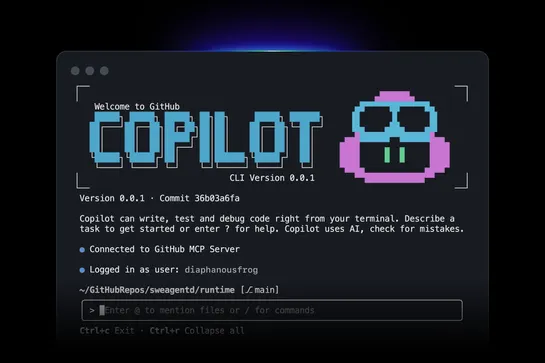
GitHub introduces Raptor mini for Copilot in VS Code, expanding AI capabilities for Pro and Free users.

GitHub’s New Raptor Mini Makes Copilot Smarter - and It’s Free (for Now)
News FAUN.dev() Team
@kaptain shared an update, 4 months, 1 week ago
FAUN.dev()

Microsoft Defender Now Blocks Pod Privilege Escalation

JFrog Artifactory Microsoft Defender for Cloud

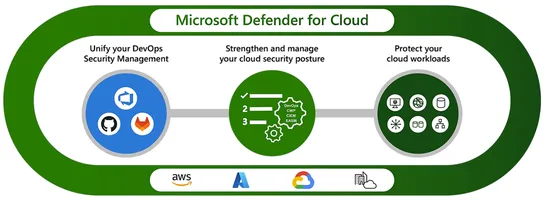
Microsoft Defender for Cloud enhances Kubernetes security with new features, updates container vulnerability re-scan policies, and expands support for Jfrog Artifactory and Docker Hub.

Microsoft Defender Now Blocks Pod Privilege Escalation
NanoClaw is an open-source personal AI agent designed to run locally on your machine while remaining small enough to fully understand and audit. Built as a lightweight alternative to larger agent frameworks, the system runs as a single Node.js process with roughly 3,900 lines of code spread across about 15 source files.

The agent integrates with messaging platforms such as WhatsApp and Telegram, allowing users to interact with their AI assistant directly through familiar chat applications. Each conversation group operates independently and maintains its own memory and execution environment.

A core design principle of NanoClaw is security through isolation. Every agent session runs inside its own container using Docker or Apple Container, ensuring that the agent can only access files and resources that are explicitly mounted. This approach relies on operating system–level sandboxing rather than application-level permission checks.

The architecture is intentionally simple: a single orchestrator process manages message queues, schedules tasks, launches containerized agents, and stores state in SQLite. Additional functionality can be added through a modular skills system, allowing users to extend capabilities without increasing the complexity of the core codebase.

By combining a minimal architecture with container-based isolation and messaging integration, NanoClaw aims to provide a transparent, customizable personal AI agent that users can run and control entirely on their own infrastructure.