Join us

ContentUpdates and recent posts about NanoClaw..
Link
@devopslinks shared a link, 2 months, 3 weeks ago
FAUN.dev()

Agent-Driven SRE Investigations: A Practical Deep Dive into Multi-Agent Incident Response

A sandboxed setup dropped multiple Claude-powered agents into Docker containers to run a full incident response drill. Each agent played a role: probing Kubernetes clusters, sniffing out root causes, and shipping remediation PRs straight to GitHub. Out of 7 test incidents, they nailed the diagnoses .. read more  

Agent-Driven SRE Investigations: A Practical Deep Dive into Multi-Agent Incident Response
Link
@devopslinks shared a link, 2 months, 3 weeks ago
FAUN.dev()

How We Saved 70% of CPU and 60% of Memory in Refinery’s Go Code, No Rust Required.

Refinery 3.0 cuts CPU by 70% and slashes RAM by 60%. The trick: selective field extraction from serialized spans. No full deserialization. Fewer heap allocations. Way less waste. It also recycles buffers, handles metrics smarter, and is gearing up to parallelize its core decision loop... read more  

How We Saved 70% of CPU and 60% of Memory in Refinery’s Go Code, No Rust Required.
Link
@devopslinks shared a link, 2 months, 3 weeks ago
FAUN.dev()

async dns

A developer went digging for safer async DNS incurlafterpthread_cancelstarted breaking things. Threadless, callback-free options took the spotlight.OpenBSD’sasrquickly stood out, clean event loop integration, no threads, no drama. Beat outc-areson portability and design clarity... read more  

News FAUN.dev() Team
@kaptain shared an update, 2 months, 3 weeks ago
FAUN.dev()

Docker Brings Production-Grade Hardened Images to Developers at No Cost

Docker

Docker has launched Docker Hardened Images, a secure and minimal set of production-ready images. These images are now freely available to developers.

Docker Brings Production-Grade Hardened Images to Developers at No Cost
Link
@anjali shared a link, 2 months, 3 weeks ago
Customer Marketing Manager, Last9

OTel Updates: OpenTelemetry Deprecates Zipkin Exporters

OpenTelemetry deprecates Zipkin exporters in favor of native OTLP support. Migration paths and timeline through December 2026.

depreciating_zipkin
News FAUN.dev() Team
@kaptain shared an update, 2 months, 3 weeks ago
FAUN.dev()

Argo CD 3.2.2 Improves Secret Management, Retry Safety, and Auth Checks

Kubernetes Argo CD

ArgoCD v3.2.2 has been released, featuring a new addition, two enhancements, and a bug fix. This update aims to improve the overall functionality and reliability of the platform.

Argo CD 3.2.2 Improves Secret Management, Retry Safety, and Auth Checks
News FAUN.dev() Team
@devopslinks shared an update, 2 months, 3 weeks ago
FAUN.dev()

Rust Confirmed for Linux Kernel: Experiment Concludes Successfully

Rust GNU/Linux The Linux Kernel UNIX

The Rust experiment in the Linux kernel concludes, confirming its suitability and permanence in kernel development, with Rust now used in production and supported by major Linux distributions.

Rust Confirmed for Linux Kernel: Experiment Concludes Successfully
Course
@eon01 published a course, 2 months, 3 weeks ago
Founder, FAUN.dev

Generative AI For The Rest Of US

ChatGPT GPT

Your Future, Decoded

Generative AI For The Rest Of US
News FAUN.dev() Team
@kaptain shared an update, 2 months, 3 weeks ago
FAUN.dev()

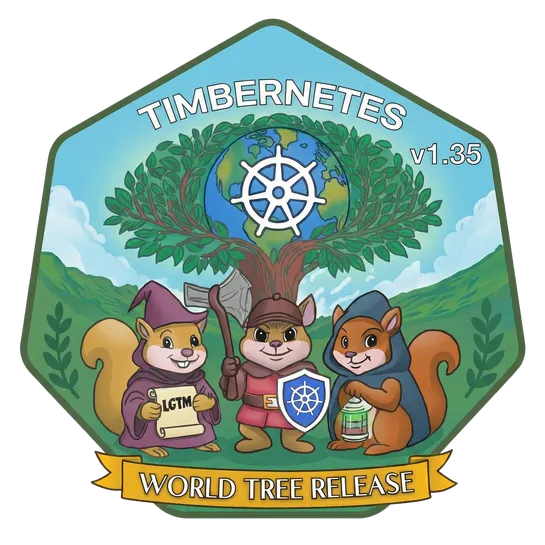
Kubernetes v1.35 Timbernetes Release: 60 Enhancements

Kubernetes Gateway API Kubernetes

Kubernetes v1.35, the Timbernetes Release, debuts with 60 enhancements, including stable in-place Pod updates and beta features for workload identity and certificate rotation.

Kubernetes v1.35 Timbernetes Release: 60 Enhancements
 Activity
@kaptain added a new tool Kubernetes Gateway API , 2 months, 3 weeks ago.
NanoClaw is an open-source personal AI agent designed to run locally on your machine while remaining small enough to fully understand and audit. Built as a lightweight alternative to larger agent frameworks, the system runs as a single Node.js process with roughly 3,900 lines of code spread across about 15 source files.

The agent integrates with messaging platforms such as WhatsApp and Telegram, allowing users to interact with their AI assistant directly through familiar chat applications. Each conversation group operates independently and maintains its own memory and execution environment.

A core design principle of NanoClaw is security through isolation. Every agent session runs inside its own container using Docker or Apple Container, ensuring that the agent can only access files and resources that are explicitly mounted. This approach relies on operating system–level sandboxing rather than application-level permission checks.

The architecture is intentionally simple: a single orchestrator process manages message queues, schedules tasks, launches containerized agents, and stores state in SQLite. Additional functionality can be added through a modular skills system, allowing users to extend capabilities without increasing the complexity of the core codebase.

By combining a minimal architecture with container-based isolation and messaging integration, NanoClaw aims to provide a transparent, customizable personal AI agent that users can run and control entirely on their own infrastructure.