Join us

ContentUpdates and recent posts about NanoClaw..
 Activity
@kala added a new tool GitHub Copilot SDK , 2 months, 3 weeks ago.
 Activity
@varbear added a new tool VillageSQL , 2 months, 3 weeks ago.
News FAUN.dev() Team Trending
@devopslinks shared an update, 2 months, 3 weeks ago
FAUN.dev()

MinIO Ends Community Development, Positions AIStor as the Future

AIStor MinIO

MinIO has marked its open-source GitHub repository as "THIS REPOSITORY IS NO LONGER MAINTAINED," effectively ending active community development. The company is shifting focus to AIStor, its subscription-based enterprise object storage platform. The code remains available under AGPLv3, but future innovation and support are centered on the commercial product.


 Activity
@devopslinks added a new tool AIStor , 2 months, 3 weeks ago.
Story
@laura_garcia shared a post, 2 months, 3 weeks ago
Software Developer, RELIANOID

Pink26: ITSM – The Next Generation 🚀

📍 February 16–18, 2026 | Las Vegas The future of IT Service Management starts here. Pink26 brings together global IT leaders for a powerful mix of innovation, learning, and real-world transformation — inspired by the spirit of Star Trek: The Next Generation. From ITSM and DevOps to AI, Agile, and Ex..

pink26 las vegas relianoid
Story
@shubham321 shared a post, 2 months, 3 weeks ago
Software engineer, Keploy

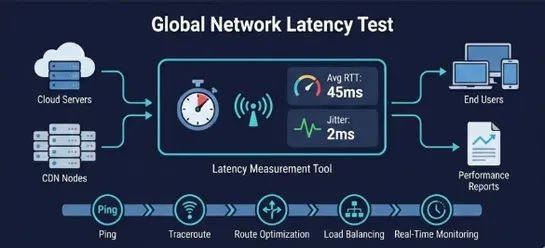
Latency Test Guide: How to Boost App Speed and Improve UX

Did you know 100ms of lag can cost you 1% in sales? Learn how to master the latency test to isolate network, application, and database bottlenecks for a snappier, more reliable user experience

Latency testing (2)
Story
@laura_garcia shared a post, 2 months, 3 weeks ago
Software Developer, RELIANOID

🔁 Resharing insights from our CEO on the next decade of cybersecurity (2026–2036)

🔁 Resharing insights from our CEO on the next decade of cybersecurity (2026–2036) Cybersecurity is not heading toward a single dramatic disruption. It is undergoing a structural transformation. In her latest analysis, our CEO outlines the fundamental shifts that will define the next ten years: 🔐 ..

Story Keploy Team
@sancharini shared a post, 2 months, 3 weeks ago

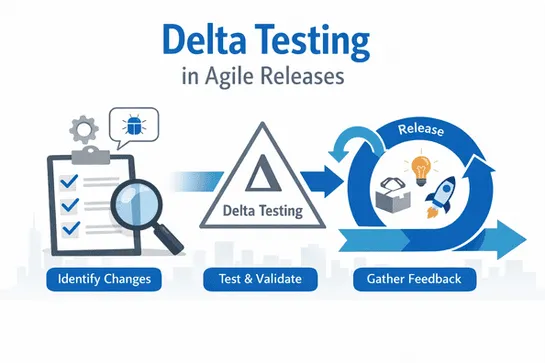
Delta Testing in Agile Releases: How to Validate Changes Without Retesting Everything?

Learn how delta testing helps Agile teams validate code changes efficiently, reduce regression scope, and accelerate CI/CD releases without retesting everything.

Delta Testing in Software Testing
Story
@laura_garcia shared a post, 2 months, 3 weeks ago
Software Developer, RELIANOID

Post-Quantum Cryptography is no longer theoretical. It’s strategic.

Quantum computing will eventually break RSA and ECC — the foundations of today’s secure communications. The industry is already preparing for “Q-Day,” with NIST standardizing algorithms like CRYSTALS-Kyber and Dilithium. We are entering a hybrid era that demands crypto agility. At RELIANOID, we’re p..

Blog Post-Quantum Cryptography
News FAUN.dev() Team
@devopslinks shared an update, 2 months, 3 weeks ago
FAUN.dev()

Anthropic Claude: $20,000, 16 AI Agents, and a Compiler That Builds Linux

Docker git Rust GNU/Linux The Linux Kernel

Anthropic researcher Nicholas Carlini orchestrated 16 autonomous Claude agents working in parallel to build a 100,000-line C compiler in Rust. Using a custom harness for task coordination, testing, and conflict resolution, the agent team produced a compiler capable of building Linux 6.9 across multiple architectures.

NanoClaw is an open-source personal AI agent designed to run locally on your machine while remaining small enough to fully understand and audit. Built as a lightweight alternative to larger agent frameworks, the system runs as a single Node.js process with roughly 3,900 lines of code spread across about 15 source files.

The agent integrates with messaging platforms such as WhatsApp and Telegram, allowing users to interact with their AI assistant directly through familiar chat applications. Each conversation group operates independently and maintains its own memory and execution environment.

A core design principle of NanoClaw is security through isolation. Every agent session runs inside its own container using Docker or Apple Container, ensuring that the agent can only access files and resources that are explicitly mounted. This approach relies on operating system–level sandboxing rather than application-level permission checks.

The architecture is intentionally simple: a single orchestrator process manages message queues, schedules tasks, launches containerized agents, and stores state in SQLite. Additional functionality can be added through a modular skills system, allowing users to extend capabilities without increasing the complexity of the core codebase.

By combining a minimal architecture with container-based isolation and messaging integration, NanoClaw aims to provide a transparent, customizable personal AI agent that users can run and control entirely on their own infrastructure.