Join us

ContentUpdates and recent posts about NanoClaw..
Link
@faun shared a link, 1 year, 11 months ago
FAUN.dev()

How tech went from free love to pay-per-day

This year at Red Hat's Devconf.cz, alongside technical talks on Linux, there was a focus on AI and blockchain projects. Open source algorithms are commonly used to generate blockchains and statistical text-prediction models marketed as artificial intelligence. The evolution of FOSS and the software .. read more  

How tech went from free love to pay-per-day
Link
@faun shared a link, 1 year, 11 months ago
FAUN.dev()

IBM Makes Generative AI Platform for DevOps Available

IBM Concert, based on the IBM watsonx platform, uses generative AI and knowledge graphs to identify IT dependencies for proactive DevOps, available as a SaaS on IBM, AWS, or on-premises. It offers a 360-degree view of IT topology and is initially optimized for application risk and compliance managem.. read more  

IBM Makes Generative AI Platform for DevOps Available
 Activity
@paulbryant created an organization DancingNumbers- Import Export & Delete QB Data , 1 year, 11 months ago.
 Activity
@liam created an organization W2S Solutions , 1 year, 11 months ago.
 Activity
@toxsltechnologies created an organization ToXSL Technologies , 1 year, 11 months ago.
Link
@faun shared a link, 1 year, 11 months ago
FAUN.dev()

Understanding the Docker USER Instruction

In a Dockerfile, if no user is specified, Docker defaults to running commands as the root user, posing security risks. Using UID/GID in Docker maintains consistent security controls by mapping numerical identifiers for users and groups. Docker's Enhanced Container Isolation and user namespaces help .. read more  

Understanding the Docker USER Instruction
Link
@faun shared a link, 1 year, 11 months ago
FAUN.dev()

Git Branching Strategies for DevOps: Best Practices for Collaboration

The article discusses Git branching strategies for efficient code management and collaboration. It covers trunk-based development, GitHub Flow, Git Flow, and Feature Branching, highlighting their benefits and challenges based on team size and deployment frequency. It also emphasizes effective collab.. read more  

Git Branching Strategies for DevOps: Best Practices for Collaboration
Link
@faun shared a link, 1 year, 11 months ago
FAUN.dev()

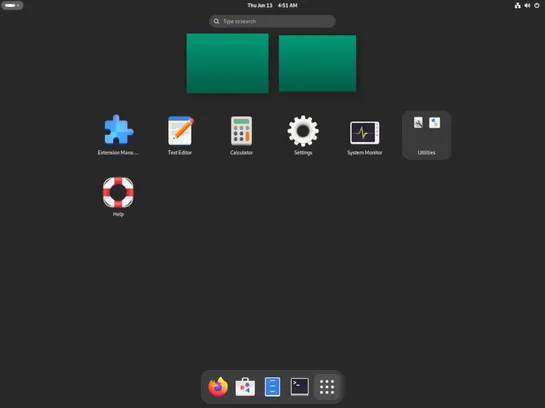
Aeon: openSUSE for lazy developers

The openSUSE project announced the second release candidate (RC2) of Aeon Desktop, which aims to provide automated system updates using snapshots. Aeon uses transactional-update with Btrfs subvolumes to create and update system snapshots. The installation process involves the Transactional Installat.. read more  

Aeon: openSUSE for lazy developers
Link
@faun shared a link, 1 year, 11 months ago
FAUN.dev()

As CentOS OS 7 nears end-of-life, what are the alternatives?

Thousands of servers running CentOS 7 will lose support from Red Hat in June 2024. Alternatives include SUSE, Oracle, and Ctrl IQ, offering RHEL-compatible systems. OpenELA provides RHEL source code, and organizations like Rocky Linux and AlmaLinux present viable migration paths... read more  

As CentOS OS 7 nears end-of-life, what are the alternatives?
Link
@faun shared a link, 1 year, 11 months ago
FAUN.dev()

Helm + Kustomize + Raw Manifests Combination

Combining Helm, Helmfile, Kustomize, and raw manifests can streamline Kubernetes manifest management, offering flexibility and control over deployment workflows. This integration allows for customization of manifests with Helm packages and fine-grained configuration using Kustomize, while also inclu.. read more  

Helm + Kustomize + Raw Manifests Combination
NanoClaw is an open-source personal AI agent designed to run locally on your machine while remaining small enough to fully understand and audit. Built as a lightweight alternative to larger agent frameworks, the system runs as a single Node.js process with roughly 3,900 lines of code spread across about 15 source files.

The agent integrates with messaging platforms such as WhatsApp and Telegram, allowing users to interact with their AI assistant directly through familiar chat applications. Each conversation group operates independently and maintains its own memory and execution environment.

A core design principle of NanoClaw is security through isolation. Every agent session runs inside its own container using Docker or Apple Container, ensuring that the agent can only access files and resources that are explicitly mounted. This approach relies on operating system–level sandboxing rather than application-level permission checks.

The architecture is intentionally simple: a single orchestrator process manages message queues, schedules tasks, launches containerized agents, and stores state in SQLite. Additional functionality can be added through a modular skills system, allowing users to extend capabilities without increasing the complexity of the core codebase.

By combining a minimal architecture with container-based isolation and messaging integration, NanoClaw aims to provide a transparent, customizable personal AI agent that users can run and control entirely on their own infrastructure.