Join us

ContentUpdates and recent posts about NanoClaw..
Story
@laura_garcia shared a post, 1 year, 11 months ago
Software Developer, RELIANOID

TECHSPO 2024

Dear Customers and Users, will you be attending TECHSPO? Please, contact us to arrange a meeting! #TECHSPO #TECHSPO2024 #TECHSPOSiliconValley #SiliconValleyTech #TechExpo #SiliconValley #CaliforniaTech #BayAreaTech #InternetTech #MobileTech #AdTech #MarTech #SaaSTech #EmergingTech #TechInnovation #T..

Techspo Sillicon Valley RELIANOID
Story
@squadcast shared a post, 1 year, 11 months ago

How Squadcast Helped FinBox Overcome Real-Time Monitoring Challenges with Incident Management Tools

This blog post details how FinBox, a B2B credit infrastructure company, overcame real-time monitoring challenges using Squadcast, an incident management solution. FinBox previously struggled with inefficient email alerts, manual monitoring, and a disorganized on-call process. Squadcast's features like tagging, integration with monitoring tools, and on-call scheduling helped FinBox achieve significant improvements, including reduced downtime, better customer experience, and more control over monitoring. Overall, Squadcast is presented as a valuable tool for businesses seeking to improve their incident management and real-time monitoring capabilities.

Story
@squadcast shared a post, 1 year, 11 months ago

How Incident Response Tools Can Help You Conduct Root Cause Analysis

This blog post talks about the importance of root cause analysis (RCA) in incident response and how using incident response tools can improve the RCA process. It explains the benefits of using RCA tools such as saving time, improved accuracy, faster resolution, and actionable insights. It contrasts traditional RCAs with RCA conducted with incident response tools, highlighting the limitations of traditional RCAs. The blog post then concludes by discussing the future of RCA with machine learning and AI and how incident response tools can help you improve your team's ability to identify and resolve incidents. Finally, it introduces Squadcast, an incident response tool that offers features to improve RCA.

 Activity
@samuel34 created an organization cookie clicker , 1 year, 11 months ago.
Link
@faun shared a link, 1 year, 11 months ago
FAUN.dev()

HashiCorp State of Cloud 2024

The HashiCorp 2024 State of Cloud Strategy Survey revealed that only 8% of respondents qualified as highly cloud mature, investing more in the cloud and experiencing stronger security, faster development, and agile provisioning. Highly cloud-mature organizations were found to be coping better with c.. read more  

Link
@faun shared a link, 1 year, 11 months ago
FAUN.dev()

State of Cloud Costs

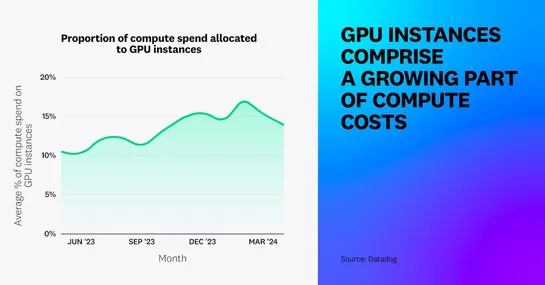
Organizations increased GPU instance spending by 40%, primarily using the cost-effective G4dn type. Arm-based instances, like the T4g with Graviton2, see a rise in usage for their energy efficiency and performance. Container use has grown to 35% of EC2 spend, though 83% of container costs stem from .. read more  

State of Cloud Costs
Link
@faun shared a link, 1 year, 11 months ago
FAUN.dev()

Secure API Gateway with Amazon Cognito using SAM

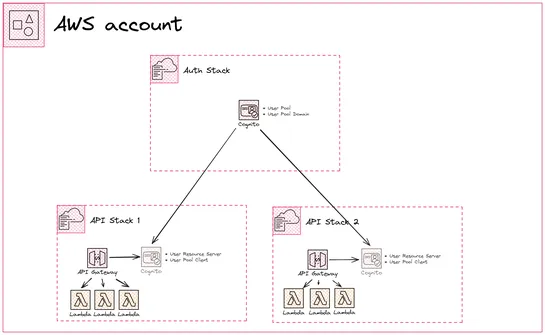
The post explains how to add authentication to APIs using Amazon Cognito in AWS. It covers concepts like User Pool, User Pool Domain, Resource Server, and User Pool Client. The setup involves creating an Auth Stack containing the User Pool and User Pool Domain resources, and then sharing the data to.. read more  

Secure API Gateway with Amazon Cognito using SAM
Link
@faun shared a link, 1 year, 11 months ago
FAUN.dev()

This Open Source Dashboard Solution With 59k Stars on GitHub astonished me — Apache Superset

Apache Superset is an open-source dashboard solution that allows for easy sharing and embedding of BI charts. It features a variety of chart types, a powerful query builder, and support for custom connectors. Many big companies use Superset, and installation on Kubernetes is made simple with just tw.. read more  

This Open Source Dashboard Solution With 59k Stars on GitHub astonished me — Apache Superset
Link
@faun shared a link, 1 year, 11 months ago
FAUN.dev()

Optimizing observability costs with a DIY framework

Global spending on observability is over 2.4 billion USD in 2024 and expected to reach 4.1 billion by 2028. The growth of observability costs is driven by factors like microservices, ephemeral servers, and SRE/Chaos Engineering practices. To reduce observability costs, companies can consider impleme.. read more  

Link
@faun shared a link, 1 year, 11 months ago
FAUN.dev()

An updated set of Grafana dashboards for Kubernetes

The dotdc/grafana-dashboards-kubernetes project has seen significant growth over the past two years, with increased traffic and new contributors, including users from companies like Rakuten, Orange, Swisscom, and Nokia. The project now features proper releases generated using semantic versioning, cl.. read more  

An updated set of Grafana dashboards for Kubernetes
NanoClaw is an open-source personal AI agent designed to run locally on your machine while remaining small enough to fully understand and audit. Built as a lightweight alternative to larger agent frameworks, the system runs as a single Node.js process with roughly 3,900 lines of code spread across about 15 source files.

The agent integrates with messaging platforms such as WhatsApp and Telegram, allowing users to interact with their AI assistant directly through familiar chat applications. Each conversation group operates independently and maintains its own memory and execution environment.

A core design principle of NanoClaw is security through isolation. Every agent session runs inside its own container using Docker or Apple Container, ensuring that the agent can only access files and resources that are explicitly mounted. This approach relies on operating system–level sandboxing rather than application-level permission checks.

The architecture is intentionally simple: a single orchestrator process manages message queues, schedules tasks, launches containerized agents, and stores state in SQLite. Additional functionality can be added through a modular skills system, allowing users to extend capabilities without increasing the complexity of the core codebase.

By combining a minimal architecture with container-based isolation and messaging integration, NanoClaw aims to provide a transparent, customizable personal AI agent that users can run and control entirely on their own infrastructure.