Join us

ContentUpdates and recent posts about NanoClaw..
Link
@faun shared a link, 1 year, 11 months ago
FAUN.dev()

Proactive PostgreSQL Database(s) Performance Scanner

The Proactive PostgreSQL Database Performance Scanner helps monitor PostgreSQL databases by identifying performance issues such as inefficient queries, high CPU utilization, and excessive active connections. It runs a script with probes for different performance metrics and generates detailed report.. read more  

Proactive PostgreSQL Database(s) Performance Scanner
Link
@faun shared a link, 1 year, 11 months ago
FAUN.dev()

Mirantis Offers Lower Cost Open Source Alternative to VMware with Latest Mirantis OpenStack for Kubernetes

Mirantis releases MOSK 24.2, featuring a dynamic resource balancer to automate workload distribution and prevent hypervisor overloading. The Distributed Resource Balancer is comparable to VMware's DRS but implemented for OpenStack without complex dependencies. MOSK 24.2 is built on OpenStack 2024.1/.. read more  

Link
@faun shared a link, 1 year, 11 months ago
FAUN.dev()

Terraform Development Pipeline

The purpose of a development pipeline is to deploy with confidence and therefore at high frequencies. Secure repository and pipelines should be configured to prevent attack vectors. Protect the main branch by requiring all commits to be made to a non-target branch before they can be merged... read more  

Terraform Development Pipeline
Link
@faun shared a link, 1 year, 11 months ago
FAUN.dev()

Slashing our AWS Bill at Levels.fyi

Levels.fyi optimized their cloud infrastructure, saving ~15% on cloud spend by making strategic changes such as shutting down unused EC2 instances, removing unnecessary ElastiCache, transitioning historical S3 data to Glacier, fine-tuning ECS autoscaling, upgrading RDS & Lambda, and tidying up ECR a.. read more  

Link
@faun shared a link, 1 year, 11 months ago
FAUN.dev()

Amazon at 30: what next for 'The Everything Company'?

Amazon, founded in 1994, has grown to have 175 "fulfilment centres" worldwide, selling millions of stock items daily and providing countless services from streaming to home camera systems. Despite criticism, the company faces the challenge of continual growth and innovation in an ever-changing lands.. read more  

Amazon at 30: what next for 'The Everything Company'?
Link
@faun shared a link, 1 year, 11 months ago
FAUN.dev()

What Is Cloud Economics? The Definitive 2024 Guide

CloudZero’s co-founder, Erik Peterson, shares the concepts of cloud economics to help you understand, control, and optimize cloud costs (and almost certainly increase savings)... read more  

 Activity
@raghuchinnannan created an organization Hydrozen.io , 1 year, 11 months ago.
 Activity
@sammathew created an organization ConverjIT Technologies Inc , 1 year, 11 months ago.
Link
@faun shared a link, 1 year, 11 months ago
FAUN.dev()

Codeium: The Best Github Copilot Alternative

GitHub Copilot offers code suggestions, snippets, comments, and documentation based on open-source patterns but requires a subscription.Codeium, a free alternative, provides similar code completion features, supports over 70 languages, and integrates with a wide range of IDEs including VSCode, JetBr.. read more  

Codeium: The Best Github Copilot Alternative
Link
@faun shared a link, 1 year, 11 months ago
FAUN.dev()

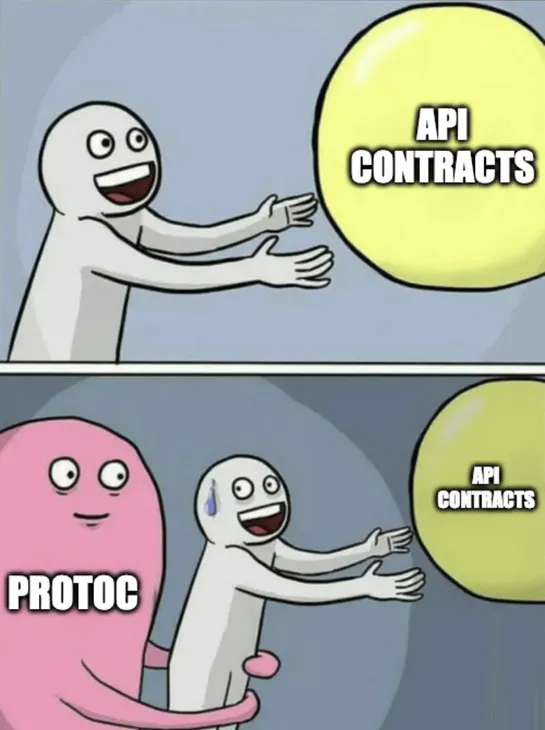
gRPC: The Bad Parts

gRPC, a high-performance RPC framework, excels with wide language support but introduces complexity in simple RPC calls and tooling due to required code generation. HTTP/2 reliance limited initial reach, while HTTP/3 adoption and JSON mapping lagged behind. Despite these issues, current improvements.. read more  

gRPC: The Bad Parts
NanoClaw is an open-source personal AI agent designed to run locally on your machine while remaining small enough to fully understand and audit. Built as a lightweight alternative to larger agent frameworks, the system runs as a single Node.js process with roughly 3,900 lines of code spread across about 15 source files.

The agent integrates with messaging platforms such as WhatsApp and Telegram, allowing users to interact with their AI assistant directly through familiar chat applications. Each conversation group operates independently and maintains its own memory and execution environment.

A core design principle of NanoClaw is security through isolation. Every agent session runs inside its own container using Docker or Apple Container, ensuring that the agent can only access files and resources that are explicitly mounted. This approach relies on operating system–level sandboxing rather than application-level permission checks.

The architecture is intentionally simple: a single orchestrator process manages message queues, schedules tasks, launches containerized agents, and stores state in SQLite. Additional functionality can be added through a modular skills system, allowing users to extend capabilities without increasing the complexity of the core codebase.

By combining a minimal architecture with container-based isolation and messaging integration, NanoClaw aims to provide a transparent, customizable personal AI agent that users can run and control entirely on their own infrastructure.