Join us

ContentUpdates and recent posts about NanoClaw..
Story
@laura_garcia shared a post, 8 hours ago
Software Developer, RELIANOID

𝗕𝗲𝘁𝘁 𝗕𝗿𝗮𝘀𝗶𝗹 𝟮𝟬𝟮𝟲

📍 São Paulo, Brazil 📅 May 5–8, 2026 𝗥𝗘𝗟𝗜𝗔𝗡𝗢𝗜𝗗 is heading to 𝗕𝗲𝘁𝘁 𝗕𝗿𝗮𝘀𝗶𝗹 𝟮𝟬𝟮𝟲 — 𝘵𝘩𝘦 𝘭𝘢𝘳𝘨𝘦𝘴𝘵 𝘌𝘥𝘛𝘦𝘤𝘩 𝘦𝘷𝘦𝘯𝘵 𝘪𝘯 𝘓𝘢𝘵𝘪𝘯 𝘈𝘮𝘦𝘳𝘪𝘤𝘢. 🚀 46,000+ professionals 💡 270+ companies 🌍 One shared goal: transforming education Let’s talk about secure, scalable, and high-performance digital learning. 👉 See you at Expo Cen..

bett_brazil_sao_paulo_2026_relianoid
Link
@koukibadr shared a link, 8 hours ago
Mobile Developer, Nventive

LiveData vs StateFlow

LiveData and StateFlow both stream data reactively, but differ in two key ways:

Initialization — LiveData needs no initial value; StateFlow requires one.

Lifecycle — LiveData is lifecycle-aware by default; StateFlow is not, so you need to wrap it in repeatOnLifecycle to avoid memory leaks.

Code templating
Story
@pramod_kumar_0820 shared a post, 12 hours ago
Software Engineer, Teknospire

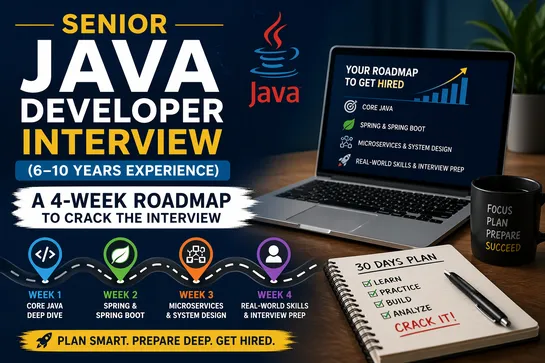
How To Crack Senior Java Interviews (6–10 YOE) In 4 Weeks

Javadoc Searchspring

A practical 4-week roadmap to crack Senior Java Developer interviews (6–10 YOE), covering Core Java, Spring Boot internals, Microservices, System Design, and real-world interview strategies.

Senior Java Interviews (6–10 YOE) In 4 Weeks
 Activity
@smh started using tool TypeScript , 13 hours, 46 minutes ago.
 Activity
@smh started using tool Terraform , 13 hours, 46 minutes ago.
 Activity
@smh started using tool Python , 13 hours, 46 minutes ago.
 Activity
@smh started using tool OpenTelemetry , 13 hours, 46 minutes ago.
 Activity
@smh started using tool Node.js , 13 hours, 46 minutes ago.
 Activity
@smh started using tool Next.js , 13 hours, 46 minutes ago.
 Activity
@smh started using tool New Relic , 13 hours, 46 minutes ago.
NanoClaw is an open-source personal AI agent designed to run locally on your machine while remaining small enough to fully understand and audit. Built as a lightweight alternative to larger agent frameworks, the system runs as a single Node.js process with roughly 3,900 lines of code spread across about 15 source files.

The agent integrates with messaging platforms such as WhatsApp and Telegram, allowing users to interact with their AI assistant directly through familiar chat applications. Each conversation group operates independently and maintains its own memory and execution environment.

A core design principle of NanoClaw is security through isolation. Every agent session runs inside its own container using Docker or Apple Container, ensuring that the agent can only access files and resources that are explicitly mounted. This approach relies on operating system–level sandboxing rather than application-level permission checks.

The architecture is intentionally simple: a single orchestrator process manages message queues, schedules tasks, launches containerized agents, and stores state in SQLite. Additional functionality can be added through a modular skills system, allowing users to extend capabilities without increasing the complexity of the core codebase.

By combining a minimal architecture with container-based isolation and messaging integration, NanoClaw aims to provide a transparent, customizable personal AI agent that users can run and control entirely on their own infrastructure.