Join us

ContentUpdates and recent posts about NanoClaw..
Link
@faun shared a link, 1 year, 1 month ago
FAUN.dev()

The Next Evolution of DigitalOcean Kubernetes: Introducing Features that Unlock Superior Scalability for Growing Businesses

DigitalOceanjust cranked up the cluster game to a cool1,000nodes, injectedeBPF-based routingfor a performance boost, and rolled outManaged Ciliumto keep things rock steady. Scale orchestration? Now it's on rocket fuel... read more  

The Next Evolution of DigitalOcean Kubernetes: Introducing Features that Unlock Superior Scalability for Growing Businesses
Link
@faun shared a link, 1 year, 1 month ago
FAUN.dev()

Introducing kube-scheduler-simulator

kube-scheduler-simulatorlets you peek into the mind of Kubernetes’ scheduler. You can poke and prod at scheduling decisions without risking a real cluster meltdown. Add custom plugins like a pro, no sweat. Forget blindsiding surprises. The simulator mirrors production with eerie accuracy—sync resour.. read more  

Introducing kube-scheduler-simulator
Link
@faun shared a link, 1 year, 1 month ago
FAUN.dev()

CKA Prep: CKA Exam Overview and Preparation Strategy

CKA exam:Juggle up to 6 Kubernetes clusters like a pro. Command rolling updates, Ingress, and persistent storage with flair. Imperative commands? Your secret weapon to snatch victory... read more  

Link
@faun shared a link, 1 year, 1 month ago
FAUN.dev()

Google Cloud unveils AI-focused updates to Kubernetes Engine

Meet theCluster Director for GKE. This beast masters GPU/TPU clusters seamlessly, herding them with Kubernetes APIs like a rodeo star. Meanwhile, theGKE Inference Gatewayramps up AI model performance. It's like magic but real: Serving costs tumble by up to30%. Tail latency? Chopped by up to60%... read more  

Link
@faun shared a link, 1 year, 1 month ago
FAUN.dev()

Optimize Gemma 3 Inference: vLLM on GKE 🏎️💨

GKE Autopilot's GPUmeans business—AI inference tasks don’t stand a chance. Just two arguments and, bam, you’ve unleashed NVIDIA's beastly Gemma 3 27B model, which chugs a massive46.4GB VRAM. ⚡️ Meanwhile, vLLM squeezes the models with bf16 precision, though optimization requires wrestling with algor.. read more  

Optimize Gemma 3 Inference: vLLM on GKE 🏎️💨
Link
@faun shared a link, 1 year, 1 month ago
FAUN.dev()

Kubernetes 1.33 – What you need to know

Kubernetes 1.33 shakes things up with game-changing updates.LIST streaming encodingtrims down API Server memory like a chef with a sharp knife. Deliberate deletion orders lock down security tighter than a drum. And get this:in-place updatesfor Pod resources ditch those annoying restarts! Finally, us.. read more  

Kubernetes 1.33 – What you need to know
Link
@anjali shared a link, 1 year, 1 month ago
Customer Marketing Manager, Last9

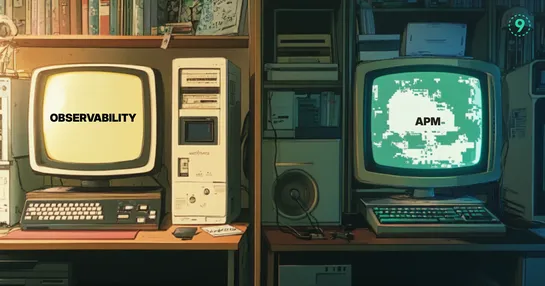
Observability vs APM: What’s the Real Difference?

Observability goes beyond APM—it's not just about metrics, it's about understanding why things break, not just that they did.

o11Y VS APM
Link
@anjali shared a link, 1 year, 1 month ago
Customer Marketing Manager, Last9

Logging vs Monitoring: What’s the Real Difference?

Logging and monitoring work together, but they’re not the same. Here’s how they help you understand, fix, and improve your systems.

logging
Link
@anjali shared a link, 1 year, 1 month ago
Customer Marketing Manager, Last9

Debug Logging: A Comprehensive Guide for Developers

A clear guide to debug logging—what it is, how to use it well, and why it matters when you're trying to understand what your code is doing.

Debug Logging_ A Comprehensive Guide for Developers
Story
@shurup shared a post, 1 year, 1 month ago
@palark

Nelm, a new alternative to Helm, is GA

werf

werf, a CNCF Sandbox project, announced Nelm as a new tool for deploying Helm charts.

Nelm project
NanoClaw is an open-source personal AI agent designed to run locally on your machine while remaining small enough to fully understand and audit. Built as a lightweight alternative to larger agent frameworks, the system runs as a single Node.js process with roughly 3,900 lines of code spread across about 15 source files.

The agent integrates with messaging platforms such as WhatsApp and Telegram, allowing users to interact with their AI assistant directly through familiar chat applications. Each conversation group operates independently and maintains its own memory and execution environment.

A core design principle of NanoClaw is security through isolation. Every agent session runs inside its own container using Docker or Apple Container, ensuring that the agent can only access files and resources that are explicitly mounted. This approach relies on operating system–level sandboxing rather than application-level permission checks.

The architecture is intentionally simple: a single orchestrator process manages message queues, schedules tasks, launches containerized agents, and stores state in SQLite. Additional functionality can be added through a modular skills system, allowing users to extend capabilities without increasing the complexity of the core codebase.

By combining a minimal architecture with container-based isolation and messaging integration, NanoClaw aims to provide a transparent, customizable personal AI agent that users can run and control entirely on their own infrastructure.