Join us

ContentUpdates and recent posts about NanoClaw..
Link
@faun shared a link, 1 year ago
FAUN.dev()

What If We Could Rebuild Kafka From Scratch?

Toss those partitions. Instead, pivot to key-centric streams—perfect for fine-tuned consumer management. Say goodbye to head-of-line blocking. Lean into topic hierarchies for slick, pattern-based subscriptions. Want to avoid outdated headaches? Tackle that with concurrency control. Broker-side schem.. read more  

Link
@faun shared a link, 1 year ago
FAUN.dev()

Ansible: pure (only in its) pragmatism

Ansibleslashes through the tangled mess of system admin tasks on Windows and Linux without needing agents, keeping things tidy and consistent. Just don't count on it to break any speed records. ItsYAML-based DSLand an extensive library of plugins give it some flair, but when it comes to full-scale i.. read more  

Link
@faun shared a link, 1 year ago
FAUN.dev()

Speeding up Terraform caching with OverlayFS

Terraform's plugin cache chokes when confronted withconcurrent runs. Picture a traffic jam at rush hour—it ain't pretty. EnterOverlayFS, the urban planner for your code. It tricks each simultaneous Terraform init into believing it's hogging the same plugin cache. Then, with finesse, it syncs everyth.. read more  

Link
@faun shared a link, 1 year ago
FAUN.dev()

AI-Driven DevOps: Quality and Compliance with Inflectra and Amazon Bedrock

Inflectra's AI-driven DevOps tools, likeSpira, hack away at development time by 50% and ramp up test coverage by 40%. This reshapes cloud workflows like magic.Spira'sagile ALM solutions let industries migrate with ease, ensuring compliance stays tight as a drum while AI injects productivity with jet.. read more  

AI-Driven DevOps: Quality and Compliance with Inflectra and Amazon Bedrock
Link
@faun shared a link, 1 year ago
FAUN.dev()

Taking a Look at Database Disk, Memory, and Concurrency Management

Databasesdance between block and file-level access. They cleverly use memory like a magician with a hidden pocket, smoothing over sluggish disk interactions. Logs? They’re the secret sauce for slick crash recovery.Concurrency controlin the mad circus of transactions? Locks. They're the backstage cre.. read more  

Link
@faun shared a link, 1 year ago
FAUN.dev()

Ran out of infrastructure titles

Taloskicked k3s to the curb, quenching that nagging itch for declarative order that Nix left behind. For traffic control,Contourswooped in, bringing sanity to my DNS maze and giving Nginx the boot.VictoriaMetricsoutpaced Prometheus, delivering speed and thrift. It even does remote monitoring like a .. read more  

Link
@faun shared a link, 1 year ago
FAUN.dev()

JFrog’s Journey with AWS Graviton

JFrog’s leap toAWS Gravitonunleashed some wizardry: slashing compute costs by20%, slicing CPU usage by another20%, and shaving network latency by10%. But here’s the kicker—carbon footprint plummeted by60%. That’s efficiency with an eco-twist. They juggled feature flags and multi-architecture support.. read more  

JFrog’s Journey with AWS Graviton
Link
@faun shared a link, 1 year ago
FAUN.dev()

37signals on-prem migration to save millions, abandon AWS

37signalsplans to chop its cloud bill from a hefty$3.2Mto under$1Ma year by dumping AWS for its own gear, with some help from swift Dell and Pure Storage systems. Oh, andAWStossed in a $250K fee waiver to nudge that transition along... read more  

37signals on-prem migration to save millions, abandon AWS
Link
@faun shared a link, 1 year ago
FAUN.dev()

VMware perpetual license holders receive cease-and-desist letters from Broadcom

Broadcomis upending the game. After itsVMwareacquisition, they slashed perpetual licenses and cranked up subscription costs by a staggering300%. To top it off, they're firing off cease-and-desist letters to folks who’ve sworn off VMware. It’s like breaking up but still getting texts from your ex—awk.. read more  

VMware perpetual license holders receive cease-and-desist letters from Broadcom
Link
@faun shared a link, 1 year ago
FAUN.dev()

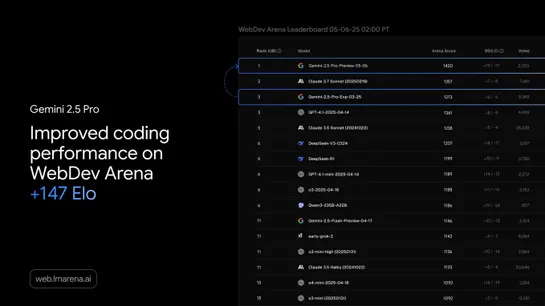
Google debuts an updated Gemini 2.5 Pro AI model ahead of I/O

Gemini 2.5 Pro Preview (I/O edition)is here, flexing its muscles in code editing and web app creation. This newcomer muscles its way to the top of theWebDev Arena Leaderboard. As if that wasn't enough, it scores a jaw-dropping84.8%on VideoMME for video analysis. And guess what? The price tag hasn’t .. read more  

Google debuts an updated Gemini 2.5 Pro AI model ahead of I/O
NanoClaw is an open-source personal AI agent designed to run locally on your machine while remaining small enough to fully understand and audit. Built as a lightweight alternative to larger agent frameworks, the system runs as a single Node.js process with roughly 3,900 lines of code spread across about 15 source files.

The agent integrates with messaging platforms such as WhatsApp and Telegram, allowing users to interact with their AI assistant directly through familiar chat applications. Each conversation group operates independently and maintains its own memory and execution environment.

A core design principle of NanoClaw is security through isolation. Every agent session runs inside its own container using Docker or Apple Container, ensuring that the agent can only access files and resources that are explicitly mounted. This approach relies on operating system–level sandboxing rather than application-level permission checks.

The architecture is intentionally simple: a single orchestrator process manages message queues, schedules tasks, launches containerized agents, and stores state in SQLite. Additional functionality can be added through a modular skills system, allowing users to extend capabilities without increasing the complexity of the core codebase.

By combining a minimal architecture with container-based isolation and messaging integration, NanoClaw aims to provide a transparent, customizable personal AI agent that users can run and control entirely on their own infrastructure.