Join us

ContentUpdates and recent posts about NanoClaw..
Link
@faun shared a link, 11 months, 3 weeks ago
FAUN.dev()

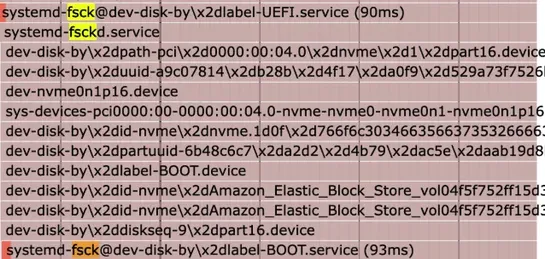
Improving EC2 boot time from 4s to 2.8s to accelerate builds

Revving upUbuntu 24.04for a speedier boot, we ditched dead weight likesnaps, AppArmor, andcloud-init—trimminguserspace boottime from 4 to2.8 seconds. BanishingIPv6address checks and pruningsystemdservices likejournaldshaved off more precious milliseconds. Next on the chopping block: kernel modules a.. read more  
Improving EC2 boot time from 4s to 2.8s to accelerate builds
Link
@faun shared a link, 11 months, 3 weeks ago
FAUN.dev()

DR 101: Assembling Your Incident Response Team

A disaster recovery plan relies on a coordinated incident response team. The speed and coordination of this team are crucial for minimizing downtime and keeping the organization running smoothly during a crisis. Key roles within the incident response team include incident commander, technical lead, .. read more  

Link
@faun shared a link, 11 months, 3 weeks ago
FAUN.dev()

Building Azure Right: A Practical Checklist for Infrastructure Landing Zones

Azure fans are pros at dodging groundwork, which, surprise, leads to chaos; lay down a rock-solid Landing Zone to hack your costs and cut the pandemonium.GrabInfrastructure as Code tools like Terraformto smooth out deployments. Make sureRBACdoesn’t dive into the horror of unmonitored access... read more  

Building Azure Right: A Practical Checklist for Infrastructure Landing Zones
Link
@faun shared a link, 11 months, 3 weeks ago
FAUN.dev()

Scaling Azure Microservices for Holiday Peak Traffic

Automation hacks away scaling migrainesfor microservices drowning in peak traffic. WithAzure DevOps CI/CDpipelines andIaC, scaling morphs into a cost-effective breeze. JustCosmos DB autoscalingcan shave off up to$7,200a year. Automation’s the unsung hero of cloud efficiency—no capes needed... read more  

Scaling Azure Microservices for Holiday Peak Traffic
Link
@faun shared a link, 11 months, 3 weeks ago
FAUN.dev()

Shared Database Pattern in Microservices: When Rules Get Broken

Every shared access point is a potential failure point. The risks are real and can be catastrophic. Safe implementation includes strict data ownership, schema change protocol, data integrity protection, and auditing. Moving to a structured API layer and data separation can help mitigate risks and pl.. read more  

Link
@faun shared a link, 11 months, 3 weeks ago
FAUN.dev()

The 18-point secrets management checklist

By 2027, user blunders will cause a staggering 99% of cloud breaches, according to the experts who swear they know these things. Lock down secrets management by centralizing and automating with tools likeOktaorMicrosoft Entra ID. Don't skimp on IBAC and least-privileged access. Guard your cloud fort.. read more  

The 18-point secrets management checklist
Link
@faun shared a link, 11 months, 3 weeks ago
FAUN.dev()

The 4 R’s of Pipeline Reliability: Data Systems That Last

RAG applicationslean on pipelines that can crumble if the4 R's frameworkisn't in place: reliable architecture, resumability, recoverability, redundancy. Ingenious stuff!.. read more  

The 4 R’s of Pipeline Reliability: Data Systems That Last
Link
@faun shared a link, 11 months, 3 weeks ago
FAUN.dev()

Announcing Red Hat Enterprise Linux for AWS

RHEL 10for AWS makes its debut, complete with AWS-tailored performance profiles, beefed-up security, and a seamless CLI. Ready to tango with the cloud like a pro... read more  

Announcing Red Hat Enterprise Linux for AWS
Link
@faun shared a link, 11 months, 3 weeks ago
FAUN.dev()

Bringing Kubernetes Back to Debian

KubernetesonDebianjust got its act together. The team axed the messy vendoring, shrunk the tarball bulk by over half, and tidied up dependency chaos. Now every dependency snuggles into Debian nicely, kicking out those pesky proprietary blobs. This means a secure, policy-friendly package and—drumroll.. read more  

Bringing Kubernetes Back to Debian
Link
@faun shared a link, 11 months, 3 weeks ago
FAUN.dev()

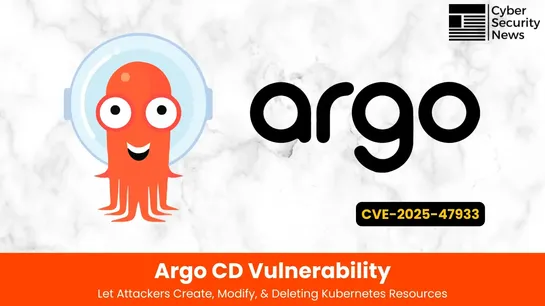
Argo CD Vulnerability Let Attackers Create, Modify, & Deleting Kubernetes Resources

CVE-2025-47933inArgo CDshreds security and hands injected JavaScript the keys to your Kubernetes kingdom. With a terrifyingCVSS score of 9.1, this one's no joke. Patch it, yesterday!.. read more  

Argo CD Vulnerability Let Attackers Create, Modify, & Deleting Kubernetes Resources
NanoClaw is an open-source personal AI agent designed to run locally on your machine while remaining small enough to fully understand and audit. Built as a lightweight alternative to larger agent frameworks, the system runs as a single Node.js process with roughly 3,900 lines of code spread across about 15 source files.

The agent integrates with messaging platforms such as WhatsApp and Telegram, allowing users to interact with their AI assistant directly through familiar chat applications. Each conversation group operates independently and maintains its own memory and execution environment.

A core design principle of NanoClaw is security through isolation. Every agent session runs inside its own container using Docker or Apple Container, ensuring that the agent can only access files and resources that are explicitly mounted. This approach relies on operating system–level sandboxing rather than application-level permission checks.

The architecture is intentionally simple: a single orchestrator process manages message queues, schedules tasks, launches containerized agents, and stores state in SQLite. Additional functionality can be added through a modular skills system, allowing users to extend capabilities without increasing the complexity of the core codebase.

By combining a minimal architecture with container-based isolation and messaging integration, NanoClaw aims to provide a transparent, customizable personal AI agent that users can run and control entirely on their own infrastructure.