Join us

ContentUpdates and recent posts about NanoClaw..
Link
@faun shared a link, 9 months, 3 weeks ago
FAUN.dev()

Build the highest resilience apps with multi-Region strong consistency in Amazon DynamoDB global tables

Amazon DynamoDBjust rolled out a nifty trick: multi-Region strong consistency. It's tailor-made for zero RPO junkies. Even during those pesky Region meltdowns, your data stays fresh as a daisy. Take your pick—go grand with three full replicas or skimp on cash with two replicas and a witness... read more  

Build the highest resilience apps with multi-Region strong consistency in Amazon DynamoDB global tables
Link
@faun shared a link, 9 months, 3 weeks ago
FAUN.dev()

How to Reduce Technical Debt With Artificial Intelligence (AI)

Technical debt from outdated software slows down businesses, costingover $2.4 trillion annually in the U.S. Using AI in SaaS can smartly reduce debt, but beware AI-induced debt by implementing rigorous oversight and governance principles likeT.R.U.S.T. Responsible AI integration enhances SaaS scalab.. read more  

Link
@faun shared a link, 9 months, 3 weeks ago
FAUN.dev()

Netflix Tudum Architecture: from CQRS with Kafka to CQRS with RAW Hollow

RAW Hollow, Netflix's brainy in-memory database, torches Tudum's update lag by jamming full datasets right into app memory. This move guaranteesO(1)access time and rock-solidread-after-writeconsistency while flexing to juggle a whopping100 millionrecords... read more  

Netflix Tudum Architecture: from CQRS with Kafka to CQRS with RAW Hollow
Link
@faun shared a link, 9 months, 3 weeks ago
FAUN.dev()

Why Policy as Code is a Game Changer for Platform Engineers

Policy as Code (PaC) isn't just another tech trend. It’s shaking up platform engineering. Get instant feedback, dodge production disasters, and automate compliance. It’s like a security blanket for self-service platforms. Enforcing those"golden paths"might actually keep things safe while innovation .. read more  

Why Policy as Code is a Game Changer for Platform Engineers
Link
@faun shared a link, 9 months, 3 weeks ago
FAUN.dev()

Local Chatbot RAG with FreeBSD Knowledge

Deepseek-r1crushes it for FreeBSD chatbots running locally on hefty GPUs. It dishes out adjustable precision, but don’t expect rubber-stamped approval... read more  

Link
@faun shared a link, 9 months, 3 weeks ago
FAUN.dev()

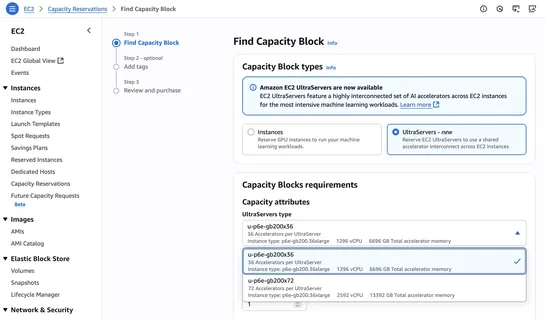
New Amazon EC2 P6e-GB200 UltraServers accelerated by NVIDIA Grace Blackwell GPUs for the highest AI performance

Amazon EC2 P6e-GB200 UltraServersroar to life withNVIDIA Grace Blackwell. Imagine a beast with360 petaflopsof FP8 compute and13.4 TBof high-bandwidth memory. Hungry for speed? They deliver, with28.8 TbpsEFAv4 networking, ensuring lightning-fast data flow. And the GPUs chat like old friends, thanks t.. read more  

New Amazon EC2 P6e-GB200 UltraServers accelerated by NVIDIA Grace Blackwell GPUs for the highest AI performance
Link
@faun shared a link, 9 months, 3 weeks ago
FAUN.dev()

Hidden Complexities of Distributed SQL

Distributed SQL engines shine when it comes to wrangling scattered data. Their secret weapons?Push-down filtersandTopNtricks that slash data transfer and shrink processing time. They deftly juggle complex queries from multiple sources, without the whole data mess piling up. Even the humdinger of ope.. read more  

Hidden Complexities of Distributed SQL
Link
@faun shared a link, 9 months, 3 weeks ago
FAUN.dev()

Understanding Time Series Databases

Time series databasesoptimize storage, retrieval, and analysis of time-stamped data, offering high-speed ingestion and specialized analytics. TSDBs are designed for efficiency and scalability, outperforming traditional databases in time-centric applications... read more  

Link
@faun shared a link, 9 months, 3 weeks ago
FAUN.dev()

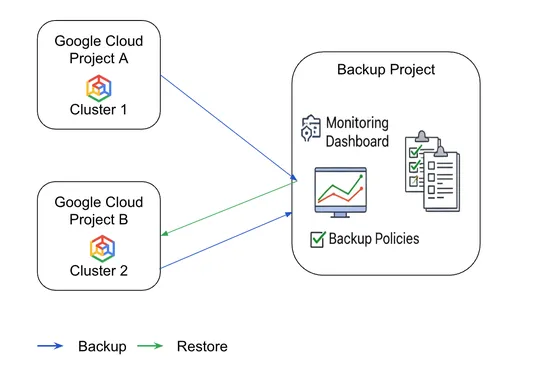
Backup for GKE supports cross-project backup and restore

Backup for GKEjust got a power-up. Now, you can zip data from one Google Cloud project and unpack it in another. This shake-up makes disaster recovery smoother, teamwork easier, and security tighter by keeping backups out of the wrong hands. All the control, none of the headache. No scripts needed... read more  

Backup for GKE supports cross-project backup and restore
Link
@faun shared a link, 9 months, 3 weeks ago
FAUN.dev()

Kubernetes List API performance and reliability

Kuberneteshas a meltdown during list calls in massive clusters. Imagine the apiservers screaming fromout-of-memorypains when dealing with over 100k pods. Enterv1.31+, lending a hand with an in-memory watch cache to lighten the load. But let's be real—v1.34is the hero we need, finally syncing paginat.. read more  

NanoClaw is an open-source personal AI agent designed to run locally on your machine while remaining small enough to fully understand and audit. Built as a lightweight alternative to larger agent frameworks, the system runs as a single Node.js process with roughly 3,900 lines of code spread across about 15 source files.

The agent integrates with messaging platforms such as WhatsApp and Telegram, allowing users to interact with their AI assistant directly through familiar chat applications. Each conversation group operates independently and maintains its own memory and execution environment.

A core design principle of NanoClaw is security through isolation. Every agent session runs inside its own container using Docker or Apple Container, ensuring that the agent can only access files and resources that are explicitly mounted. This approach relies on operating system–level sandboxing rather than application-level permission checks.

The architecture is intentionally simple: a single orchestrator process manages message queues, schedules tasks, launches containerized agents, and stores state in SQLite. Additional functionality can be added through a modular skills system, allowing users to extend capabilities without increasing the complexity of the core codebase.

By combining a minimal architecture with container-based isolation and messaging integration, NanoClaw aims to provide a transparent, customizable personal AI agent that users can run and control entirely on their own infrastructure.