Join us

ContentUpdates and recent posts about NanoClaw..
Link
@faun shared a link, 8 months, 3 weeks ago
FAUN.dev()

Kubernetes Observability: Pillars, Tools & Best Practices

Kubernetes observability isn’t just about catching metrics or tailing logs. It’s about stitching togethermetrics, logs, and tracesto see what’s actually happening—across services, over time, and through the chaos. Thing is, Kubernetes doesn’t come with this built in. So teams hack together toolchai.. read more  
Link
@faun shared a link, 8 months, 3 weeks ago
FAUN.dev()

Introducing Headlamp AI Assistant

Headlamp just dropped an AI Assistant plugin that foldsLLM-driven actions and queriesstraight into the Kubernetes UI. It taps intocontext-aware promptsto spot issues, restart deployments, and hunt down flaky pods—without leaving the interface. System shift:This pushes Kubernetes toward intent-based.. read more  

Link
@faun shared a link, 8 months, 3 weeks ago
FAUN.dev()

Introducing Kubernetes for Snowflake

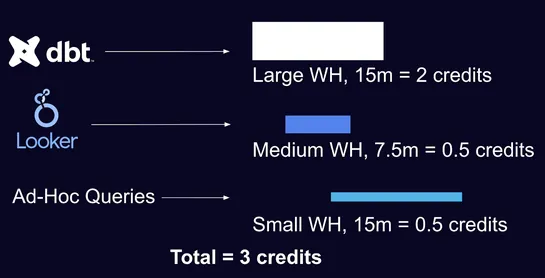
Snowflake just leveled up its workload scheduler—now driven by LLMs and reinforcement learning. Instead of locking jobs to static warehouses, it predicts where to send them in real-time. Smarter routing, tighter hardware use, over40%shaved off compute bills. Bigger picture:Another nod toward ML-bas.. read more  

Introducing Kubernetes for Snowflake
Link
@faun shared a link, 8 months, 3 weeks ago
FAUN.dev()

Cloudera Acquires Taikun for Managing Kubernetes and Cloud

Cloudera acquired Taikun for seamless deployment of data and AI workloads in any environment. This move reinforces Cloudera's commitment to flexibility and innovation in managing complex IT infrastructures... read more  

Story
@laura_garcia shared a post, 8 months, 3 weeks ago
Software Developer, RELIANOID

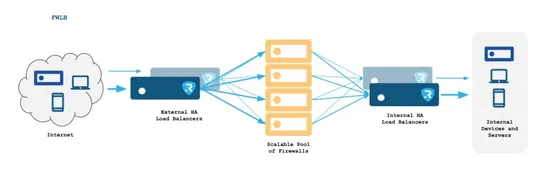
🔒 How can you improve the high availability and performance of your firewalls?

We're sharing a diagram on Firewall Load Balancing, along with a link to our technical article that explains how it works, its benefits, and best practices. 👉https://www.relianoid.com/resources/knowledge-base/misc/what-is-firewall-load-balancing-fwlb/ #FirewallLoadBalancing#HighAvailability#NetworkS..

diagrama firewall load balancing RELIANOID
Story
@idjuric660 shared a post, 8 months, 3 weeks ago
Technical Content Writer, Mailtrap

How to Send Emails in VS Code with Mailtrap MCP Server

Besides having an AI editor to help you develop projects, VS Code can now also generate and send emails in your stead. To do this, you simply need to integrate VS Code withMailtrap MCPand you’ll be able to send emails with a single prompt. And yes, this works for both Windows and macOS. First, we’ll..

Story
@laura_garcia shared a post, 8 months, 3 weeks ago
Software Developer, RELIANOID

🔹 What is a Layer 4 Load Balancer and Why Does It Matter?

📶 Whether you're managing web servers, real-time gaming, or VoIP applications—Layer 4 Load Balancing is key to performance and reliability. At the transport layer (OSI Layer 4), this type of load balancer distributes traffic based on IP addresses and port numbers, ensuring efficient and fast packet ..

Story
@idjuric660 shared a post, 8 months, 3 weeks ago
Technical Content Writer, Mailtrap

How to Send Emails in Claude Desktop with Mailtrap MCP

Ever since Mailtrap launched itsvery own MCP server, Claude can not only generate emails for you, but it can also send them to your recipients. The integration is super seamless, takes ~5 minutes, and works for both Windows and macOS. In this guide, I’ll show you how to integrate theMailtrap MCP, an..

Story
@laura_garcia shared a post, 8 months, 3 weeks ago
Software Developer, RELIANOID

🚀 ESA strengthens its cybersecurity defenses.

The European Space Agency has just inaugurated a new Cybersecurity Operations Center (C-SOC) to protect its satellites, mission control systems, and digital assets from growing cyber threats. 🌍 In today’s space-driven world, initiatives like this — along with global cybersecurity alliances — are mor..

NanoClaw is an open-source personal AI agent designed to run locally on your machine while remaining small enough to fully understand and audit. Built as a lightweight alternative to larger agent frameworks, the system runs as a single Node.js process with roughly 3,900 lines of code spread across about 15 source files.

The agent integrates with messaging platforms such as WhatsApp and Telegram, allowing users to interact with their AI assistant directly through familiar chat applications. Each conversation group operates independently and maintains its own memory and execution environment.

A core design principle of NanoClaw is security through isolation. Every agent session runs inside its own container using Docker or Apple Container, ensuring that the agent can only access files and resources that are explicitly mounted. This approach relies on operating system–level sandboxing rather than application-level permission checks.

The architecture is intentionally simple: a single orchestrator process manages message queues, schedules tasks, launches containerized agents, and stores state in SQLite. Additional functionality can be added through a modular skills system, allowing users to extend capabilities without increasing the complexity of the core codebase.

By combining a minimal architecture with container-based isolation and messaging integration, NanoClaw aims to provide a transparent, customizable personal AI agent that users can run and control entirely on their own infrastructure.